
T
Loading…
Loading…
Last Updated: October 2026
A cluttered kitchen slows down cooking, hides expired food, and makes cleanup harder. When I declutter a kitchen, I am not just removing extra items; I am creating a space where cooking, storage, and cleaning feel easier every day.
The good news is that kitchen decluttering works better when it is treated as a system, not a one-time spring clean. In this guide, I will show you how to clear the kitchen, organize what remains, and keep the space in order with routines that fit everyday life.
Kitchen clutter usually grows in small, invisible ways. A spare spoon becomes ten, one empty jar becomes a shelf full of jars, and groceries are pushed to the back until they expire. In Nigeria, this often happens when a kitchen has to serve many roles at once: cooking space, storage area, food prep zone, and sometimes even a mini pantry.
Decluttering works best when you understand the common sources of mess:
A simple reset starts with removing what no longer belongs in the kitchen and creating clear homes for everything else.
I find it easier to declutter in this order because it reduces decision fatigue and shows quick progress. Start with the items that create the most mess or waste.
Check dry goods, condiments, spices, bottled drinks, and freezer items. Look at labels, smell, texture, and packaging condition, especially for items that may have been sitting for months. Nigeria’s National Agency for Food and Drug Administration and Control emphasizes safe food handling and proper labeling, so damaged packaging, unsealed products, and suspicious-looking foods deserve extra caution.
Keep only what you actually use. If there are three openers, five spatulas, or several measuring cups, choose the ones that are comfortable and reliable, then move the rest out of active storage.
A cracked bowl, a chipped plate, or a pot with a loose handle creates clutter and can also make storage unsafe. Broken items take up space because they are often moved around instead of being used.
Thrift Date Night Outfits That Don’t Look Cheap
How to Treat Body Odour and Sweat in Nigerian Heat
Thrift Haul Nigeria: 10 Pieces, One Small Budget

Cheap Birthday Ideas in Nigeria: How to Celebrate on a Budget

How to Save Money as a Student in Nigeria

How Nigerians Are Coping With the Cost of Living Through Thrifting
Have something to give away or sell?
Post your first listing — it only takes a couple of minutes. Or browse listings near you.
Old takeaway containers, unused gift mugs, and event-only serving pieces often pile up. Keep only the versions that have a real purpose in your current kitchen routine.
A clean kitchen is easier to keep when every item goes through the same sorting process. I use a four-part method: keep, relocate, donate, discard.
| Category | What goes here | Action |
|---|---|---|
| Keep | Items used regularly and in good condition | Return to kitchen storage |
| Relocate | Belongings that are not kitchen items | Move to their proper room |
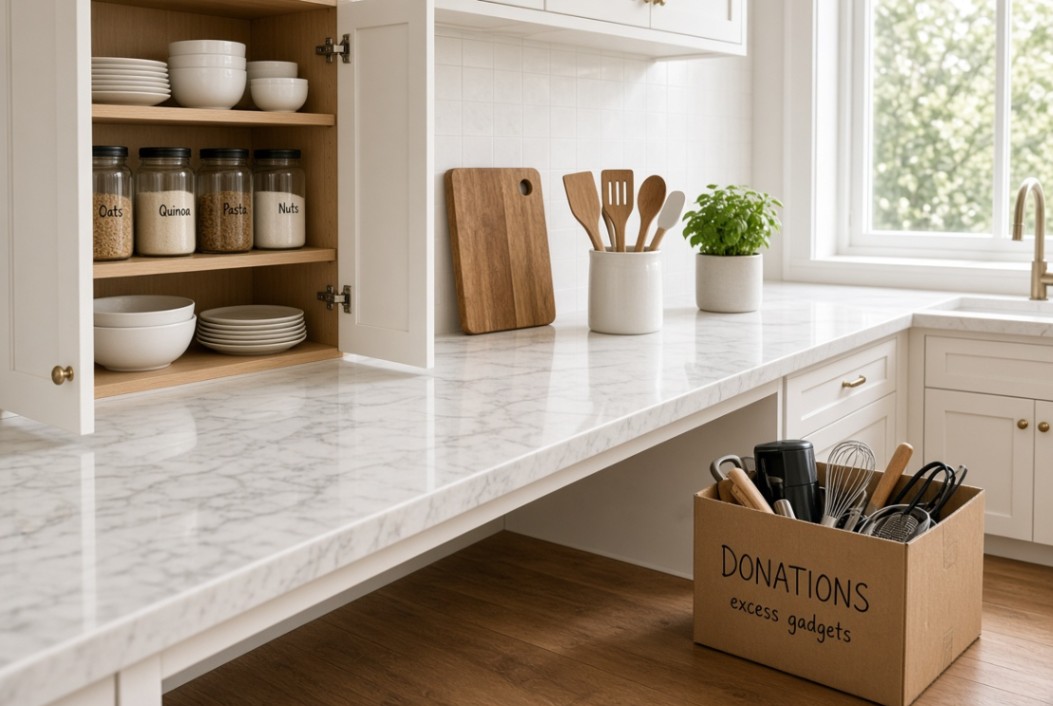
| Donate | Clean, usable duplicates or extra pieces | Pass on responsibly |
| Discard | Expired, broken, stained, or unsafe items | Dispose safely |
This kind of sorting helps you avoid the trap of “moving clutter around” without actually reducing it.
Once the excess is gone, the kitchen needs a layout that supports daily habits. Zoning works because it matches storage to action.
Keep chopping boards, knives, mixing bowls, and food prep tools close together. This reduces the time spent searching for things before cooking starts.
Store pots, pans, ladles, pot holders, and cooking spoons near the stove. If possible, keep the most-used pot within easy reach so daily cooking feels smoother.
Place dish soap, sponges, scrubbers, trash bags, and cleaning cloths near the sink. A cleaning zone reduces delays after meals and makes it easier to tidy up immediately.
Group dry foods together by type: grains, cereals, seasoning, snacks, tea, and baking items. Clear containers or labeled jars make it easier to see what is running low and prevent duplicate purchases.
If your kitchen has tea, coffee, milk powder, sugar, cups, and a kettle, keep them together. That small grouping prevents clutter from spreading across the counter.
Good storage is not about buying more containers. It is about giving each item a clear place and making the system easy to maintain.
Shelves, risers, hooks, and wall racks help small kitchens use height instead of crowding the counter. In apartments with limited cabinet space, vertical storage often makes the biggest difference.
Labels help when several people use the kitchen. They are especially helpful for flour, rice, sugar, dry pepper, and snack jars. A label can save time and reduce waste because items are less likely to be forgotten at the back of the shelf.
The more often you use something, the easier it should be to reach. If a blender or toaster stays in use every day, leaving it in an accessible spot is more practical than hiding it in a deep cabinet.
Dead storage is any space where items disappear and are never checked. This often happens behind stacked pots, in crowded cupboards, or in the far corner of a shelf. Once a month, open those spaces and review what is still useful.
Use this checklist during your reset.
This works well because it creates a repeatable process instead of a one-off cleaning burst.
When a kitchen has too many usable items, the next question is where they can go. Clean, safe extras can be donated, shared, or passed on through local community channels. If an item is stained, cracked, expired, or damaged, disposal is the better option than storing it “for later.”
For food-related items, safety matters. Damaged jars, swollen cans, torn packets, and leaking bottles should not be kept just because they still look usable from far away.
Kitchen decluttering does not need expensive supplies. Here are practical range estimates for common organizing items in Nigeria:
| Item | Typical range |
|---|---|
| Plastic storage baskets | ₦1,500–₦5,000 |
| Airtight food containers | ₦2,500–₦12,000 |
| Labels or marker set | ₦500–₦2,500 |
| Shelf risers | ₦3,000–₦10,000 |
| Wall hooks or racks | ₦1,500–₦8,000 |
| Drawer organizers | ₦2,000–₦9,000 |
These ranges vary by size, material, and market location. I prefer starting with only what solves a real storage problem, instead of filling the kitchen with matching containers that do not improve function.
Keeping a kitchen decluttered is mostly about small routines. If the system is easy to follow, clutter has fewer chances to return.
Spend five minutes after cooking to return items to their zones. Wash or soak the main dishes, wipe one counter, and put dry items back immediately.
Check the fridge, pantry, and utensil drawer once a week. Remove old leftovers, combine duplicate packets, and note items that are running low.
Once a month, inspect deep storage areas, expired foods, and rarely used tools. This is the best time to catch clutter before it spreads again.
When a new mug, container, or tool comes in, remove one similar item if the category is already crowded. This keeps storage from overflowing over time.
A kitchen can look organized for a few days and then slide back into clutter if the system is too complicated. These are the mistakes I see most often:
The easiest fix is to reduce the number of places where clutter can settle.
A one-room apartment kitchen can still feel organized with a simple arrangement. I would group plates and cups on one shelf, cooking items near the stove, food containers in one drawer, and dry groceries in labeled jars or transparent bins. A single hook rail can hold spoons, strainers, and mitts without taking up counter space.
That setup works because it follows use, not decoration. It makes cooking smoother while keeping the counter open for prep and cleaning.
If you want a simple sequence, use this:
This approach is easier to repeat because it breaks the job into visible steps.
If you have clean kitchen items you no longer use, a peer-to-peer listing approach can help them find a new home instead of taking up space. Threddo’s WhatsApp-first setup and categories for household items make that kind of exchange straightforward, especially when you want a simple way to pass on usable items locally. See Threddo safety guidance and current listings.
Kitchen decluttering works when the space is sorted by use, reviewed regularly, and protected from repeat clutter. Once food, tools, and storage all have defined places, the kitchen becomes easier to clean, easier to cook in, and easier to maintain. This article is for educational purposes only and does not constitute professional advice. Always follow safe trading practices and use your own judgement.