
T
Loading…
Loading…
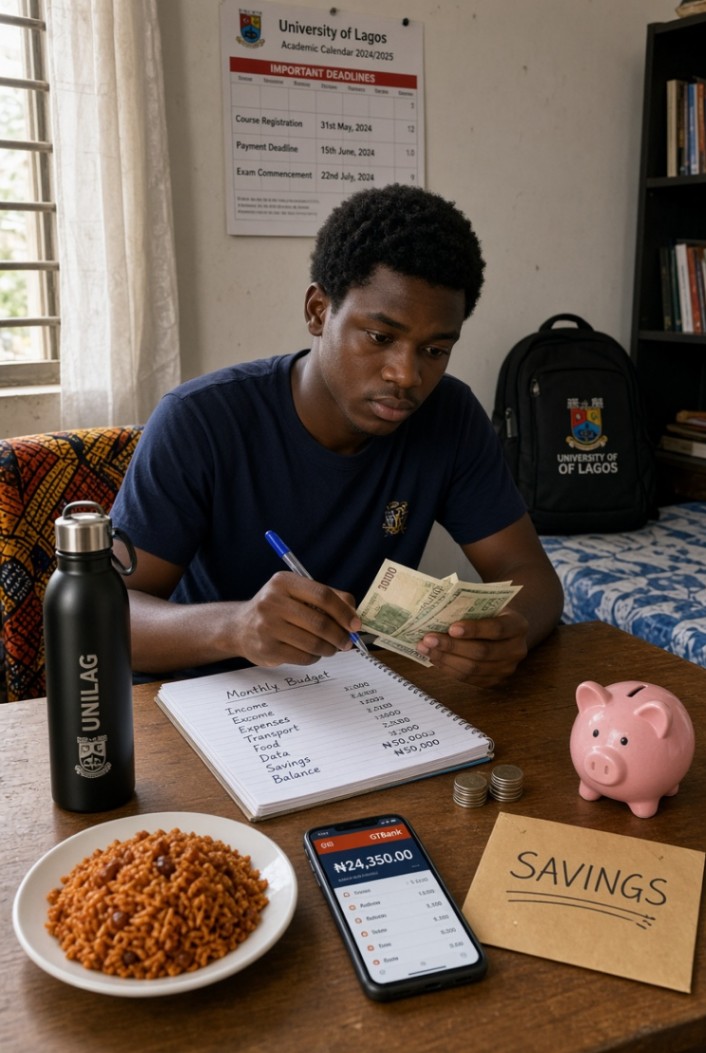
Saving money as a student in Nigeria can feel difficult when food, transport, data, accommodation, school materials, and personal expenses keep changing. A workable approach starts with tracking where your money goes, separating needs from wants, and reducing repeated expenses rather than trying to stop every small enjoyment. Nigeria’s rising food prices make this especially important. The National Bureau of Statistics reported year-on-year food inflation of 21.79% in March 2025, while June 2025 food inflation was 21.97%. These figures do not mean every item rises by exactly the same amount, but they explain why an old student budget may no longer cover the same meals. ## Start With a Student Budget A budget is simply a written plan for money coming in and money going out. It can be kept in a notebook, phone note, spreadsheet, or budgeting app. Begin with four figures: 1. Money received: allowance, scholarship, part-time earnings, gifts, or business income. 2. Fixed costs: rent, hostel fees, school charges, subscriptions, or regular transport. 3. Flexible costs: food, data, laundry, entertainment, and personal care. 4. Savings target: the amount reserved before the rest is spent. A useful student budget does not need to use a strict formula. If your income changes each month, record the lowest realistic amount you expect to receive and treat extra money separately. ### Example monthly budget Assume a student has ₦100,000 available for one month: | Category | Example allocation | Amount | |---|---:|---:| | Food and groceries | 40% | ₦40,000 | | Transport | 15% | ₦15,000 | | Data and calls | 10% | ₦10,000 | | School materials | 10% | ₦10,000 | | Personal expenses | 10% | ₦10,000 | | Savings or emergency reserve | 10% | ₦10,000 | | Flexible balance | 5% | ₦5,000 | These are planning examples, not universal prices. A student living at home may spend less on accommodation and more on transport, while a student living off campus may face higher rent, electricity, and cooking costs. ## Track Every Expense Many students remember large payments but overlook frequent small spending. A ₦700 snack, ₦500 transfer charge, or ₦1,000 extra ride may appear insignificant individually but become substantial when repeated. For seven days, record: - Date. - Item or service. - Amount in naira. - Payment method. - Whether it was planned. - Whether a cheaper alternative existed. ### Weekly spending example | Expense | Daily amount | Seven-day total | |---|---:|---:| | Breakfast snacks | ₦800 | ₦5,600 | | Extra transport rides | ₦600 | ₦4,200 | | Bottled drinks | ₦500 | ₦3,500 | | Unplanned data purchases | ₦700 | ₦4,900 | | Total | — | ₦18,200 | This example shows how repeated convenience spending can reach ₦18,200 in one week. The purpose of tracking is not to create guilt; it is to reveal patterns that are easy to change. ## Reduce Food Costs Food often takes one of the largest portions of a student budget. A practical approach combines planning, shared cooking, local staples, and fewer emergency purchases. ### Plan meals around affordable staples Depending on location and availability, students often build meals around rice, beans, garri, yam, eggs, noodles, oats, plantain, vegetables, and seasonal produce. Prices vary between Lagos, Abuja, university towns, and smaller communities, so compare the cost of ingredients in your area rather than relying on an old price list. Helpful habits include: - Create a three- or four-day meal plan before shopping. - Buy only quantities you can store safely and use. - Compare open-market, campus-shop, and supermarket prices. - Cook larger portions when storage and food safety allow. - Share bulk purchases with trusted roommates. - Carry water instead of buying drinks repeatedly. - Keep a simple emergency meal available to reduce impulse purchases. If cooking is available, calculate the cost per portion. For example, a pot of beans costing ₦8,000 in ingredients and producing 10 portions costs approximately ₦800 per portion before cooking fuel. That figure can then be compared with nearby cafeteria or restaurant prices. ### Watch cooking and storage costs Cheap ingredients can become expensive if food spoils or cooking fuel is wasted. Buy quantities that match your storage space, label leftovers, and avoid preparing more food than can be safely consumed. For students without a kitchen, compare the monthly cost of cafeteria meals with a combination of ready-to-eat staples and occasional cooking. The cheapest option depends on local prices, time, access to fuel, and whether food can be stored safely. ## Save on Transport Transport costs can quietly consume a large amount of student income, particularly in cities where students make several short trips each day. Try mapping your regular journeys: | Journey | Frequency | Cost per trip | Weekly estimate | |---|---:|---:|---:| | Home or hostel to campus | 10 trips | ₦500 | ₦5,000 | | Campus errands | 4 trips | ₦400 | ₦1,600 | | Weekend shopping | 2 trips | ₦800 | ₦1,600 | | Estimated total | 16 trips | — | ₦8,200 | Ways to reduce unnecessary transport spending include: - Combine errands into one journey. - Use campus shuttle services where available. - Walk short routes when conditions and personal safety permit. - Share rides with trusted classmates. - Compare transport fares before leaving. - Avoid returning home several times in one day. - Keep a small transport reserve for emergencies. Do not choose an unsafe route or vehicle solely because it is cheaper. Saving money should not involve ignoring personal safety, road conditions, or reliable transport information. ## Control Data and Airtime Spending Mobile data is essential for lectures, research, communication, and payments, but frequent small purchases can make the monthly total difficult to see. Review your data usage and identify the biggest drains: - Video streaming. - Social-media autoplay. - App updates. - Cloud backups. - Large downloads. - Video calls. - Hotspot sharing. Practical adjustments include turning off autoplay, downloading lecture materials on Wi-Fi, restricting background data, and choosing bundles that match actual usage. Compare the total price per gigabyte and validity period rather than choosing a bundle only because it has the largest headline amount. Keep academic downloads organised in folders so the same file is not downloaded repeatedly. When using public Wi-Fi, avoid entering sensitive banking information unless the connection is trusted and the website is secure. ## Spend Less on Clothes and Accessories Clothing expenses can become unpredictable when students buy for events, photos, birthdays, religious programmes, interviews, or social outings. A capsule-style wardrobe can reduce the need for frequent purchases: a few neutral tops, trousers or skirts, comfortable shoes, and versatile accessories can create multiple outfits. Before buying, check: - Whether the item fills a genuine wardrobe gap. - Whether it matches at least three existing outfits. - Its condition, size, fabric, and repair needs. - The full cost after transport or delivery. - Whether a clean secondhand item serves the same purpose. ### Example secondhand comparison | Item | New purchase example | Secondhand or swap example | Possible difference | |---|---:|---:|---:| | Casual shirt | ₦12,000 | ₦5,000 | ₦7,000 | | Everyday trousers | ₦18,000 | ₦8,000 | ₦10,000 | | Handbag | ₦25,000 | ₦10,000 | ₦15,000 | | Sneakers | ₦35,000 | ₦18,000 | ₦17,000 | These figures are illustrations, not fixed market prices. Condition, brand, location, authenticity, and demand affect the final amount. Secondhand shopping also extends the useful life of products and can reduce demand for unnecessary new production. Examine seams, zips, soles, stains, odour, lining, and signs of repair before completing a purchase. ## Buy School Materials Strategically Academic materials are easier to manage when purchases are separated into urgent, reusable, and optional items. ### Use this checklist - Check the course outline before buying books. - Ask whether a lecturer requires a particular edition. - Borrow or share reference books with trusted classmates. - Use libraries and legitimate open educational resources. - Buy stationery in quantities that match the semester. - Keep folders for digital notes and receipts. - Reuse files, calculators, bags, and laboratory coats where appropriate. - Compare photocopy and printing prices near campus. Avoid downloading pirated textbooks or software. Apart from ethical and legal concerns, unofficial files can contain malware or inaccurate material. Use school libraries, authorised platforms, or materials supplied by lecturers where available. ## Reduce Social and Convenience Spending Social life is part of student experience, but unplanned outings can affect food, transport, airtime, and clothing budgets at the same time. Set a monthly social allowance and use it for planned activities. Lower-cost options may include: - Visiting a friend’s residence. - Group study sessions. - Campus events with no entry fee. - Shared meals prepared by several people. - Free public lectures, exhibitions, or community programmes. - Walking-distance activities in safe areas. When friends suggest an unplanned outing, a clear response such as “I have already used my entertainment budget this week” can prevent pressure without requiring a long explanation. ## Save Small Amounts Consistently A savings habit does not need to begin with a large amount. Saving ₦500 twice a week equals ₦1,000 weekly and approximately ₦4,000 over four weeks. Saving ₦2,000 every week equals approximately ₦8,000 in four weeks. The purpose may be: - Emergency transport. - School materials. - Medical or personal needs, handled through appropriate professional support. - Phone replacement or repair. - Travel home. - A future business or project expense. Keep savings separate from daily spending where possible. A separate wallet, account, or labelled envelope can reduce accidental use. Avoid placing money into products you do not understand, and do not treat informal promises of unusually high returns as guaranteed savings options. ## Earn Carefully Without Affecting Schoolwork Some students reduce financial pressure through tutoring, design, writing, photography, hair services, thrift reselling, baking, or campus-based services. The activity should be evaluated by time, materials, transport, and reliability—not only by the amount charged. Before accepting paid work, calculate: $ \text{Net amount} = \text{Money received} - \text{materials} - \text{transport} - \text{data} - \text{other direct costs} $ For example, if a student receives ₦10,000 for a design job but spends ₦1,500 on data and ₦1,000 on transport, the amount remaining before other costs is ₦7,500. Keep records of payments and avoid sending money to “agents” who promise guaranteed jobs, grants, or quick profits. The warns people to be cautious about urgent requests, suspicious links, and messages seeking personal information. ## Buy and Sell Secondhand Items Safely Secondhand marketplaces can help students access affordable clothes, shoes, bags, hair, jewellery, and accessories. They can also provide a way to recover some value from items that are no longer used. ### Buyer checklist - Ask for clear, current photos. - Confirm size, condition, colour, and visible defects. - Request measurements for clothing and shoes where relevant. - Ask whether the item is authentic if branding matters. - Confirm the total price, delivery charge, and meeting arrangement. - Avoid rushed payments caused by artificial urgency. - Use a public meeting point for local exchanges. - Inspect the item before completing a handover where possible. - Keep chat records and payment evidence. The identifies consumer information and complaint processes among its responsibilities, and it advises consumers to first engage the provider before escalating an unresolved complaint. Its complaint guidance also refers to keeping transaction evidence and relevant documents. ### Seller checklist - Describe the item accurately. - State defects instead of hiding them. - Use your own photos where possible. - Confirm whether the item is available before accepting payment. - Keep proof of dispatch or handover. - Avoid publishing unnecessary personal information. - Agree clearly on delivery and return expectations before the transaction. For safety principles, see Threddo’s before arranging an exchange. ## Avoid Common Money Leaks Some expenses are not large enough to feel serious but occur often enough to affect a budget. | Money leak | Practical control | |---|---| | Multiple small data purchases | Track weekly usage and compare bundles | | Snacks between meals | Carry water and a planned snack | | Repeated ATM or transfer charges | Plan withdrawals and use trusted payment methods | | Unused subscriptions | Review and cancel services not being used | | Clothing bought for one occasion | Choose reusable pieces or borrow where suitable | | Spoiled food | Shop according to storage capacity | | Late transport | Plan departure times and combine errands | | Impulse online shopping | Use a 24-hour pause before nonessential purchases | The goal is not to eliminate every convenience. It is to identify spending that gives little value compared with its repeated cost. ## A 30-Day Saving Plan ### Days 1–7: Observe Record every expense without trying to change your behaviour immediately. Include cash, transfers, debit-card payments, subscriptions, and money borrowed from friends. ### Days 8–14: Categorise Sort spending into food, transport, data, school, personal care, clothing, social activities, and unexpected costs. Mark each item as planned or unplanned. ### Days 15–21: Adjust Choose two categories with realistic room for reduction. Examples include cooking twice more per week, combining errands, limiting delivery fees, or postponing nonessential clothing purchases. ### Days 22–30: Automate the habit Set aside a small amount whenever money arrives. Review the month and record: - Total received. - Total spent. - Amount saved. - Largest spending category. - One expense to monitor next month. - One change that worked in practice. ## Use Threddo for Practical Reuse This article is for educational purposes only and does not constitute professional advice. Always follow safe trading practices and use your own judgement.
How Far Can ₦5,000 Really Go at a Thrift Market?
10 Thrift Finds Under ₦2,000 You Need to See
How to Recreate a Celebrity Look With Thrift Pieces
Thrift Date Night Outfits That Don’t Look Cheap
Thrift Outfit Ideas for Campus: Stylish School Looks on a Budget
Thrifted Street Style: Outfits Spotted on Lagos Streets
Have something to give away or sell?
Post your first listing — it only takes a couple of minutes. Or browse listings near you.