T
Loading…
Loading…
Last Updated: September 2026
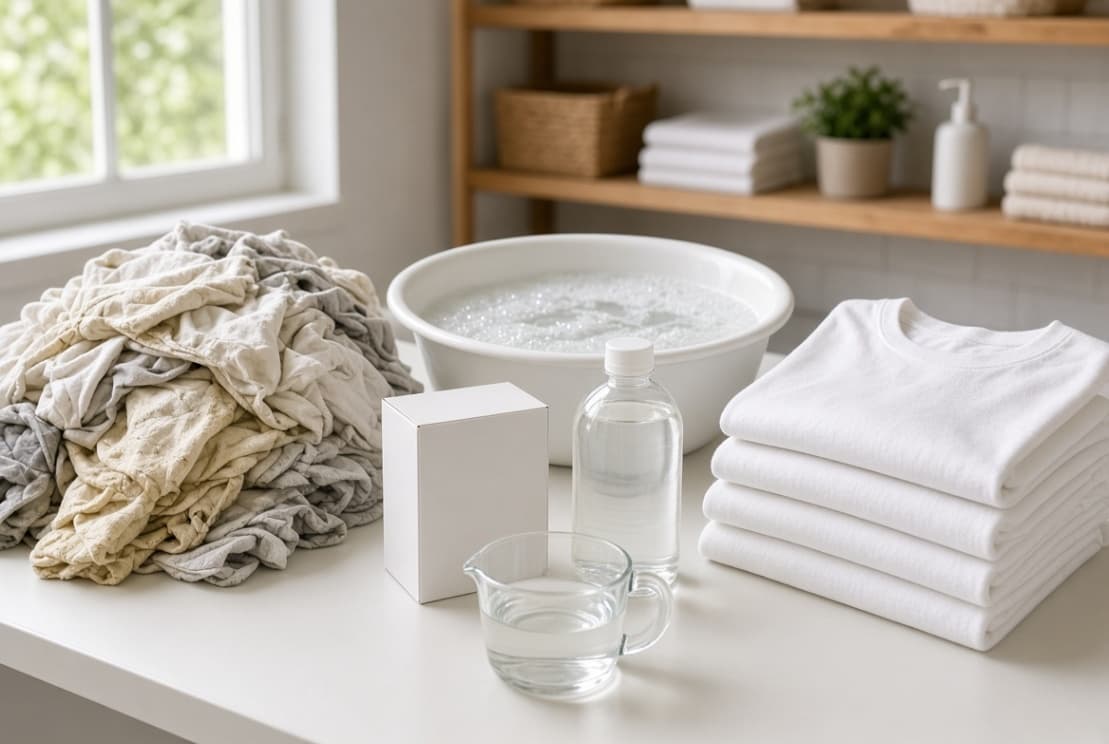
Yellowed white clothes can look old even when the fabric is still in good condition. The good news is that many white garments can look brighter again with the right washing method, gentle soaking, and proper drying. This guide shows how I would approach how to whiten yellowed clothes in a practical way, especially for cotton, T-shirts, school shirts, bedsheets, and everyday wear.
White fabric usually yellows for a few common reasons: sweat, body oils, detergent residue, hard water minerals, storage in heat, and repeated exposure to sunlight or heat drying. Cotton and polyester blends are especially prone to that dull yellow cast because dirt and oils cling to the fibres over time.
In Nigeria, this often happens faster when clothes are washed in water with high mineral content, dried under strong sun for long periods, or stored in humid spaces. Yellowing can also build up when too much detergent is used and the rinse cycle does not fully remove it.
Before trying any whitening method, I look at the care label and fabric type. Delicate fabrics, embroidery, lace, silk, and wool need a different approach from sturdy cotton shirts or bedsheets.
Here is a simple fabric guide:
| Fabric type | Whitening approach | Notes |
|---|---|---|
| Cotton | Soak, oxygen bleach, baking soda paste | Handles repeated washing well |
| Polyester blends | Mild soak and gentle washing | Avoid very hot water |
| Linen | Gentle soaking | Strong scrubbing can damage fibres |
| Lace or embroidery | Spot treatment only | Test first on a hidden area |
| Wool or silk | Professional cleaning or very mild hand wash | Avoid harsh bleach |
For many yellowed white clothes, a soak is the most effective starting point. Use warm water, not boiling water, because very high heat can lock in stains on some fabrics.
A practical method is:
Have something to give away or sell?
Post your first listing — it only takes a couple of minutes.
This works well for clothes that are yellowed from age, sweat, or storage rather than heavy dye transfer.
Baking soda can help lift surface grime and reduce odour. It is useful for white T-shirts, collars, and underarm areas where sweat stains collect.
A simple paste can be made with baking soda and a little water. Apply it to yellowed areas, leave it for a short time, then wash. For general brightening, some people add a small amount of baking soda to the wash cycle to help freshen clothes.
Underarm yellowing often comes from a mix of sweat, deodorant, and body oil. That area usually needs pre-treatment rather than a full soak alone.
A practical sequence is:
White vinegar can help with fabric stiffness and residue from detergent or hard water. It is not a bleach, but it can make white fabric look cleaner after washing.
Add it during the rinse stage, not together with bleach. Mixing vinegar and chlorine bleach is unsafe and should be avoided. The key benefit here is residue removal, which can help clothes look less dull.
If clothes look yellowish because of soap build-up, a second wash with less detergent can help. Too much soap can stay trapped in fibres and leave white garments looking grey or yellow over time.
This matters for school uniforms, polo shirts, and bedsheets because they are often washed frequently. Using the right amount of detergent and rinsing properly can prevent future yellowing.
Some whitening combinations do more harm than good. I avoid mixing random household cleaners because fabrics can weaken, colours can fade, and fumes can become dangerous.
| Do not mix | Why it is a problem |
|---|---|
| Bleach and vinegar | Can release harmful fumes |
| Bleach and ammonia | Can create dangerous gas |
| Strong bleach and delicate fabrics | Can weaken or destroy fibres |
| Hot water and protein stains | Can set sweat or body-fluid stains |
| Too much detergent and hard water | Leaves residue on fabric |
If a fabric is delicate, stained in several places, or very old, a gentler method is usually the safer first step.
This routine works well for everyday white clothes that have turned yellow over time:
If the item is still yellowed after the first wash, repeat the process instead of using stronger chemicals immediately. Repeated gentle treatment is often more effective than one harsh wash.
For practical budgeting, these are typical cost ranges you may see in Nigerian markets and supermarkets:
| Item | Common use | Approximate range |
|---|---|---|
| Laundry detergent | General washing | ₦1,500–₦8,000+ |
| Oxygen bleach | Soaking whites | ₦3,000–₦15,000+ |
| Baking soda | Spot treatment and deodorising | ₦1,000–₦5,000+ |
| White vinegar | Rinse support and residue removal | ₦1,500–₦6,000+ |
| Stain remover | Underarm and collar stains | ₦2,000–₦10,000+ |
These ranges vary by brand, pack size, and location, so they are better used as a planning guide than a fixed price list.
A lot of yellowing happens after washing, not during washing. White clothes left damp in a closed room can develop odour and discoloration, especially in humid areas.
To reduce this:
Sunlight can help brighten whites, but too much harsh exposure can weaken fabric over time. Airflow matters just as much as sun.
Some clothes yellow because the fibres have aged, the fabric is weak, or the stain has set too deeply. In those cases, cleaning may improve the look but not restore a brand-new white.
Signs that whitening may be limited include:
For sentimental or valuable items, a textile cleaner may have more advanced options. For everyday items, the aim is often to make them fresh and wearable again rather than perfect.
A white cotton school shirt with yellowed underarms can often improve with a pre-treatment plus soak approach. I would start by rubbing in detergent on the underarm areas, then soak the shirt in warm water with an oxygen-based product, wash it again, and dry it fully in fresh air.
A white bedsheet that looks dull from detergent residue may respond better to a rewash with less soap and a vinegar rinse. A lace top, by contrast, needs a gentler method because aggressive scrubbing can damage the threads quickly.
Yellowed whites are common in thrifted fashion, especially when pieces have been stored for a long time or washed in a rough cycle. This is why good garment care matters in circular fashion: the longer a piece lasts, the more value it gives.
For secondhand buyers, checking collars, underarms, cuffs, and seams before purchase can save time later. For sellers, clean presentation increases trust because buyers can more easily see the true condition of the item.
If you list preloved white clothes on Threddo, a simple note about fabric type, stains, and care history helps other users judge the item fairly and safely. You can also point buyers to your platform’s safety guidance and listing details for clearer communication.
Use this checklist before and after whitening:
Whitening yellowed white clothes usually works best with a gentle, repeated routine rather than harsh chemicals. Warm-water soaking, correct detergent use, stain pre-treatment, and proper drying can restore a surprising amount of brightness to everyday garments. This article is for educational purposes only and does not constitute professional advice. Always follow safe trading practices and use your own judgement.