
T
Loading…
Loading…
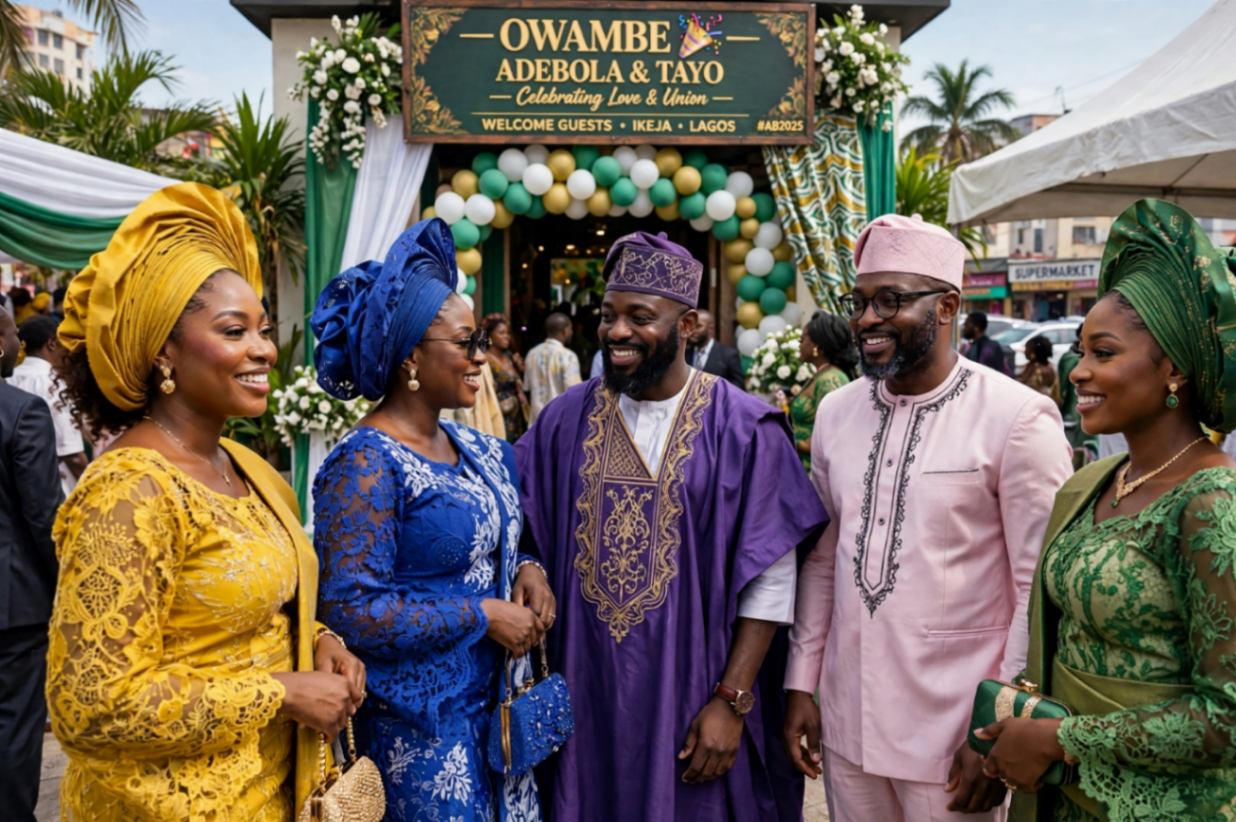
Knowing what to wear to an owambe often involves more than choosing a beautiful outfit. You may need to consider the dress code, whether you are wearing asoebi, the venue, the weather, how long you will stay, and how easily you can move, eat, dance, and take photographs.
An owambe is usually a lively Nigerian celebration such as a wedding, naming ceremony, birthday, burial ceremony, house opening, or anniversary. Guests often dress in coordinated fabrics, expressive colours, traditional silhouettes, statement accessories, and polished footwear.
You do not need a brand-new wardrobe for every invitation. A well-fitted secondhand dress, carefully altered agbada, vintage handbag, pre-owned lace blouse, or reusable gele can create a complete look while extending the life of clothing already in circulation. Research on secondhand clothing in Africa identifies Nigeria as one of the continent’s significant importing countries, while local thrift markets in Lagos provide access to garments at different price points.
The invitation usually provides the clearest clue about what to wear. Look for references to:
When asoebi is specified, guests may wear the fabric as a complete outfit, a blouse, skirt, wrapper, gown, kaftan, bubu, agbada, or accessory. If you are not part of the asoebi group, a coordinated colour or neutral outfit can help you look appropriately dressed without appearing to be part of the official uniform.
Ask the host, organiser, or person who invited you. A short message can clarify whether guests are expected to wear:
This small check can prevent an outfit mismatch, especially where the event includes both a formal ceremony and a large reception.
Women’s owambe outfits often include lace, sequins, brocade, Ankara, aso-oke, velvet, satin, chiffon, organza, or embellished net. The shape may be a fitted gown, peplum set, skirt and blouse, iro and buba, jumpsuit, kaftan, or flowing bubu.
10 Thrift Finds Under ₦2,000 You Need to See
How to Recreate a Celebrity Look With Thrift Pieces
Thrift Date Night Outfits That Don’t Look Cheap
Thrift Outfit Ideas for Campus: Stylish School Looks on a Budget
Thrifted Street Style: Outfits Spotted on Lagos Streets
15 Thrifted Outfit Inspo Looks for This Week
Have something to give away or sell?
Post your first listing — it only takes a couple of minutes. Or browse listings near you.
The most practical choice depends on your comfort and the event setting.
A floor-length or midi gown works well for weddings, evening receptions, and formal birthday celebrations. A pre-owned gown can be altered at the waist, shoulders, hem, or sleeves for a closer fit.
Details to inspect before buying or wearing a secondhand gown include:
Iro and buba can create a traditional and polished appearance. The blouse may be plain, embroidered, peplum-shaped, or decorated with lace and beads. The wrapper can be tied securely and adjusted for walking or dancing.
A shorter blouse or lighter fabric may provide more comfort in warm weather. For a formal appearance, pair the outfit with a structured purse, low-to-medium heel, gele, and jewellery that does not compete with the neckline.
A bubu offers ease of movement and works for guests who prefer less restrictive clothing. It can be made from lace, Ankara, crepe, chiffon, brocade, or embellished fabric.
Because a bubu is often loose-fitting, the accessories help define the outfit. Consider:
Ankara is suitable for daytime celebrations, cultural ceremonies, birthdays, and less formal receptions. A two-piece set can also be worn separately after the event, which increases the garment’s practical use.
For example, an Ankara peplum top can later be worn with plain trousers, while the skirt can be paired with a simple blouse. This approach supports repeat wear rather than treating every owambe outfit as a single-use purchase.
Men’s owambe clothing commonly includes agbada, senator wear, kaftan, isi agu, traditional two-piece outfits, trousers with a native shirt, or a well-tailored suit.
Agbada creates a formal traditional look for weddings, chieftaincy events, naming ceremonies, and major celebrations. The outfit generally includes an outer flowing robe, an inner top, and trousers.
When checking a secondhand agbada, inspect:
A lighter agbada may feel more comfortable for daytime events in hot or humid conditions.
Senator wear offers a structured alternative to agbada. It may include a long or short native shirt with matching trousers. Subtle embroidery can look formal without the extra volume of a flowing robe.
A well-fitted senator outfit generally depends on clean shoulder lines, appropriate sleeve length, trousers that sit comfortably, and a shirt length suited to the wearer’s proportions.
A suit can fit a formal owambe, especially for an evening reception or a venue with air conditioning. A navy, black, grey, cream, or deep brown suit can be reused for work, graduation ceremonies, church events, and other celebrations.
For outdoor events, consider the fabric weight. Heavy wool-like materials may feel uncomfortable in humid weather, while cotton blends or lightweight suiting can provide easier movement.
| Event setting | Suitable outfit direction | Practical detail |
|---|---|---|
| Church wedding | Lace gown, iro and buba, modest dress, senator wear, or suit | Consider sleeve length, neckline, and ease of sitting |
| Outdoor wedding | Ankara, light lace, kaftan, bubu, or breathable native wear | Select footwear that works on grass or uneven ground |
| Evening reception | Embellished gown, velvet accent, formal agbada, or suit | A small clutch and polished shoes complete the look |
| Naming ceremony | Neat traditional wear, simple gown, native two-piece, or smart casual | Comfortable clothing helps when moving between guests |
| Birthday celebration | Ankara set, jumpsuit, kaftan, gown, or blazer combination | Choose the level of formality from the invitation |
| Burial ceremony | Dark or specified colours, modest traditional wear, or formal clothing | Follow the family’s colour and cultural instructions |
| Beach or garden event | Flowing dress, relaxed kaftan, linen blend, or smart native wear | Avoid very narrow heels on sand or grass |
Owambe footwear needs to balance appearance and movement. Guests may stand for long periods, walk across parking areas, dance, or move between venues.
Options include:
Thin stilettos can look elegant but may be difficult on grass, loose sand, gravel, or uneven paving. A block heel or wedge often provides more stability.
Suitable options may include:
Check the soles, stitching, inner lining, and heel condition when buying pre-owned footwear. A shoe that looks attractive but has a worn sole can become uncomfortable during a long reception.
Accessories can coordinate an outfit without requiring a completely new garment.
| Accessory | Works well with | Buying or styling check |
|---|---|---|
| Gele | Lace, iro and buba, blouse and wrapper | Check fabric firmness and comfort around the head |
| Aso-oke headtie | Traditional outfits and formal gowns | Match or deliberately contrast the outfit |
| Statement earrings | Simple gowns, bubus, kaftans | Use fewer competing accessories |
| Beaded necklace | Open necklines and plain fabrics | Check clasp strength and missing beads |
| Clutch bag | Formal gowns and evening outfits | Confirm phone, keys, and small essentials fit |
| Structured handbag | Daytime traditional wear | Choose a shape that complements the silhouette |
| Brooch | Agbada, kaftan, blazer, or buba | Secure it carefully to avoid fabric damage |
| Pocket square | Suit, senator wear, or blazer | Coordinate with the outfit rather than matching every detail |
A useful styling principle is to let one item lead. For example, a heavily embellished gown may need simple earrings and a plain clutch, while a plain bubu can accommodate a more noticeable necklace or bag.
Prices vary by fabric, tailoring, brand, condition, location, and embellishment. The figures below are planning ranges rather than fixed market prices.
| Item | Possible secondhand or budget range | Higher-cost factors |
|---|---|---|
| Pre-owned dress | ₦8,000–₦40,000 | Designer label, lace, beadwork, condition |
| Ankara two-piece | ₦15,000–₦60,000 | Tailoring, fabric quality, embroidery |
| Pre-owned lace gown | ₦20,000–₦100,000 | Heavy embellishment, structure, brand |
| Native two-piece for men | ₦15,000–₦70,000 | Embroidery, fabric, tailoring |
| Pre-owned agbada | ₦30,000–₦150,000 | Aso-oke, embroidery, size, condition |
| Dress shoes or sandals | ₦8,000–₦50,000 | Leather, brand, sole condition |
| Clutch or small handbag | ₦5,000–₦35,000 | Brand, hardware, material |
| Gele or headtie | ₦5,000–₦40,000 | Aso-oke, pre-tied construction, detail |
Before paying for a secondhand outfit, check the total cost of cleaning, alterations, transport, and accessories. An item priced at ₦15,000 may require additional tailoring or repairs, while a more expensive garment in excellent condition may need fewer adjustments.
Use this checklist when buying or preparing a pre-owned outfit:
A lightweight Ankara peplum set, low block heels, small structured bag, simple earrings, and a neatly tied headwrap can work for a daytime wedding. The shorter heel is practical for movement, while the two-piece can be reused separately.
A pre-owned embellished gown, plain clutch, minimal earrings, and comfortable pumps can create a formal look. Check the gown under indoor lighting because some marks or missing embellishments may be less visible outdoors.
A breathable senator outfit, polished loafers, a simple wristwatch, and a pocket square can provide a formal appearance without the volume of agbada. The shirt and trousers can later be styled separately.
A neutral jumpsuit, plain kaftan, cream dress, navy suit, or coordinated Ankara accessory can show respect for the event without copying the official uniform fabric.
Nigerian celebrations often combine several settings: a religious ceremony, a formal reception, outdoor photographs, food service, dancing, and greetings with older relatives. An outfit that looks good in photographs also needs to remain manageable during these transitions.
For a church or mosque ceremony, consider the expectations of the venue. Higher necklines, covered shoulders, longer hems, or a coordinating shawl may be appropriate depending on the location and event instructions.
Weather also matters. Lagos humidity, harmattan dust, heat in northern cities, and sudden rain can affect fabric and footwear choices. A small scarf, foldable flats, or a light cover-up can be useful additions when they fit the event’s dress code.
When buying a secondhand owambe outfit through a person-to-person listing, request clear photographs of the front, back, label, measurements, flaws, and close-up details. Keep important conversations and agreed prices in writing.
Practical safety habits include:
These practices are general fraud-prevention measures, not a substitute for professional legal advice. Nigerian consumer-protection rules emphasise fair dealing and accurate information in consumer transactions, so descriptions of condition, size, and defects should be clear rather than misleading.
If you are looking for a pre-owned gown, native outfit, handbag, shoes, or accessories, Threddo can help you browse Nigerian secondhand listings and contact sellers directly through WhatsApp. Review the platform’s Safety Guide before arranging a transaction, and explore available listings when planning your outfit.
What to wear to an owambe depends on the invitation, venue, weather, ceremony type, personal comfort, and whether asoebi is involved. A gown, iro and buba, Ankara set, bubu, agbada, senator outfit, suit, or carefully coordinated secondhand look can all work when the fit, condition, accessories, and footwear suit the occasion.
A practical owambe outfit is polished enough for photographs, comfortable enough for movement, and versatile enough to be worn again. This article is for educational purposes only and does not constitute professional advice. Always follow safe trading practices and use your own judgement.