T
Loading…
Loading…
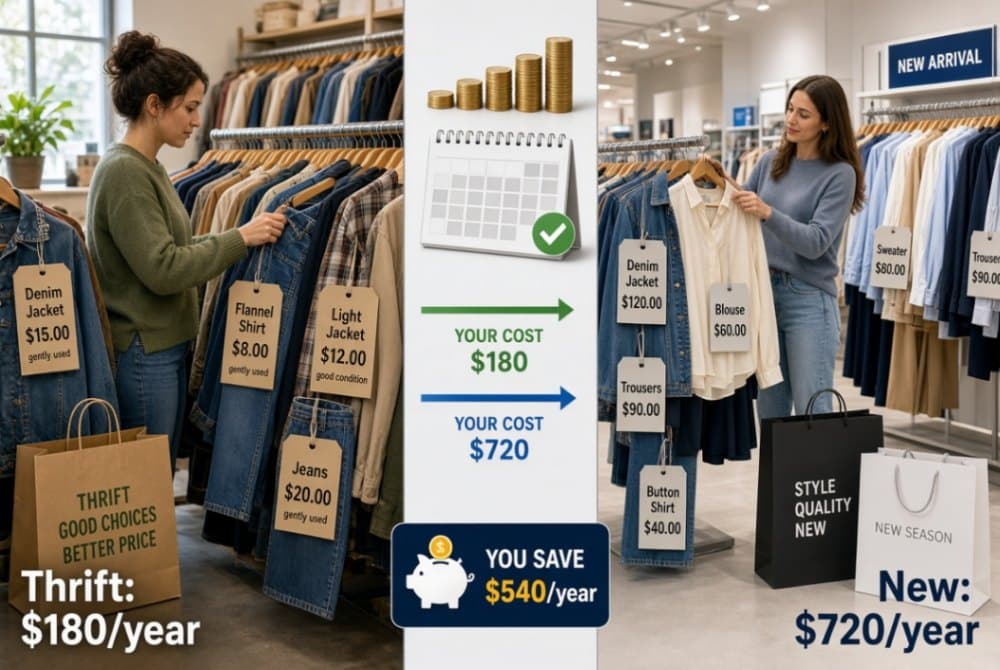
If you're trying to stretch your wardrobe budget in today's economy, choosing between thrift (okrika) and new clothes can make a big difference over 12 months. In this guide, I break down real price ranges in ₦, how long items typically last, hidden costs like washing and repairs, and what a smart one-year wardrobe plan looks like for students, young professionals, and families in Nigeria.
Last Updated: September 2026
With inflation and rising transport costs, many Nigerians are rethinking how they shop for clothes. Reports show that high living costs are pushing more people toward secondhand options because branded or good-quality thrift pieces often cost far less than new boutique items while lasting longer. At the same time, fast fashion from online stores and roadside boutiques has become cheaper upfront but often wears out faster, leading to more frequent replacements.
Understanding the true one-year cost—not just the sticker price—helps you decide what works for your lifestyle, location (like Ibadan, Lagos, or Abuja), and wardrobe goals.
Prices vary by city, seller, and quality grade, but here are realistic ranges you'll see across markets, WhatsApp sellers, and online stores.
| Item Type | Grade A (Clean, Near-New) | Grade B (Good, Minor Wear) | Bale/Roadside Pick |
|---|---|---|---|
| Tops (blouses, tees, shirts) | ₦2,500–₦5,000 | ₦800–₦2,500 | ₦500–₦1,500 |
| Jeans/Trousers | ₦4,000–₦10,000 | ₦2,000–₦5,000 | ₦1,000–₦2,500 |
| Gowns/Dresses | ₦3,500–₦8,000 | ₦1,500–₦4,000 | ₦800–₦2,000 |
| Jackets/Blazers | ₦5,000–₦12,000 | ₦2,500–₦6,000 | ₦1,500–₦3,500 |
| Shoes (sneakers, flats) | ₦3,000–₦8,000 | ₦1,500–₦4,000 | ₦800–₦2,000 |
| Bags & Accessories | ₦2,000–₦7,000 | ₦800–₦2,500 | ₦500–₦1,500 |
Have something to give away or sell?
Post your first listing — it only takes a couple of minutes.
| Item Type | Online (Jumia/Konga) | Roadside Boutique | Mid-Range Local Tailor (Ankara/Adire) |
|---|---|---|---|
| Tops (blouses, tees, shirts) | ₦3,500–₦10,000 | ₦5,000–₦12,000 | ₦6,000–₦15,000 (made-to-measure) |
| Jeans/Trousers | ₦8,000–₦18,000 | ₦10,000–₦20,000 | ₦12,000–₦25,000 |
| Gowns/Dresses | ₦7,000–₦20,000 | ₦10,000–₦30,000 | ₦15,000–₦40,000 |
| Jackets/Blazers | ₦12,000–₦35,000 | ₦15,000–₦45,000 | ₦20,000–₦60,000 |
| Shoes (sneakers, flats) | ₦8,000–₦25,000 | ₦10,000–₦30,000 | N/A (custom sandals ₦8,000–₦20,000) |
| Bags & Accessories | ₦5,000–₦20,000 | ₦8,000–₦35,000 | ₦10,000–₦40,000 |
Key takeaway: For everyday wear, Grade A/B thrift often costs 40–70% less than comparable new items, while bale picks can be 80–90% cheaper but require more time and careful selection.
Price is only half the story. How long an item lasts determines your true cost per wear.
Many Grade A thrift pieces come from higher-quality brands (UK/US imports) with stronger stitching and fabrics that survive multiple washes. Sellers note that first-grade jeans and vintage gowns can resell for ₦5,000–₦10,000 after months of use, showing they retain value and structure. In markets like Ibadan and Lagos, buyers report getting 10+ good items for around ₦1,000 each from bale sales, with some pieces lasting 1–2 years with proper care.
Typical lifespan with regular wear (2–3 times/week):
Budget-friendly new clothes from online stores and roadside boutiques often use thinner fabrics and simpler construction to hit low price points. While they look fresh at first, many start fading, pilling, or losing shape after 3–6 months of regular wear. This leads to more frequent replacements, especially for trend-driven items.
Typical lifespan with regular wear (2–3 times/week):
Real-world example: A ₦9,000 new top worn 20 times before fading costs ₦450 per wear. A ₦3,500 Grade A thrift top worn 60 times costs ₦58 per wear—almost 8x better value.
Both thrift and new clothes come with extra costs beyond the sticker price. Here's what to factor into your one-year budget.
| Cost Type | Estimated Annual Cost (₦) | Notes |
|---|---|---|
| Deep washing/disinfecting (first wash) | ₦500–₦1,500 per item | Dettol/antiseptic soak, extra detergent |
| Minor repairs (buttons, hems) | ₦200–₦1,000 per item | Local tailor or DIY |
| Transport to markets/sellers | ₦1,000–₦5,000 | Depends on location and frequency |
| Time spent picking/selecting | 2–6 hours per shopping trip | Bale markets require patience |
Safety tip: Under Nigeria's Federal Competition and Consumer Protection Act (FCCPA), sellers must clearly label secondhand goods as used, and you have the right to accurate descriptions and sales records. Always inspect items carefully and ask for receipts where possible.
| Cost Type | Estimated Annual Cost (₦) | Notes |
|---|---|---|
| Dry cleaning (for some items) | ₦1,000–₦5,000 per item | Blazers, delicate dresses |
| Replacements due to wear | ₦5,000–₦20,000+ | More frequent for fast fashion |
| Delivery fees (online orders) | ₦500–₦2,000 per order | Jumia/Konga shipping |
| Alterations (tailoring adjustments) | ₦1,000–₦5,000 | Hemming, taking in/out |
Consumer right reminder: Businesses must display prices clearly in Nigerian currency, and you shouldn't be charged more than the displayed price. Keep receipts for any returns or complaints.
To make this practical, here are three common wardrobe plans with total estimated costs for 12 months.
Goal: 12–15 versatile pieces (tops, bottoms, 1–2 dresses/gowns, 1 pair of shoes, 1 bag)
| Approach | Items & Prices | Total Estimated Cost (₦) |
|---|---|---|
| All Thrift (Grade A/B mix) | 6 tops @ ₦2,000 avg = ₦12,000<br>4 bottoms @ ₦3,500 avg = ₦14,000<br>2 dresses @ ₦4,000 avg = ₦8,000<br>1 shoes @ ₦4,000<br>1 bag @ ₦3,000<br>+ Washing/repairs ₦3,000 | ₦44,000 |
| All New (Fast Fashion) | 6 tops @ ₦6,000 avg = ₦36,000<br>4 bottoms @ ₦12,000 avg = ₦48,000<br>2 dresses @ ₦12,000 avg = ₦24,000<br>1 shoes @ ₦12,000<br>1 bag @ ₦8,000<br>+ Alterations/delivery ₦5,000 | ₦133,000 |
Savings with thrift: ~₦89,000 (67% less) over one year.
Goal: 15–20 pieces including office wear, casuals, 2–3 statement pieces, 2 pairs of shoes
| Approach | Items & Prices | Total Estimated Cost (₦) |
|---|---|---|
| 70% Thrift + 30% New | 8 thrift tops @ ₦3,000 = ₦24,000<br>5 thrift bottoms @ ₦5,000 = ₦25,000<br>2 thrift blazers @ ₦7,000 = ₦14,000<br>3 new office shirts @ ₦9,000 = ₦27,000<br>2 new trousers @ ₦15,000 = ₦30,000<br>2 shoes (1 thrift ₦5k + 1 new ₦15k) = ₦20,000<br>1 bag (thrift) @ ₦5,000<br>+ Washing/repairs ₦5,000 | ₦150,000 |
| All New (Mid-Range) | 8 tops @ ₦10,000 = ₦80,000<br>5 bottoms @ ₦18,000 = ₦90,000<br>2 blazers @ ₦25,000 = ₦50,000<br>3 office shirts @ ₦12,000 = ₦36,000<br>2 trousers @ ₦20,000 = ₦40,000<br>2 shoes @ ₦20,000 = ₦40,000<br>1 bag @ ₦15,000<br>+ Alterations/delivery ₦10,000 | ₦361,000 |
Savings with smart mix: ~₦211,000 (58% less) over one year.
Goal: 40–50 pieces total (mix of adult and kids' clothing, shoes, bags)
| Approach | Estimated Annual Cost (₦) | Notes |
|---|---|---|
| Mostly Thrift (Grade A/B + some bale) | ₦180,000–₦250,000 | Kids outgrow clothes fast; thrift reduces replacement frequency |
| Mostly New (Fast Fashion + kids' stores) | ₦500,000–₦800,000+ | Higher turnover due to growth and wear |
Savings with thrift: ₦300,000–₦550,000+ per year for a typical family.
Whether you're shopping thrift or new, use this quick checklist to avoid regrets.
Beyond personal savings, choosing thrift supports broader sustainability goals. The global fashion industry accounts for 8–10% of carbon emissions and significant water pollution, with synthetic fabrics contributing to microplastic waste. In Africa, fast fashion waste from overproduction and discarded imports ends up in landfills and waterways, creating health and environmental risks. By extending the life of existing clothes through thrifting, you reduce demand for new production and help keep textiles out of waste streams. Lagos alone generates over 13,000 metric tonnes of waste daily, with textiles making up a notable portion.
Thrift isn't always the best fit. Here are situations where buying new may be preferable:
Smart buying tip: For new items, focus on natural fabrics (cotton, linen) or high-quality blends, and check reviews or seller reputation to avoid low-quality imports.
Here's a simple framework to maximize value regardless of your budget:
Threddo is a free, WhatsApp-first marketplace where Nigerians can list or find secondhand clothes, shoes, bags, and accessories with no fees—useful for both buying smart and selling what you no longer wear.
For most everyday Nigerians, thrift (especially Grade A/B) offers significantly lower one-year costs than buying all-new fast fashion, with comparable or better durability when chosen carefully. A student can save ₦80,000+, a young professional ₦200,000+, and a family ₦300,000+ annually by prioritizing thrift for high-wear items while mixing in new pieces where it makes sense.
The key is informed shopping: inspect quality, understand hidden costs, and track how often you actually wear each item. With rising living costs and growing awareness of fashion's environmental impact, smart thrifting isn't just budget-friendly—it's a practical step toward more sustainable consumption in Nigeria.
This article is for educational purposes only and does not constitute professional advice. Always follow safe trading practices and use your own judgement.