
T
Loading…
Loading…
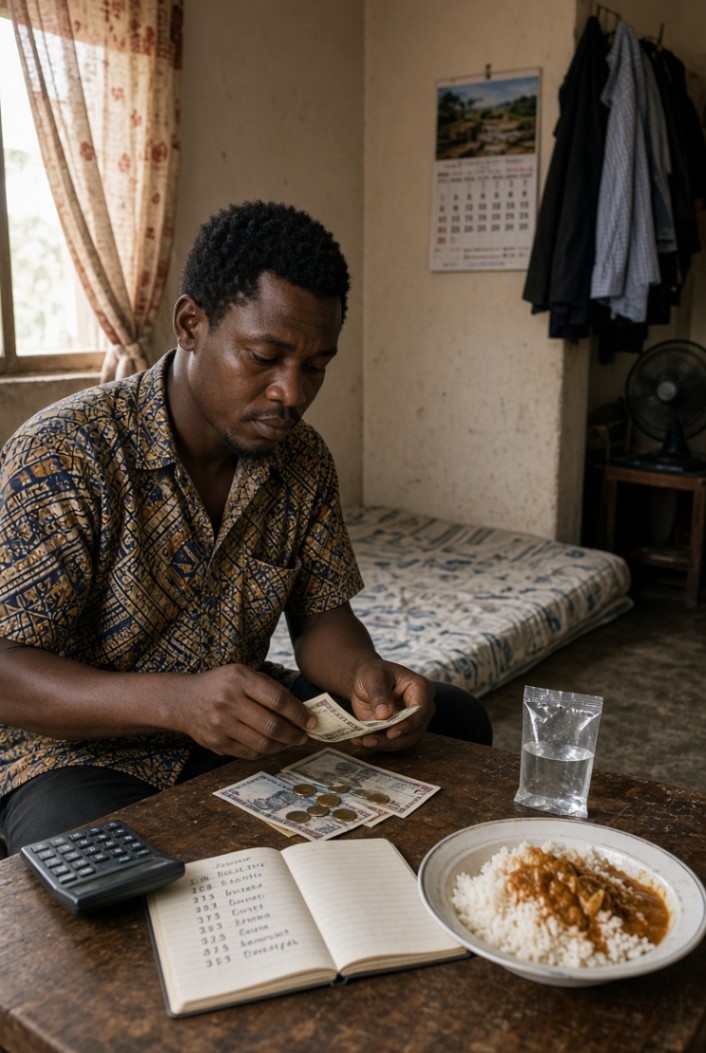
Surviving on minimum wage in Nigeria requires careful planning around food, transport, housing, energy, clothing, communication, and emergencies. A useful approach is to track essential costs, reduce avoidable spending, use secondhand options where practical, and protect every naira from scams and impulse purchases.
Nigeria’s minimum wage discussion became more important after the Federal Ministry of Labour announced a new national minimum wage taking effect from 1 April 2024. However, the amount available for daily living can differ significantly after deductions, location, household size, rent, transport costs, and whether other people depend on the income.
At the same time, prices continue to change. The National Bureau of Statistics reported headline inflation of 15.39% and food inflation of 19.57% in August 2026, showing why a budget that worked several months ago may no longer fit current prices.
A survival budget begins with the amount that actually reaches your account or hand, not only the announced salary. Write down your net monthly income and separate regular costs from irregular expenses.
Record:
Do not treat uncertain income, expected gifts, or occasional transfers as guaranteed money. A simple written record makes it easier to identify which expenses are fixed and which can change.
| Spending group | Examples | Planning question |
|---|---|---|
| Essentials | Food, rent, transport, electricity, water, medication prescribed by a professional | What keeps the household functioning? |
| Work and school | Data, work clothes, school materials, lunch, transport | What supports income or education? |
| Flexible needs | Clothing, personal care, entertainment, gifts | Can timing or quantity change? |
| Irregular costs |
How Far Can ₦5,000 Really Go at a Thrift Market?
10 Thrift Finds Under ₦2,000 You Need to See
How to Recreate a Celebrity Look With Thrift Pieces
Thrift Date Night Outfits That Don’t Look Cheap
Thrift Outfit Ideas for Campus: Stylish School Looks on a Budget
Thrifted Street Style: Outfits Spotted on Lagos Streets
Have something to give away or sell?
Post your first listing — it only takes a couple of minutes. Or browse listings near you.
| Repairs, ceremonies, emergencies, family obligations |
| What small amount can be set aside regularly? |
These categories are not a universal formula. They are a way to see trade-offs before money disappears through many small payments.
Monthly budgeting can feel abstract, particularly when income arrives once a month but expenses occur every day. Convert part of the available money into a weekly or daily limit after setting aside major bills.
For example, if someone receives ₦70,000 after deductions and has ₦20,000 in fixed monthly obligations, ₦50,000 remains for food, transport, communication, household needs, and irregular costs. Dividing that balance into four planning weeks gives approximately ₦12,500 per week, although the actual calendar may contain more than four weeks.
This is an example of a planning method, not a recommended personal allocation.
| Item | Planned amount | Actual amount |
|---|---|---|
| Net income | ₦70,000 | ₦_____ |
| Rent contribution or housing | ₦_____ | ₦_____ |
| Food | ₦_____ | ₦_____ |
| Transport | ₦_____ | ₦_____ |
| Electricity and water | ₦_____ | ₦_____ |
| Data and calls | ₦_____ | ₦_____ |
| Household and personal care | ₦_____ | ₦_____ |
| Clothing and footwear | ₦_____ | ₦_____ |
| Emergency or irregular costs | ₦_____ | ₦_____ |
| Balance | ₦_____ | ₦_____ |
Review the worksheet weekly. If transport rises because of a new route or food prices increase at a local market, record the change instead of assuming the original budget is still accurate.
Food is often the largest recurring household expense. NBS consumption data has previously shown food taking more than half of total household expenditure nationally, which explains why small changes in food purchasing can affect the rest of the budget.
A lower price is not automatically a saving if an item spoils, remains unused, or requires additional transport. The useful comparison is the total cost of buying, carrying, storing, and consuming the item.
Before buying, ask:
Transport can consume a large share of income, especially for people travelling across Lagos or between distant neighbourhoods. Track transport for seven days, including short trips, surge fares, errands, and return journeys. The total can reveal costs that are easy to underestimate.
Data spending also benefits from a simple limit. Review automatic subscriptions, video streaming, social media use, and background app consumption. Separating work or school data from entertainment data can make the available balance last longer.
Clothing is a real need for work, school, worship, ceremonies, interviews, and changing weather. It can also become an unplanned expense when a low price encourages several purchases.
The Nigeria General Household Survey 2023/2024 identified tailoring charges, adult tailored clothes, and shoes among commonly reported household expenditure categories. The same report recorded average spending of ₦21,271.40 for ready-made adult clothing among households reporting that category and ₦20,363.50 for adult tailored clothing.
These figures are survey averages, not a personal budget or current shop price. They demonstrate why clothing purchases benefit from planning.
Instead of judging a garment only by its purchase price, estimate:
$ \text{Cost per wear} = \frac{\text{Purchase price} + \text{repair or alteration cost}}{\text{expected number of wears}} $
For example:
| Item | Purchase price | Repair cost | Expected wears | Approximate cost per wear |
|---|---|---|---|---|
| Secondhand shirt | ₦4,000 | ₦1,000 | 20 | ₦250 |
| New shirt | ₦12,000 | ₦0 | 20 | ₦600 |
| Secondhand shoe | ₦8,000 | ₦2,000 | 40 | ₦250 |
This example does not mean every secondhand item has better value. Condition, fit, authenticity, cleaning, repair, and durability all affect the result.
Check:
Secondhand clothing can provide access to lower-cost garments and a wider range of styles. A 2025 Nigerian study reported that affordability, accessibility, and variety were major reasons respondents patronised secondhand apparel.
Extending the life of what you already own can delay replacement spending.
A ₦1,000 repair can sometimes prevent a much larger replacement expense, but the decision depends on the item’s condition and expected future use. Compare repair cost with the likely additional wears.
The Federal Competition and Consumer Protection Commission states that consumers have rights relating to understandable product information, price disclosure, examination of goods, and protection from misleading representations under Part XV of the Federal Competition and Consumer Protection Act. For peer-to-peer trades, practical safety also matters because the transaction may be between individuals rather than a conventional retail business.
Threddo’s Safety Guide similarly advises public meetings, inspection before payment, avoiding upfront transfers to strangers, and reporting suspicious listings.
A budget can fail even when daily spending is controlled because expenses such as school requirements, ceremonies, repairs, medical bills, rent, or family support arrive at different times.
Create an irregular-cost list with three columns:
| Expense | Likely timing | Preparation method |
|---|---|---|
| Phone or appliance repair | When needed | Keep a small repair reserve |
| Work or school clothing | Before a new term or job | Plan purchases early |
| Rent contribution | Agreed date | Divide the expected amount across months |
| Ceremonies and gifts | Seasonal or occasional | Set a personal limit before attending |
| Transport disruption | Unpredictable | Retain a small travel buffer |
A reserve does not have to begin with a large amount. Recording the target and contributing consistently can make an irregular payment less disruptive, provided essential expenses remain covered.
A tight budget is especially vulnerable to one fraudulent transfer because replacing the money may be difficult. Common warning signs include urgent pressure, unusually low prices, requests for payment before inspection, fake payment screenshots, and requests for secret codes.
The FCCPC advises consumers to seek clear information and notes that businesses should disclose material facts and applicable prices. In a peer-to-peer marketplace, keep the same principle in practice: ask questions, preserve written details, and do not proceed when the item or identity cannot be reasonably verified.
If the answer to the last question is yes, extra caution is appropriate. A bargain is not a saving when the item never arrives.
If you are looking for affordable clothes, shoes, bags, hair, jewellery, or accessories, Threddo.com.ng provides a free WhatsApp-first marketplace where buyers and sellers connect directly. Browse relevant listings, then review the Safety Guide before arranging inspection, collection, or payment.
The platform does not use in-app payments, so the buyer and seller need to agree on a safe handover and verify the transaction independently. The same public-meeting, inspection, privacy, and no-upfront-payment principles apply.
This process does not create extra income, but it can make the available income more visible and reduce avoidable leakage.
How to survive on minimum wage in Nigeria depends on practical control of recurring costs rather than one dramatic saving tactic. Track net income, plan food and transport weekly, delay unplanned clothing purchases, repair and reuse items, consider safe secondhand options, and protect every transaction from fraud.
The approach also needs flexibility because prices, household responsibilities, transport fares, and income deductions can change. Use current local prices when preparing your plan, and review it regularly instead of relying on an old estimate.
This article is for educational purposes only and does not constitute professional advice. Always follow safe trading practices and use your own judgement.
Last Updated: October 2026