
T
Loading…
Loading…
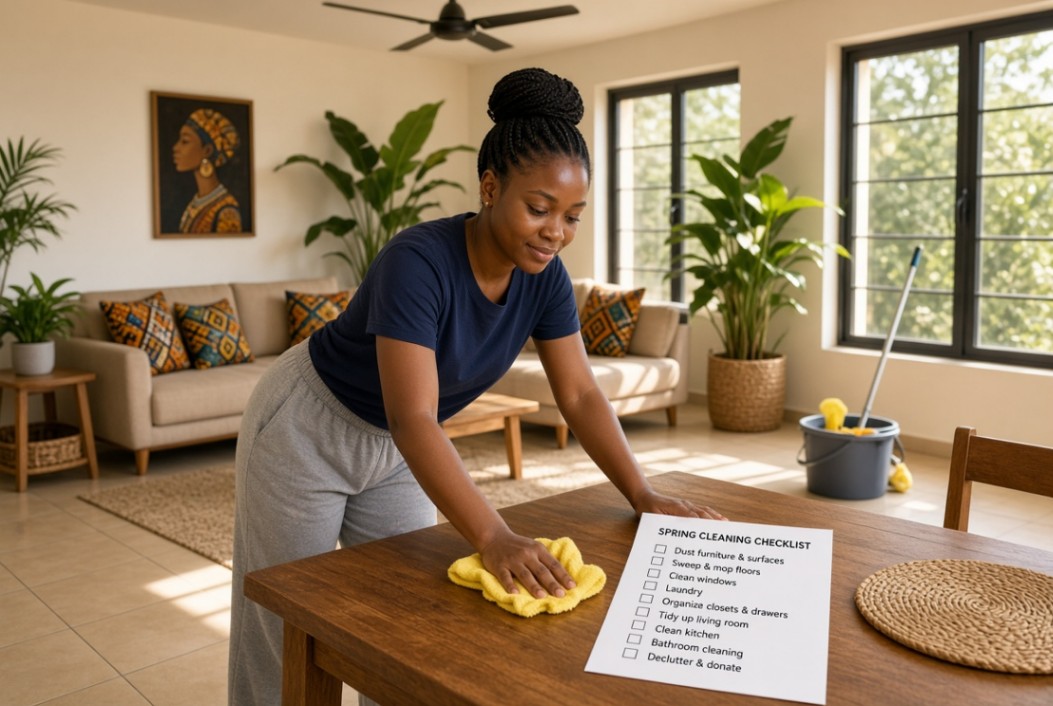
A spring cleaning checklist helps you refresh your home systematically instead of moving randomly from one task to another. In Nigeria, a useful deep-cleaning routine also needs to account for dust, humidity, insects, mould risk, rainy-season dampness, generator areas, water storage, and wardrobes filled with clothing, shoes and accessories. You do not need to clean the entire house in one day. A room-by-room plan makes it easier to identify what to clean, repair, donate, reuse, sell or dispose of responsibly. It can also prevent wearable items from becoming unnecessary waste. ## What Spring Cleaning Means in Nigeria “Spring cleaning” is commonly used to describe a thorough seasonal home refresh. Although Nigeria does not experience the same four-season pattern as countries in Europe or North America, the idea remains useful before or during periods when dust, heat, humidity or rainfall affect the home. For many Nigerian households, a cleaning reset may include: - Removing dust from ceiling fans, window blinds and high shelves. - Checking clothes and shoes for dampness, stains, mould or insect damage. - Washing curtains, bedding and removable upholstery. - Clearing expired food, cosmetics and household products. - Organising storage areas before the rainy season. - Repairing, donating, reusing or passing on items that are no longer needed. - Reviewing items stored under beds, in wardrobes, on balconies and in outdoor rooms. The goal is not simply to own fewer things. It is to make the items you keep easier to find, use and maintain. ## Nigerian Home Spring Cleaning Checklist Use this checklist as a flexible plan. Mark each task after completion or divide the work between family members. | Area | Cleaning tasks | Decluttering tasks | Maintenance checks | |---|---|---|---| | Living room | Dust fans, blinds, shelves, electronics and skirting boards | Remove unused décor, magazines and broken items | Check sockets, cables and leaking windows | | Bedrooms | Wash bedding, curtains and mattress covers | Review clothes, shoes, bags and accessories | Check for dampness, insects and damaged storage | | Kitchen | Clean cabinets, cooker, fridge and food containers | Remove expired food and unused utensils | Check gas connections, taps and drainage | | Bathroom | Scrub tiles, toilet, shower area and drains | Remove empty bottles and old toiletries | Look for leaks, blocked drains and mould | | Storage areas | Sweep under beds, inside wardrobes and behind appliances | Sort boxes, luggage and seasonal items | Check for moisture, pests and damaged containers | | Outdoor areas | Sweep balconies, corridors and entrances | Clear broken furniture, unused containers and litter | Inspect gutters, water flow and outdoor lighting | A cleaning session becomes more manageable when you prepare separate bags or boxes labelled keep, , , , and . ## Prepare Before Cleaning Before moving furniture or opening every storage box, gather basic supplies. The exact products depend on the material being cleaned, but preparation saves time and reduces unnecessary purchases. ### Useful supplies - Broom, dustpan and mop. - Microfibre cloths or clean old cotton T-shirts. - Buckets and labelled containers. - Mild soap or a suitable household cleaner. - Rubber gloves. - Scrub brush and old toothbrush. - Bin bags or reusable sorting bags. - Masking tape and marker. - Laundry basket. - Torch for dark cupboards and storage corners. - Small repair kit for buttons, loose hems and simple fastenings. Use products according to their labels. Avoid mixing cleaning chemicals, particularly bleach with ammonia-based or acidic products, because dangerous fumes can form. Keep cleaning products away from children, food and open flames. If electricity or water supply is limited, plan tasks around available water and daylight. Drying clothes, rugs and curtains completely is important in humid conditions because items stored while damp can develop unpleasant odours or mould. ## Room-by-Room Cleaning Plan ### Living Room Start from high surfaces and work downwards. Dust ceiling fans, light fittings, curtain rails, shelves and the tops of cabinets before cleaning the floor. This prevents loose dust from settling on an area you have already cleaned. Check commonly overlooked areas: - Behind the television and decoder. - Under sofas and centre tables. - Window tracks and mosquito-net frames. - Remote controls and frequently touched handles. - Corners behind curtains. - Extension boxes and visible cables. Do not spray liquid directly onto televisions, phones, speakers or electrical sockets. Apply a small amount to a cloth instead, with the device unplugged where appropriate. During decluttering, separate decorative items that are damaged, duplicated or no longer used. An intact vase, framed print, side table or cushion may be suitable for reuse or secondhand circulation rather than immediate disposal. ### Bedrooms and Wardrobes Wardrobes often contain the largest number of items that are no longer used. Remove contents in sections rather than emptying several wardrobes at once. For each garment, ask: 1. Does it fit comfortably? 2. Has it been worn within a reasonable period? 3. Is it clean and presentable? 4. Does it need a repair? 5. Is it suitable for donation, resale, exchange or reuse? 6. Is it too damaged for another person to use? Inspect clothes for: - Broken zips. - Missing buttons. - Loose seams. - Permanent stains. - Fading. - Mould spots. - Insect damage. - Strong odours caused by damp storage. Wash and dry wearable clothing before giving it away or listing it for another person. A recipient should not have to clean an item before determining whether it is usable. Fold clean clothes according to type, such as workwear, casual clothing, traditional wear, sportswear and sleepwear. Store frequently used pieces where they are easy to reach, and avoid overpacking wardrobes because compressed fabric is harder to inspect and ventilate. ### Shoes and Bags Clean shoes according to their material. Wipe leather or synthetic surfaces with an appropriate cloth, brush dirt from fabric shoes and allow footwear to dry naturally. Avoid sealing damp shoes inside plastic bags. For shoes, inspect: - Soles and heels. - Inner lining. - Odour. - Cracked material. - Loose straps. - Missing laces. - Size and fit information. For bags, check zips, handles, lining, pockets and stains. Photograph any visible flaw if the item is being offered to another person. Clear descriptions reduce misunderstandings in secondhand transactions. Small accessories such as belts, sunglasses, scarves, watches and jewellery can be stored in labelled pouches or shallow containers. Keep pieces separated where contact may cause scratches or tangling. ### Kitchen Remove items from one cabinet at a time. Check food labels, spices, canned goods, reusable containers and appliances. Discard food that is spoiled, leaking or unsafe according to its label and condition. Clean these areas carefully: - Cooker knobs and surrounding surfaces. - Fridge door seals. - Cabinet handles. - Sink and drain area. - The space behind small appliances. - Water dispenser surfaces. - Food-storage containers. Do not pour cooking oil, paint, chemicals or solid waste down drains. They can contribute to blockages and damage drainage systems. Place solid waste in appropriate bags and follow local waste-collection arrangements. If a kitchen item is clean and functional but no longer needed, separate it from damaged waste. Extra plates, utensils, storage containers and small appliances may have another use within the household or community. ### Bathroom Ventilation is particularly important in bathrooms exposed to frequent moisture. Wash shower curtains, scrub tile joints and clean around taps, drains and toilet bases. Check for: - Slow drainage. - Leaking taps. - Loose toilet fittings. - Damp walls. - Broken shelves. - Empty product containers. - Slippery residue on floors. Do not combine different toilet or drain chemicals. Keep the bathroom dry after cleaning and store products where children cannot access them. ### Storage Areas and Outdoor Spaces Storage rooms, balconies, corridors and spaces under stairs often collect dust and unused items. Remove everything in a small section, clean the space, then decide what returns. Look for moisture around: - External walls. - Roof edges. - Window corners. - Areas beneath leaking pipes. - Boxes placed directly on the floor. Use raised shelves or clean pallets where appropriate to keep boxes away from damp floors. Do not store clean clothing in a container until it is fully dry. Clear blocked gutters and outdoor drains only where it is safe and practical to do so. For difficult, high or hazardous areas, a qualified maintenance worker may be needed. ## Wardrobe Decluttering Categories A clear sorting system prevents useful items from going directly into the bin. | Category | Condition | Practical next step | |---|---|---| | Keep | Clean, useful and regularly worn | Fold, hang or store by category | | Repair | Usable after a simple fix | Set aside for tailoring or repair | | Give away | Clean and wearable but no longer needed | Offer to a suitable person or organisation | | Sell | Clean, wearable and suitable for another owner | Photograph and describe accurately | | Reuse | Fabric or parts remain useful | Convert into cleaning cloths or craft material | | Discard | Mouldy, unsafe or severely damaged | Follow local waste-disposal options | A garment with a missing button may belong in the repair category, while one with extensive mould damage may not be suitable for another wearer. Avoid passing on items that create a hygiene or safety concern. ## How to Handle Items You No Longer Need ### Give items to people who can use them Donations are more useful when they match the recipient’s needs. Sort clothing by size, gender category where relevant, season, condition and type. Clean shoes and fasten pairs together. When giving items to a charity, school, community group or religious organisation, contact them first to confirm what they accept. This reduces unwanted donations and makes distribution easier. ### Repair before replacing Simple repairs can extend the useful life of clothing and accessories: - Replace missing buttons. - Sew loose hems. - Repair small tears. - Replace shoelaces. - Tighten loose bag straps. - Clean surface stains according to the fabric type. A tailor, cobbler or bag repairer may be able to restore an item that would otherwise be abandoned. ### Reuse household textiles Old cotton clothing can become cleaning cloths. Worn towels may be used for household wiping, provided they are clean and suitable for the task. Fabric scraps can support craft activities or basic packaging. Do not use fabric contaminated with chemicals, bodily fluids or heavy mould for ordinary household purposes. ### Offer items through peer-to-peer exchange If an item remains wearable but does not suit your household, a direct local exchange or secondhand listing can keep it in use. Describe the size, condition, brand if known, colour, location and any defects clearly. For direct trading, avoid sending money or goods before the other person and the item have been reasonably verified. Meet in a public place where possible, keep communication records and be cautious of urgent requests, fake payment screenshots and links requesting passwords or card details. ## Practical Cleaning Schedule A spring cleaning checklist does not need to become an exhausting weekend project. | Schedule | Tasks | |---|---| | 30 minutes | Clear one drawer, wipe one shelf, wash one set of shoes | | 1 hour | Clean a wardrobe section, sort one category of clothing | | Half-day | Refresh one bedroom or living room | | Full day | Complete several rooms with help from household members | | Weekly follow-up | Repair, donate, list or dispose of sorted items | A useful method is to complete one cleaning task and one decision task together. For example, clean a wardrobe shelf, then immediately decide what happens to the items on that shelf. ## A Simple Nigerian Home Checklist ### Cleaning - [ ] Dust ceiling fans and high surfaces. - [ ] Clean window frames, blinds and curtain rails. - [ ] Wash curtains, bedding and removable covers. - [ ] Clean under beds and sofas. - [ ] Wipe electronics safely. - [ ] Scrub bathrooms and drains. - [ ] Clean kitchen cabinets and appliances. - [ ] Sweep balconies, corridors and entrances. - [ ] Check damp corners and areas behind furniture. ### Clothing and accessories - [ ] Remove clothes that no longer fit or get used. - [ ] Separate items for repair. - [ ] Wash and dry donation or resale items. - [ ] Pair shoes and inspect soles. - [ ] Empty and clean bags. - [ ] Untangle and organise jewellery. - [ ] Photograph items with accurate condition details. - [ ] Store clean items away from moisture. ### Safety and maintenance - [ ] Keep chemicals away from children and food. - [ ] Avoid mixing cleaning products. - [ ] Unplug electrical items before cleaning around them. - [ ] Check visible leaks and blocked drains. - [ ] Keep walkways free of boxes and cables. - [ ] Use public locations for unfamiliar in-person exchanges. - [ ] Treat payment screenshots as unverified until funds appear in the correct account. ## Example: A Lagos Wardrobe Reset Imagine a wardrobe containing 35 clothing items, four pairs of shoes, three bags and several accessories. During a two-hour session, the household might divide the contents into: - 18 items to keep. - Five items requiring tailoring. - Six clean items suitable for giving away. - Four items suitable for secondhand listing. - Two severely damaged items for textile reuse or disposal. - Two bags and one pair of shoes requiring cleaning before a decision. The important result is not the number removed. It is the clear handling of each item, so clean wearable clothing does not remain forgotten in a damp corner or enter the waste stream unnecessarily. ## Using Threddo for Unused Fashion Items ## Conclusion This spring cleaning checklist for Nigerian homes combines deep cleaning with careful decluttering, repair, donation, reuse and secondhand circulation. A room-by-room approach makes household work easier to organise, while accurate sorting helps clean and wearable fashion remain useful for longer. This article is for educational purposes only and does not constitute professional advice. Always follow safe trading practices and use your own judgement.
10 Thrift Finds Under ₦2,000 You Need to See
How to Recreate a Celebrity Look With Thrift Pieces
Thrift Date Night Outfits That Don’t Look Cheap
Thrift Outfit Ideas for Campus: Stylish School Looks on a Budget
Thrifted Street Style: Outfits Spotted on Lagos Streets
15 Thrifted Outfit Inspo Looks for This Week
Have something to give away or sell?
Post your first listing — it only takes a couple of minutes. Or browse listings near you.