
T
Loading…
Loading…
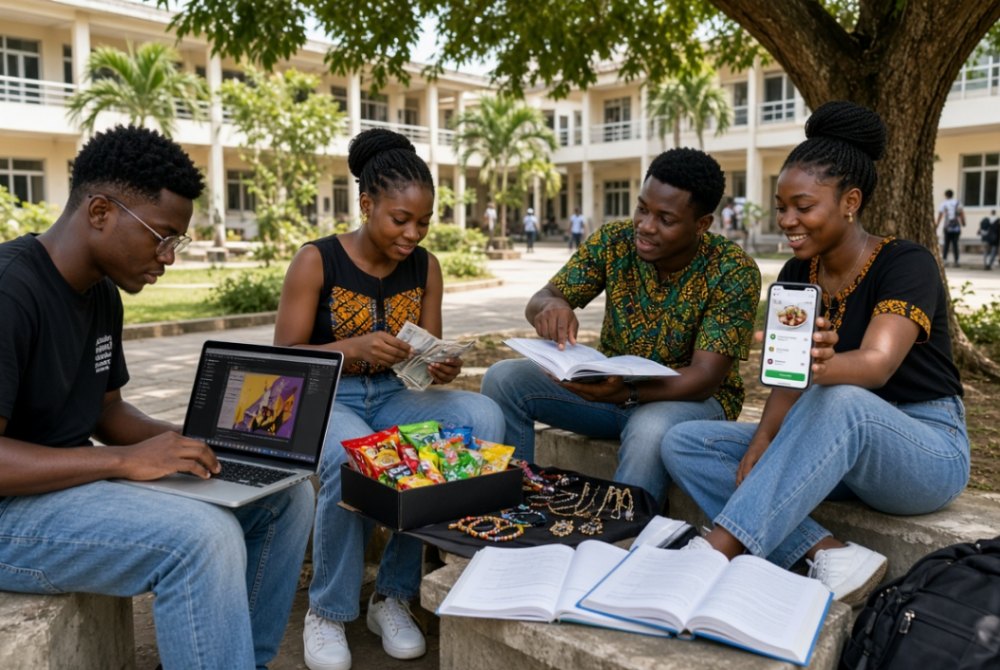
Finding a side hustle for students in Nigeria can help you develop useful skills, serve people around you, and earn extra income without abandoning your studies. The most workable options usually have three features: low starting costs, flexible hours, and customers you can reach through your existing network.
Students in Lagos, Abuja, Ibadan, Benin City, Port Harcourt, Enugu, and other Nigerian communities already use phones, social media, campus groups, and personal referrals to offer services and sell products. Digital work and secondhand fashion have also created accessible entry points for students who want to start small.
Income figures in this guide are examples, not promises. A student offering a service for ₦3,000 may complete several jobs in a week, while another may need time to build trust and repeat customers.
Before spending money, compare an idea against your timetable, skills, available tools, and customer access.
| Factor | Questions to ask |
|---|---|
| Time | Can the work fit around lectures, assignments, and examinations? |
| Startup cost | Can you begin with what you already own? |
| Skill level | What can you deliver competently today? |
| Customer access | Can you reach customers through classmates, neighbours, groups, or social media? |
| Transport | Will movement reduce the money earned? |
| Reliability | Can you complete orders when promised? |
| Safety | Can you communicate and meet customers without unnecessary risk? |
A side hustle becomes difficult when it depends on constant availability but your academic schedule changes weekly. Service-based work often offers more flexibility than stock-heavy businesses because you can accept jobs according to your capacity.
Tutoring is one of the simplest side hustles for Nigerian students who understand a subject and can explain it clearly. Potential customers include secondary-school pupils, first-year undergraduates, examination candidates, and classmates who need help with difficult topics.
Possible services include:
How Far Can ₦5,000 Really Go at a Thrift Market?
10 Thrift Finds Under ₦2,000 You Need to See
How to Recreate a Celebrity Look With Thrift Pieces
Thrift Date Night Outfits That Don’t Look Cheap
Thrift Outfit Ideas for Campus: Stylish School Looks on a Budget
Thrifted Street Style: Outfits Spotted on Lagos Streets
Have something to give away or sell?
Post your first listing — it only takes a couple of minutes. Or browse listings near you.
A student could offer a one-hour session at an illustrative rate of ₦2,000–₦5,000, depending on the subject, level, location, and format. Online sessions can reduce transport costs, while in-person lessons may work better for younger learners.
Avoid completing assignments or examinations on another person’s behalf. Academic support is more sustainable when it focuses on explanation, practice, feedback, and responsible learning.
Businesses, student organisations, churches, creators, and small brands often need help with captions, blog articles, product descriptions, newsletters, proofreading, and document formatting.
A beginner can create three sample pieces:
Illustrative beginner prices may range from ₦3,000–₦15,000 for a small writing or editing task. The final amount depends on length, research requirements, turnaround time, and revision terms.
Keep records of agreed deliverables. A written message confirming the word count, deadline, number of revisions, and payment arrangement helps prevent misunderstandings.
Students who can use Canva, Adobe tools, CapCut, or similar software can create content for small businesses and organisations. Common requests include flyers, menus, event invitations, price lists, Instagram posts, and short promotional videos.
A simple service package might include:
| Service | Illustrative student pricing |
|---|---|
| Single flyer | ₦2,000–₦6,000 |
| Social media post set | ₦5,000–₦20,000 |
| Short edited video | ₦5,000–₦25,000 |
| Monthly content support | ₦20,000–₦75,000 |
These are planning ranges, not fixed market prices. A student can begin with one-off jobs, then develop repeat work after delivering consistently.
Use licensed fonts, images, music, and templates where required. Avoid presenting another designer’s work as your own portfolio.
Secondhand clothing, shoes, bags, jewellery, hair, and accessories can create a flexible resale opportunity when the seller understands condition, presentation, pricing, and customer communication. Nigerian secondhand fashion markets include established physical markets such as Yaba, Katangowa, and Aswani, while online sellers use Instagram, WhatsApp, and peer-to-peer marketplaces. Nigerian media have reported strong consumer interest in secondhand fashion, particularly as shoppers look for lower-cost clothing options.
A student does not need to begin with a large bale or a shop. Smaller approaches include:
| Item | Amount |
|---|---|
| Purchase price | ₦4,000 |
| Cleaning or minor preparation | ₦500 |
| Transport and data allocation | ₦500 |
| Total cost | ₦5,000 |
| Example listing price | ₦7,000 |
| Difference before other costs | ₦2,000 |
The difference is not automatically profit if the item remains unsold, requires delivery, or attracts negotiation. Track every cost in a notebook or spreadsheet.
The secondhand trade can support reuse, but it also requires responsible handling of unsold or damaged clothing. Donation, repair, upcycling, textile collection, and responsible disposal can reduce waste. Research on secondhand clothing in Africa also cautions that imported used-clothing systems can create environmental and economic pressures when waste management and local production systems are weak.
Many small businesses need better images for WhatsApp Status, Instagram, catalogues, and online listings. A smartphone, clean background, natural light, and basic editing skills can be enough for simple product photography.
Potential customers include:
A basic shoot may involve 10–20 product photos and short videos. Illustrative charges can range from ₦5,000–₦25,000 depending on the number of products, location, editing, and delivery format.
Ask for permission before photographing people or publishing their images. Keep a backup of the original files until the client confirms delivery.
Students with practical skills in braiding, wig styling, makeup, nail care, gele styling, barbering, or clothing coordination can serve classmates and nearby residents. Campus events, birthdays, graduation ceremonies, cultural celebrations, and religious gatherings can create seasonal demand.
A service menu might include:
Prices vary widely by location, materials, experience, and complexity. State whether the customer provides materials or whether materials are included.
For products applied to the body, use properly labelled products and avoid making health or treatment claims. Where regulated cosmetics or related products are involved, check relevant Nigerian regulatory information, including NAFDAC requirements, before buying or reselling products.
Food sales can work around a timetable when production is based on confirmed orders rather than uncertain daily stock. Examples include small chops, chin chin, cakes, zobo, sandwiches, parfaits, and local snacks.
A pre-order process can include:
Food handling requires attention to cleanliness, storage, packaging, and local rules. A student selling food also needs a plan for late pickups, cancellations, and spoilage.
Students with access to a printer, reliable internet, or document software can offer practical campus services. Possible jobs include printing, scanning, binding, CV formatting, form filling, typing, and converting files between formats.
Illustrative charges may include:
| Task | Example charge |
|---|---|
| Black-and-white printing | ₦50–₦150 per page |
| Colour printing | ₦200–₦500 per page |
| Scanning | ₦100–₦300 per page |
| CV formatting | ₦2,000–₦8,000 |
| Typing or formatting | ₦1,000–₦5,000 per document |
Rates vary according to paper, ink, electricity, device access, and urgency. Protect customers’ personal information by avoiding unnecessary sharing of identity documents, examination records, or private forms.
A virtual assistant can help a small business organise routine digital tasks such as:
This work rewards consistency and clear communication more than flashy advertising. A student can begin with a limited weekly schedule and define response hours so that client requests do not interfere with classes.
Never request or store a customer’s password when a safer delegated-access option exists. Keep sensitive business information confidential.
A student who knows the campus and nearby areas may coordinate small errands, pickup services, queue assistance, or item transfers. This can be useful for students with limited mobility or tight schedules.
Before accepting an errand, confirm:
Do not transport prohibited or suspicious items. For valuable goods, use a documented handover and avoid carrying more cash than necessary.
Digital products can include:
The advantage is that one file can serve multiple customers, but the product must provide genuine value and not copy protected content. Describe exactly what the customer receives, the file format, and whether edits are included.
Some businesses pay commissions for verified referrals or sales. This can include fashion, beauty, education, events, technology, or local services.
Before participating, clarify:
A request to pay money before receiving an unclear “job opportunity” deserves caution. The Federal Competition and Consumer Protection Commission provides consumer-protection information for Nigerian consumers, including guidance relevant to misleading representations and marketplace transactions.
A small test can reveal whether people understand and value an offer.
For example, a student interested in thrift resale could photograph five personal items, post accurate descriptions, and record enquiries, transport costs, negotiation patterns, and time spent. This produces more useful information than buying a large quantity without testing demand.
Use a basic table for each job or sale.
| Date | Activity | Money received | Direct cost | Time spent | Balance before other costs |
|---|---|---|---|---|---|
| Monday | Flyer design | ₦5,000 | ₦500 | 2 hours | ₦4,500 |
| Wednesday | Thrift item sale | ₦8,000 | ₦5,500 | 1.5 hours | ₦2,500 |
| Friday | Tutoring | ₦6,000 | ₦1,000 | 3 hours | ₦5,000 |
The balance shown is not a complete accounting profit because it excludes equipment replacement, unpaid time, failed deliveries, data, electricity, and unsold stock.
Peer-to-peer transactions carry risks, especially when strangers communicate through social media or messaging apps.
Practical safety steps include:
This article is for educational purposes only and does not constitute professional advice. Always follow safe trading practices and use your own judgement.