T
Loading…
Loading…
Last Updated: September 2026
Shipping clothes across states in Nigeria is easier when the packaging is neat, the item is protected from dust and moisture, and the buyer gets clear delivery details before payment. For secondhand fashion sellers, good packaging also helps reduce disputes, damaged deliveries, and avoidable returns.
Clothes are light, but they still get damaged in transit by rain, rough handling, stains, and poor folding. In Nigeria’s inter-state delivery system, many parcels pass through multiple hands, so a simple poly mailer alone may not be enough for delicate, white, or premium items. The Nigerian Postal Service and private couriers both move parcels under handling systems that reward clear labeling and secure wrapping, which makes packaging a practical part of the sale rather than an afterthought.
For thrift sellers, packaging also affects trust. A buyer who receives a clean, well-wrapped shirt is more likely to reorder, while a crumpled or damp item can create tension even if the cloth itself is fine. Circular fashion research also shows that secondhand clothing remains valuable when it stays in usable condition and continues through another owner instead of becoming waste.
When people look for this topic, they usually want simple, practical guidance around shipping clothes in Nigeria, how to send thrift wear to another state, cloth delivery prices, and how to package clothes for dispatch. They also search for safe delivery options, especially when selling on WhatsApp, Instagram, or peer-to-peer marketplaces.
A useful content angle for this topic is:
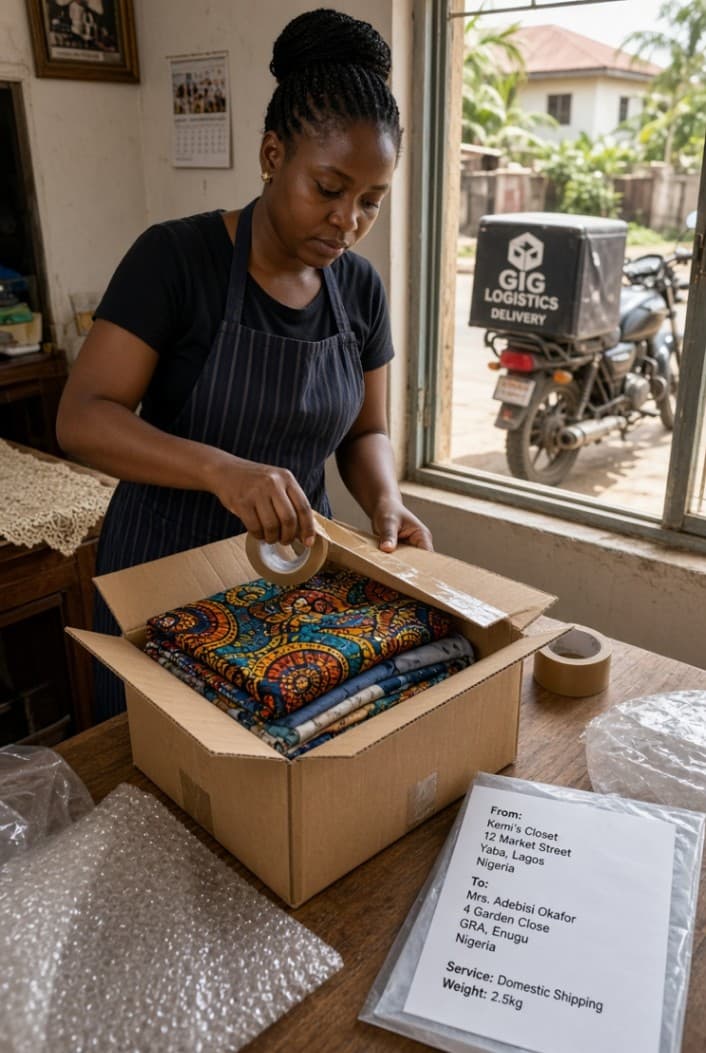
The aim of packaging is to keep the clothing dry, clean, compressed, and easy to identify. For most regular clothes, a layered approach works well: first fold the item neatly, then wrap it in tissue or a clean inner bag, and finally place it inside a stronger outer pack. For premium garments, add an extra layer such as a zip-lock bag, a clear garment bag, or a reusable plastic pouch.
Here is a practical packaging guide:
Have something to give away or sell?
Post your first listing — it only takes a couple of minutes.
| Item type | Packaging approach | Why it works |
|---|
| T-shirts, jeans, casual tops | Fold, tissue wrap, poly mailer | Lightweight and space-saving |
| White clothes | Clean inner wrap plus sealed outer bag | Helps reduce dust and moisture exposure |
| Dresses, native wear, occasion pieces | Tissue wrap, garment bag, cardboard support | Protects shape and fabric finish |
| Kids’ clothes | Small sealed bags, labeled by set | Easier sorting and delivery |
| Bundles of thrift pieces | Separate each item, then bundle outer pack | Keeps pieces clean and organized |
A good rule is to keep the parcel firm but not overstuffed. Overpacking can tear seams, crease clothes badly, or split the outer bag during sorting.
You do not need expensive materials to package clothes properly. In many Nigerian cities, thrift sellers use low-cost items that are easy to find in local markets, printing shops, or courier offices. The point is consistency, not fancy presentation.
Useful materials include:
If you are shipping multiple clothing items, use separate inner bags for each item before bundling them together. This helps when a buyer orders one item from a mixed pack or when the courier needs to inspect contents.
A clean process reduces mistakes and gives the buyer a better unboxing experience. This is a simple workflow that works for most inter-state clothing deliveries in Nigeria.
This process works for single pieces and small thrift orders. For bigger orders, separate items by type and label them before sealing the final bundle.
Nigeria has several delivery routes for state-to-state clothing shipments, and the right option depends on speed, budget, and how delicate the item is. Courier companies are common in major cities, while bus-parcel services can be cheaper for bulky or regular orders. Rural or hard-to-reach destinations may take longer regardless of the option used.
| Delivery option | Common use | Practical notes |
|---|---|---|
| Courier company | Small to medium clothing parcels | Tracking is usually available |
| Bus parcel service | Bulk thrift bundles or cheaper deliveries | Confirm terminal pickup process first |
| Local dispatch chain | City-to-city handoffs and pickups | Fast in urban routes, but varies by operator |
| National postal service | General parcel delivery | Often useful for lower-cost deliveries |
Before handing over clothes, ask what the service covers, how they handle damaged parcels, and whether they offer tracking or proof of drop-off. Consumer protection principles in Nigeria emphasize clear information, fair treatment, and proper disclosure in transactions, which is useful when you are dealing with delivery promises and parcel handling.
Shipping prices vary by state pair, parcel weight, delivery speed, and the courier’s own rate card. In practice, clothing parcels are often cheaper than boxed electronics because they are lighter and more compressible. The final price also changes depending on whether the parcel is same-day, next-day, or standard delivery.
Here is a rough budgeting table for clothing parcels:
| Parcel type | Typical weight feel | Budget range |
|---|---|---|
| Single light item | Very light | ₦1,500–₦3,500 |
| Two to four folded clothes | Light to medium | ₦2,500–₦5,000 |
| Bulk thrift bundle | Medium to heavy | ₦4,000–₦8,000+ |
| Premium garment in protective packaging | Light to medium | ₦2,500–₦6,000 |
These are practical working ranges, not fixed market rates. In many cases, the delivery quote depends on the route, the courier branch, and whether the parcel is picked up or dropped off.
Many delays and complaints come from avoidable packaging and communication errors. Most of them are simple to fix once you know where problems usually begin.
For thrift sellers, another common issue is overstating the condition of the clothing. Nigeria's consumer protection expectations around fair dealing make accurate descriptions important, especially when a buyer is ordering remotely and cannot inspect the item in person. A clear note like “pre-loved, good condition, slight fade at sleeve” is often more useful than a vague “excellent condition” label.
Shipping clothes gets easier when the sale process is organized before the parcel leaves your hands. I find that a short checklist helps reduce friction and keeps both sides aligned.
These habits are useful for WhatsApp selling, Instagram thrift pages, and marketplace listings. They also fit the broader practice of transparent peer-to-peer trading, where both sides rely on accurate information instead of physical inspection.
A seller in Ibadan wants to send three thrift items to Port Harcourt: one denim skirt, one blouse, and one unisex jacket. The seller first folds each item separately, wraps them in tissue, and seals each piece in a small transparent bag. The three pieces are then placed in one thick poly mailer, taped at the edges, and labeled with the buyer’s full details.
The seller then confirms the delivery route, pays the courier, and shares a waybill number with the buyer. If the buyer opens the parcel and sees clean, dry, well-separated clothes, the transaction feels reliable even without face-to-face contact. That reliability matters in secondhand commerce because trust is often the difference between a one-time sale and repeat buying.
Shipping clothes to other states also supports circular fashion. Instead of leaving usable clothes idle in wardrobes or sending them straight to waste, inter-state resale gives garments a longer life cycle and helps them reach a new wearer. Research on the second-hand clothing economy in Africa shows that used garments remain part of a large cross-border and regional circulation system, with West African countries playing a major role in import and reuse flows.
For everyday Nigerians, that means a clean, well-packaged clothing item can move from one wardrobe to another with very little extra waste. Good packaging makes that reuse possible because the item arrives in a condition that still feels valuable.
If you are listing secondhand clothes for state-to-state buyers, a WhatsApp-first marketplace like Threddo can help you publish the item, share details quickly, and keep buyer contact direct without extra platform fees. You can also pair that with a simple safety page such as Threddo Safety and a listings page such as Threddo Listings for a cleaner selling flow.
If you want fewer delivery complaints, focus on three things: clean packaging, accurate item descriptions, and clear courier communication. Those three habits do more for clothing shipments than expensive wrapping ever will. This article is for educational purposes only and does not constitute professional advice. Always follow safe trading practices and use your own judgement.