T
Loading…
Loading…
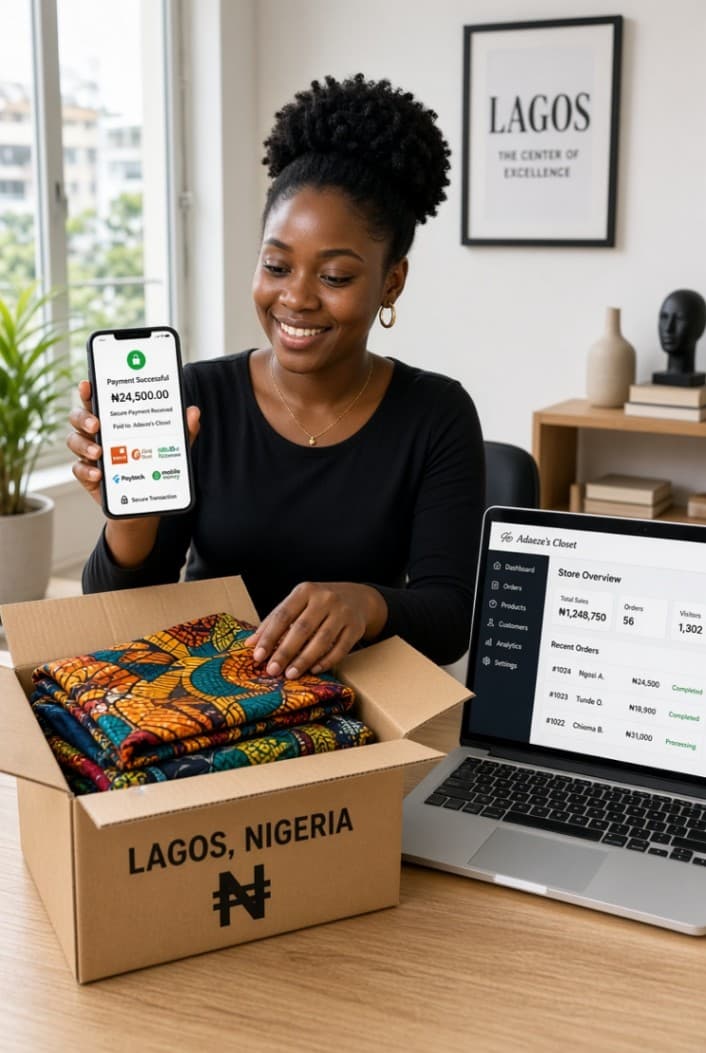
Selling secondhand clothes on WhatsApp, Instagram, or Jiji can be profitable, but choosing the wrong payment method is how many sellers lose money to fraud. This guide breaks down every major payment option available to Nigerian clothing sellers in 2026, ranks them by safety, and gives you practical checklists to avoid common scams.
Nigeria’s e-commerce transactions are projected to exceed $33 billion by 2026, with account-to-account transfers, cards, and cash-on-delivery (COD) still dominating the market. However, social commerce on WhatsApp and Instagram has exploded, and these informal channels lack the built-in buyer/seller protections that platforms like Jumia or Konga offer.
The Federal Competition and Consumer Protection Commission requires online sellers to provide clear price disclosures, truthful product descriptions, and complaint resolution mechanisms before payment is collected. For secondhand clothing sellers, this means you must be transparent about item condition (e.g., “gently used,” “minor stain on sleeve”) and have a clear refund/return policy stated upfront.
| Payment Method | Safety Score (1–5) | Typical Fees | Speed to You | Best For | Key Risk |
|---|---|---|---|---|---|
| Escrow services (EscrowLock, PayScrow, SafeTrade) | ⭐⭐⭐⭐⭐ | 1.25–3.25% + fixed | 24–72 hrs after delivery confirmation | High-value items (₦15k+), unknown buyers | Fake escrow links |
| Instant bank transfer (with proof of payment screenshot) | ⭐⭐⭐⭐ | Free–₦50 | Instant | Trusted repeat buyers, local sales | Fake alert scams |
| Paystack/Flutterwave payment links | ⭐⭐⭐⭐ | 1.5% + ₦100 | Instant–same day | Instagram/WhatsApp shops with volume | Chargeback disputes |
| POS terminal (in-person meetup) | ⭐⭐⭐⭐ | Free–₦100 | Instant | Local pickups, Lagos/Abuja/Ibadan | Network failure, fake POS |
Have something to give away or sell?
Post your first listing — it only takes a couple of minutes.
| Cash on Delivery (COD) via courier | ⭐⭐ | Courier fees + 5–10% commission | 3–7 days after delivery | Nationwide reach, new customers | Buyer refuses item, return shipping cost |
| Direct cash (in-person) | ⭐⭐⭐ | None | Instant | Local friends, campus sales | Robbery risk, no record |
| Cryptocurrency / unstable wallets | ⭐ | Variable | Variable | Tech-savvy buyers only | Regulatory uncertainty, volatility |
Scores based on fraud risk, reversibility, and real-world seller experiences in Nigeria (2025–2026).
Escrow is a third-party service that holds the buyer’s money until you deliver the item and they confirm it matches the description. Popular Nigerian options include EscrowLock, PayScrow, SafeTrade Nigeria, and GETscrow.
How it works:
When to use escrow:
Red flags to avoid:
Real example: A Lagos seller used SafeTrade to sell a ₦28,000 vintage denim jacket to a buyer in Port Harcourt. The buyer tried to claim the jacket had “extra holes” after delivery, but the seller had uploaded a packaging video showing the item’s condition. SafeTrade released the funds after 48 hours.
Direct bank transfer remains the most popular payment method for Nigerian online sellers, especially on WhatsApp. It’s fast and free, but fake payment alerts are rampant.
Safety checklist for bank transfers:
Fake alert scam pattern:
Pro tip: If a buyer refuses to wait 2 minutes for you to confirm the transfer in your app, that’s a major red flag. Legitimate buyers understand fraud risks.
Payment gateways like Paystack and Flutterwave allow you to generate a unique payment link that buyers can pay via card, bank transfer, or USSD. Fees are typically 1.5% + ₦100 per transaction.
Advantages:
Disadvantages:
Best practice: Use payment links for Instagram shops with 10+ sales per month. It builds trust and reduces “have you received my transfer?” DMs.
If you’re meeting a buyer in a public place (mall, campus, office), bringing a POS terminal (Moniepoint, OPay, PalmPay) adds professionalism and instant confirmation.
Safety tips:
Risk: Network failure can delay the transaction. Always have a backup (e.g., “If POS fails, we can do direct transfer, but I’ll confirm in my app first”).
COD via courier services (GIG, Kwik, DHL) allows buyers to pay when the item arrives. It’s popular for nationwide sales but carries significant risks for sellers.
Hidden costs of COD:
When COD makes sense:
Avoid COD if:
Meeting a buyer in person and collecting cash is straightforward, but it’s only safe in well-lit, public locations with security (e.g., shopping malls, university campuses).
Safety rules:
The FCCPC Act (2018) and its 2025 digital lending regulations set clear expectations for online sellers:
Violating these rules can lead to complaints filed with the FCCPC, which has a dedicated online portal for consumer disputes.
Use this before shipping any item:
| Item Value | Recommended Payment Method | Estimated Total Fees |
|---|---|---|
| ₦1,000 – ₦5,000 | Direct transfer or POS | Free–₦50 |
| ₦5,000 – ₦15,000 | Bank transfer or Paystack link | ₦0–₦325 |
| ₦15,000 – ₦50,000 | Escrow (1.5–3%) or Paystack | ₦225–₦1,600 |
| ₦50,000+ | Escrow (mandatory for safety) | ₦750–₦1,625+ |
Fees based on 2026 rates from Paystack, EscrowLock, and SafeTrade Nigeria.
If you’re looking for a free platform to list secondhand clothes with built-in safety guidelines and direct WhatsApp contact, Threddo.com.ng allows you to create listings in categories like Clothing, Shoes, and Accessories without fees or in-app payments. Their safety page recommends using escrow for high-value items and always confirming payments before shipping.
The safest payment method depends on your item value, buyer location, and sales volume. For one-off sales to strangers, escrow is worth the small fee. For repeat local buyers, instant bank transfer with in-app confirmation works well. Avoid COD unless you’ve calculated return costs, and never ship based on screenshots alone.
This article is for educational purposes only and does not constitute professional advice. Always follow safe trading practices and use your own judgement.
Last Updated: September 2026