T
Loading…
Loading…
Last Updated: September 2026
If you sell thrift in Nigeria, the way you store stock can affect how fast you list, how clean items stay, and how easily you find the right piece when a buyer asks. A simple inventory system helps you sort by category, size, condition, and price so you spend less time searching and more time selling. Research on Nigeria’s used-textile and circular-economy landscape shows that textiles remain a meaningful part of the country’s waste stream, which makes careful resale and reuse especially relevant for circular fashion practices.
A thrift business runs on speed, clarity, and presentation. When items are mixed together in bags or cartons, clothes crease badly, shoes pick up odor, and small accessories disappear before you can list them. Clean sorting also reduces disputes because buyers can see consistent photos and descriptions, and Nigeria’s consumer-protection expectations emphasize clear transaction records and fair treatment in trade.
For a reseller, good organization does three practical things:
A common pattern in Nigerian thrift operations is to separate stock early, clean it, and tag it before posting or storing it for later sale. That simple habit usually pays off more than keeping everything in one pile.
Before storage, sort inventory into groups that match how buyers shop. The easiest structure is category first, then condition, then size or age range. Nigerian thrift guides commonly recommend grouping items by type, such as shirts, trousers, skirts, children’s wear, shoes, and accessories, because buyers usually ask by item type before anything else.
Have something to give away or sell?
Post your first listing — it only takes a couple of minutes.
This method makes it easier to answer buyer questions quickly, especially when you sell through WhatsApp and need to send pictures fast.
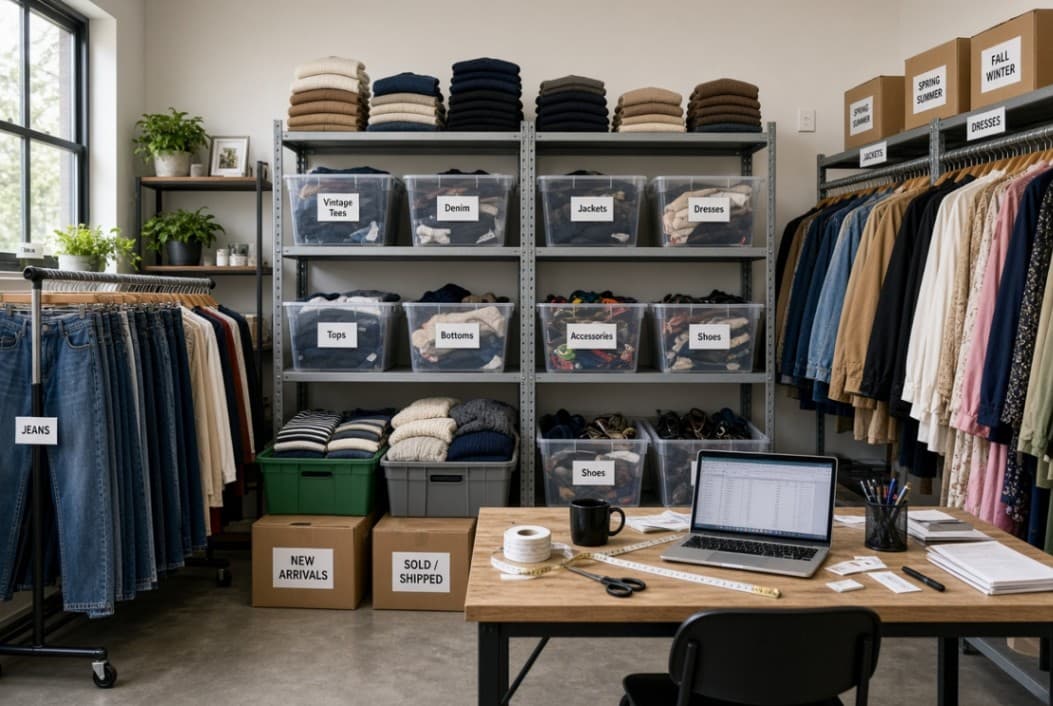
You do not need a big shop to keep thrift inventory in order. A bedroom corner, plastic shelves, transparent bags, cartons, or hanging rails can work if the space is dry and ventilated. Practical thrift guides in Nigeria consistently warn against damp storage because moisture leads to odor, mold, and fabric damage.
| Storage option | Best for | Why it helps |
|---|---|---|
| Transparent zipper bags | Small bundles, tops, kidswear | Easy to see contents without opening |
| Cartons with labels | Shoes, folded clothes, bulk stock | Stackable and cheap |
| Plastic shelves | Mixed inventory in a room | Keeps stock off the floor |
| Hanging rails | Dresses, shirts, outerwear | Reduces wrinkles and saves time |
| Drawers or bins | Jewellery, hair, small accessories | Prevents loss and tangling |
If space is tight, store by turnover speed. Put items that sell frequently where you can reach them first, and move slow-moving stock to the back. That small change saves time every day.
Labels turn a pile of thrift into a real inventory system. You can label each item or bundle with the category, size, condition, acquisition date, and asking price. Nigerian thrift sellers often use tags for size, grade, and price because buyers want quick clarity and sellers need faster retrieval.
Example: CL-014 | Women Shirt | M | Good | ₦4,500 | 12 Sep
That code makes it easier to track whether an item has been posted, sold, returned, or moved to discount bundles.
A notebook works, but a spreadsheet gives you more control once your inventory grows. Track what came in, what has been cleaned, what is listed online, what is reserved, and what has sold. For many small resellers, one page or one sheet per category is enough to avoid confusion.
| Date in | Item code | Item name | Size | Condition | Cost price | Price listed | Status | Location |
|---|---|---|---|---|---|---|---|---|
| 12 Sep | CL-014 | Shirt | M | Good | ₦2,000 | ₦4,500 | Listed | Shelf B |
| 12 Sep | SH-008 | Sneakers | 42 | Near-new | ₦5,500 | ₦9,000 | Reserved | Box 3 |
This kind of record also supports clearer receipts and sales history, which fits consumer-record expectations in Nigeria’s trade environment. It is especially useful when you handle repeat buyers or sell in bundles.
Thrift stock should be cleaned and fully dried before long-term storage. Nigerian thrift-resale guides commonly recommend washing, drying in shade, and removing odor before ironing or steaming, because that preserves fabric quality and improves presentation. If you store damp clothing, the smell spreads to other items and can make a whole batch harder to sell.
A useful habit is to treat cleaning as part of inventory prep, not a separate chore. Once items are clean and tagged, they are easier to list, photograph, and price.
Not all thrift inventory deserves the same storage priority. Fast-moving items need quick access, while slow-moving items can be grouped into bundles or seasonal sections. Nigerian thrift content often notes that kids’ wear, office pieces, and trendy basics can move faster than niche or highly styled pieces, depending on the audience.
This structure helps you avoid mixing items that are ready to sell with items that still need cleaning or repair.
Storage problems are often small at first and expensive later. Sunlight can fade fabric, humidity can cause mildew, and insects can damage clothing and packaging. Several Nigerian thrift guides recommend storing items in dry areas and avoiding direct sun during drying because bleaching and odor are common risks.
If you sell from home, a single moisture absorber or a clean sealed box can protect higher-value pieces from long-term damage.
For WhatsApp-first reselling, your storage system should match the way you post products. That means keeping items grouped in a way that makes it easy to take photos, reply to buyers, and locate stock quickly. Sellers in Nigeria often improve sales when they can send clear pictures, item details, and size information without delay.
This workflow reduces double posting and helps you avoid selling an item you cannot find.
Inventory storage also supports smarter pricing because you can see what is slow, what is premium, and what can be bundled. Some Nigerian thrift guides suggest grouping lower-value pieces into sets or mix-and-match bundles to move stock faster and reduce dead inventory. That approach works well for kidswear, casual tops, and simple accessories.
| Item type | Example condition | Typical reseller action |
|---|---|---|
| Basic tops | Good condition | Single listing |
| Kids outfits | Good condition | Bundle by age/size |
| Shoes | Near-new | Individual listing |
| Small accessories | Mixed condition | Bundle or add-on item |
| Slightly flawed items | Repairable | Discounted listing or clearance |
For Nigerian students and budget-conscious buyers, bundle pricing can make stock move faster without needing to keep too many individual listings open at once.
Inventory problems usually come from weak routines rather than lack of space. The same few errors show up again and again in small thrift businesses.
Avoiding these mistakes gives you a cleaner workflow and fewer buyer delays.
A student reseller with a small room can divide stock into four zones: “to clean,” “ready to post,” “listed,” and “sold.” Clothes can go in clear bags by size, shoes in labeled cartons, and accessories in a small drawer organizer. When a buyer asks for a size M black shirt, the seller only checks the M section instead of opening ten different bags.
That kind of structure is especially useful in Nigerian cities where many thrift sellers operate from homes, hostels, or small stalls and need a system that works without expensive equipment.
If you list items on Threddo.com.ng, a neat inventory system makes it easier to upload clear, accurate listings and keep buyer chats organized without mixing up stock. That matters because Threddo is built around direct buyer-seller contact, so the faster you match the right item to the right inquiry, the smoother your trading process becomes. A simple safety habit is to keep your physical item code aligned with the online listing so you can confirm details quickly.
Organizing thrift inventory is mostly about consistency: sort early, label clearly, store in dry sections, and keep a clean log for every item. When your stock is easy to find and easy to describe, you save time, reduce damage, and make your listings look more trustworthy to buyers. This article is for educational purposes only and does not constitute professional advice. Always follow safe trading practices and use your own judgement.