How to Organize a Small Room With Kids: A Practical Nigeria Family Guide
Evelyn John·
Keeping a small room organized with kids around is possible when you combine smart storage, clear zones, and simple daily routines. In Nigeria—where many families live in single rooms, self-contained flats, or shared spaces—the key is using vertical space, affordable containers, and secondhand finds to reduce clutter without breaking the bank.
This guide walks through room layout, kid-friendly storage, safety checks, budget-friendly buys in ₦, and maintenance habits that fit real Nigerian family life.
Last Updated: October 2026
Start With a Quick Declutter (The Nigerian Family Way)
Clutter grows fast when kids share a small room. Begin with a short, focused declutter session before buying any storage.
Pick one zone: a drawer, a shelf, or a corner you see daily.
Use the “used in the last year?” test: If it hasn’t been used in 12 months, move it to a “maybe” box.
Try the six‑month rule: Items not used or thought about in six months can be let go.
Create three piles: Keep, Donate/Sell, Maybe (review after 3 months).
For families in Lagos and other cities, donating or selling gently used kids’ clothes and toys keeps the room lighter and helps other households. Platforms like community WhatsApp groups or free marketplaces make this easier.
Map the Room: Zones That Work for Kids and Adults
In a small room, clear zones prevent chaos. Think in terms of what happens in each area, not just where furniture goes.
Typical Zones for a Single Room With Kids
Sleeping zone: Beds or mattresses placed to allow walking space and airflow.
Play/learning zone: A small floor area or low table for toys, drawing, or homework.
Storage zone: Wardrobe, shelves, bins, and under‑bed storage.
Dressing zone: Mirror, hamper, and a hook rail for school uniforms or daily outfits.
Use lightweight dividers to separate zones without building walls:
Curtains hung from ceiling tracks
Low bookshelves or racks acting as “soft walls”
Folding screens or even a row of tall storage bins
This approach is common in Lagos one‑room apartments where families create sleeping, cooking, and relaxing areas in the same space.
Wall‑mounted shelves: Store books, school bags, and off‑season clothes high up. Ensure your Lagos flat walls can hold the weight.
Over‑the‑door hangers: Hang towels, bags, uniforms, and accessories on the back of the room and bathroom doors.
High shelves near the ceiling: Use for luggage, big boxes, or items used only occasionally.
Tall, narrow wardrobes or racks: Better than wide, low furniture in tight rooms.
Getting items off the floor instantly makes a small room feel larger and safer for kids to move around.
Kid‑Friendly Storage That Actually Gets Used
Storage only works if children can reach and understand it. Design for their height and habits.
Low, Open Storage for Kids
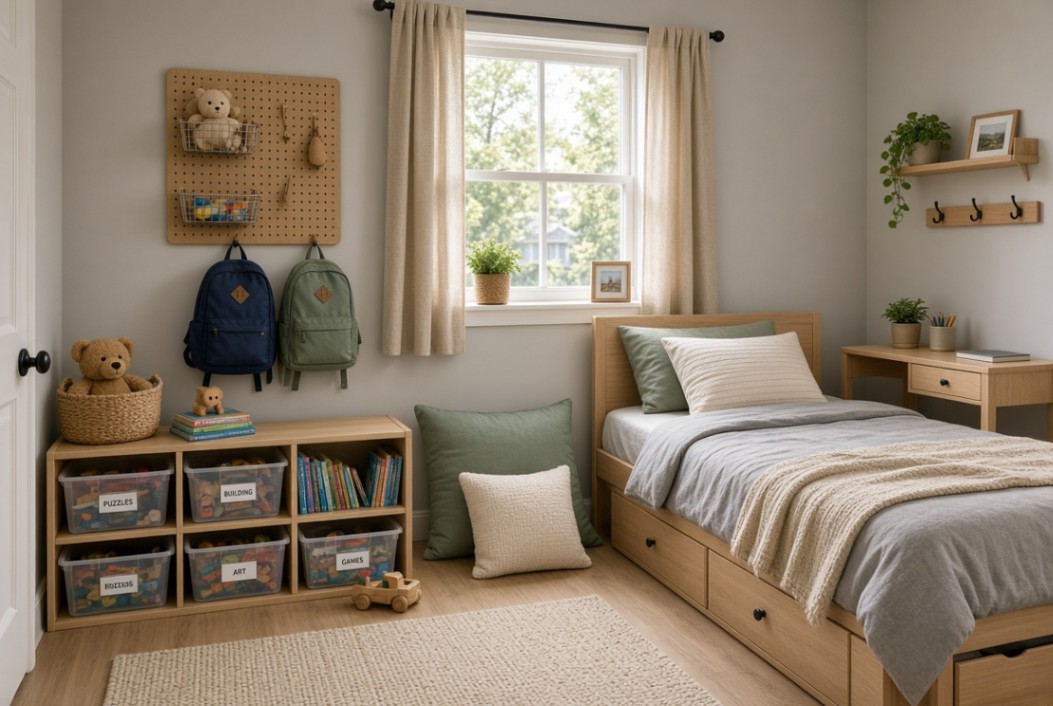
Low shelving units: Choose sturdy units with rounded edges and non‑toxic finishes so kids can reach toys and books safely.
Open bins and baskets: Use floor‑level containers for toys, socks, and underwear so kids can drop items in without opening lids.
Child‑height clothing rods: Lower hanging rods in the wardrobe and use child‑sized hangers so kids can pick outfits themselves.
Label Everything
Labels help kids know where things belong:
Use simple words and pictures (e.g., a sock icon on the sock bin).
Stick labels on drawers, shelf edges, and plastic boxes.
For younger children, picture labels work better than text alone.
This reduces “I don’t know where it goes” moments and makes cleanup faster.
Smart Furniture Choices for Small Rooms
Furniture should earn its place by saving space or adding storage.
Beds With Built‑In Storage
High bed frames: Raise the bed enough to slide boxes or drawers underneath for clothes, shoes, or bedding.
Beds with drawers or lift‑up frames: Store blankets, extra sheets, or out‑of‑season clothes below the mattress.
Storage headboards: Add shelves in the headboard area for books, toiletries, and small items.
Multi‑Purpose Pieces
Ottomans with storage: Use as seating and a place to stash toys or linens.
Foldable tables: Serve as a desk, dining surface, or craft station, then tuck away.
Stackable bins: Act as seats when covered with a cushion and as storage inside.
In single rooms, scaling down furniture size is critical; large sofas or wide wardrobes quickly overwhelm the space.
Affordable Storage Buys in Nigeria (With Price Ranges)
You don’t need expensive systems to organize a small room. Many useful items are available online and in local markets.
Common Storage Items and Typical Prices (₦)
Item
Typical Use
Approx. Price Range (₦)
Mini woven plastic baskets (set of 2–5)
Toys, socks, hair accessories, small clothes
₦1,800 – ₦6,000
Plastic storage bins with lids (3–6 pcs sets)
Clothes, school materials, toys
₦13,500 – ₦55,000
Foldable plastic crates (large)
Seasonal clothes, shoes, bulky items
Around ₦9,200
Utility/storage boxes (40–100 litres)
Big toys, linens, off‑season items
₦18,000 – ₦30,000
Low kids’ storage shelves
Toys, books, daily clothes
Varies widely; look for sturdy, anchored units
Mesh waste baskets (small/medium)
Light trash, small item catch‑alls
₦5,300 – ₦10,000
Prices change often, so check current listings on major Nigerian e‑commerce sites and compare before buying.
For tighter budgets, secondhand baskets, crates, and small shelves from thrift markets or online resellers can cut costs while supporting circular consumption.
Safety First: Anchoring, Edges, and Airflow
With kids in a small room, safety is part of organization.
Anchor tall shelves and wardrobes: Use wall studs or proper anchors and anti‑tip straps to prevent tip‑overs when kids pull or climb.
Choose rounded edges: For low shelves and tables, pick designs with rounded corners and sturdy bases.
Keep heavy items low: Place heavier boxes and toys on lower shelves; lighter items go higher.
Maintain airflow and light: Avoid blocking windows and vents with tall furniture; use light curtains or blinds instead of heavy drapes where possible.
These steps align with general consumer safety expectations: products should be fit for purpose and not pose unnecessary risk, especially around children. In Nigeria, the Federal Competition and Consumer Protection Commission (FCCPC) handles complaints about unsafe or defective goods, so keeping receipts and noting product issues matters if problems arise.
Daily and Weekly Routines That Stick
Organization fails without routines. Build short, repeatable habits that fit school days and power cuts.
Simple Daily Checklist
Morning pickup (5 minutes): Straighten the bed, return pillows, put yesterday’s clothes in the hamper.
Evening pickup (5–10 minutes): Before bed, return toys to labeled bins, fold one load of clothes, clear the floor.
One‑in, one‑out rule: When a new toy or clothing item enters the room, one old item leaves (donated, sold, or trashed if broken).
Monthly “Declutter Day”
Pick one Saturday a month as family declutter day.
Each person chooses one small area: a drawer, a shelf, or a toy box.
Use the “used in the last year?” and six‑month rules to decide what stays.
Over time, these routines prevent the room from slowly filling up again.
Thrifty and Sustainable Storage Ideas
Organizing a small room with kids doesn’t mean buying everything new. Secondhand and repurposed items fit well with tight budgets and sustainability goals.
Secondhand baskets and crates: Often available from market sellers or online resellers at lower prices than brand‑new sets.
Repurposed food containers: Clean, sturdy plastic containers (with lids) can store small toys, hair clips, or school supplies.
Clothes swaps with neighbours or church groups: Exchange outgrown kids’ clothes instead of storing them “just in case.”
This approach supports a circular economy: items stay in use longer, waste reduces, and families spend less. In Nigeria’s growing secondhand fashion scene, similar principles apply to clothes, shoes, and accessories—keeping them circulating instead of dumped.
Special Tips for Lagos and Other Busy Cities
Living in Lagos, Abuja, Port Harcourt, or similar cities adds specific challenges: heat, humidity, and limited space.
Favour light colours: Light flooring and walls make small rooms feel bigger and brighter.
Use breathable storage: Avoid sealing clothes in airtight plastic for long periods in humid rooms; add silica gel or neem leaves to reduce mould risk.
Protect against dust: Choose storage bins with lids for clothes and books, especially near busy roads.
Plan for generator/NEPA realities: Keep a small, labeled “blackout box” with torches, batteries, and charged power banks in an easy‑to‑reach shelf.
In one‑room Lagos apartments, families often use room dividers, light colours, and scaled‑down furniture to live comfortably with children.
A Quick Safety and Trading Note for Secondhand Buys
When buying secondhand storage items (baskets, shelves, bins) from individuals or small sellers:
Inspect for cracks, sharp edges, or unstable legs before paying.
Ask about age and prior use, especially for items kids will touch or climb on.
Meet in safe, public places or use trusted platforms with clear safety guidelines.
Threddo, for example, is a free, WhatsApp‑first marketplace in Nigeria where people list secondhand clothes, bags, accessories, and home items with direct buyer‑seller contact and no fees; its Safety Guide outlines basic practices like meeting in public places and trusting your instincts.
Example: Organizing a 3 × 4 Metre Room for Two Kids
Imagine a 3 m by 4 m room shared by two school‑age children and used by parents at night.
Beds: Two single beds pushed along one wall, with under‑bed storage boxes for clothes and shoes.
Play/Study Corner: A small foldable table near the window with a low shelf for books and a labeled bin for toys.
Wardrobe Zone: One tall, narrow wardrobe on the opposite wall; lower rod for kids’ clothes, higher rod for adults.
Door and Wall Use: Over‑the‑door hangers for school bags and uniforms; a narrow wall shelf next to the bed for phones and small lamps.
Floor: Kept mostly clear, with only a small rug in the play area and labeled bins that tuck under the table when not in use.
With this layout, the room supports sleeping, studying, and playing without feeling packed.
Common Mistakes to Avoid
Buying storage before decluttering: You’ll just organize clutter. Start with the one‑zone, one‑drawer approach.
Overloading tall shelves: Respect weight limits and anchor units to avoid tip‑overs.
Ignoring kids’ height: If children can’t reach or understand the storage, they won’t use it.
No maintenance plan: Without daily pickup and monthly reviews, the room will slowly return to chaos.
Avoiding these errors makes your organization efforts last longer.
Conclusion
Organizing a small room with kids in Nigeria comes down to decluttering first, designing clear zones, using vertical and under‑bed storage, choosing kid‑friendly labeled bins, and keeping simple daily and monthly routines. Affordable storage options—from mini woven baskets to stackable plastic bins—make it possible to maintain order without overspending, while secondhand and repurposed items support a more sustainable, circular approach to home life.
This article is for educational purposes only and does not constitute professional advice. Always follow safe trading practices and use your own judgement.