
T
Loading…
Loading…
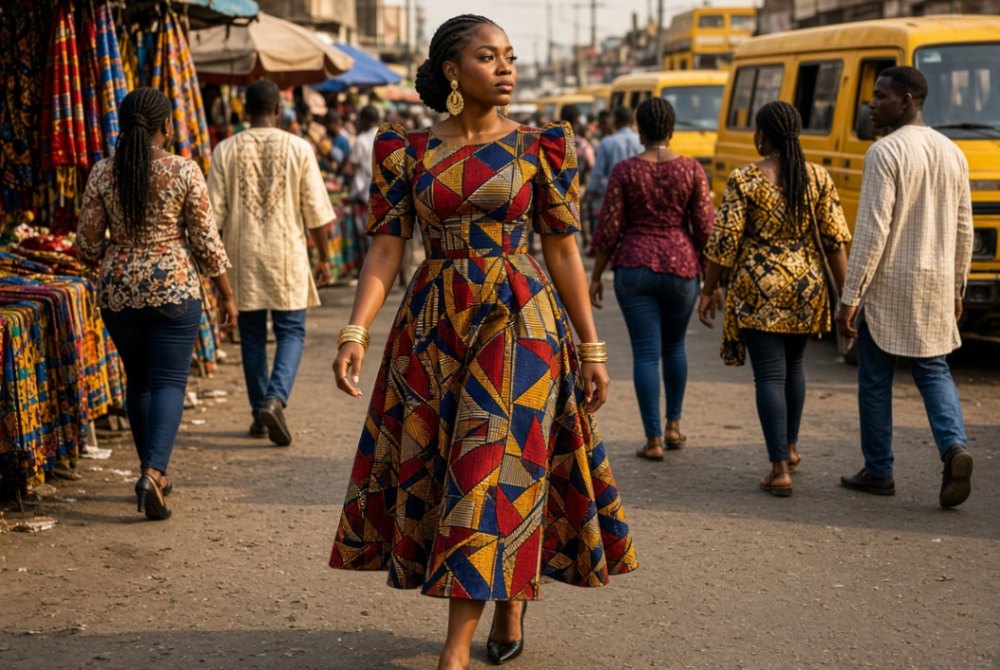
Nollywood influences everyday Nigerian fashion by turning fabrics, hairstyles, accessories, silhouettes, and cultural dress into visual references that audiences can recognise and recreate. From Ankara gowns and aso-oke headwraps to Lagos streetwear and character-inspired thrift outfits, Nigerian films help define what looks fashionable, respectable, traditional, wealthy, youthful, or rebellious.
The influence reaches beyond red carpets. A film costume may inspire a wedding colour palette, a tailor’s design, a boutique display, a secondhand clothing search, or the way someone styles a blouse for work. Nigeria’s film industry produces around 2,500 films a year, giving costume and wardrobe choices a wide cultural audience.
Film communicates through more than dialogue. Clothing helps audiences understand a character’s age, occupation, social position, ethnic background, personality, and emotional journey.
A sharply tailored suit may present a character as successful or ambitious. A flowing iro and buba may communicate cultural pride, maturity, or ceremony. Sneakers, denim, oversized shirts, and graphic T-shirts can identify a younger urban character, while beads, gele, coral accessories, or aso-oke can establish a formal Nigerian setting.
Nollywood also makes fashion feel familiar because its stories often take place in homes, offices, markets, churches, schools, universities, parties, and family ceremonies. Viewers do not only see costumes in fantasy settings; they see clothes resembling what Nigerians wear in Lagos, Abuja, Enugu, Ibadan, Benin City, Kano, Port Harcourt, and other communities.
The industry’s use of local languages strengthens that connection. A UNESCO report found that about 56% of Nigerian films surveyed were made in local languages, while English accounted for 44%. This gives regional clothing traditions additional visibility and helps audiences connect fashion with language, family, and place.
One of Nollywood’s strongest contributions is the presentation of Nigerian textile traditions to local and international viewers. Research on Nigerian film and dress notes that Nollywood has helped showcase traditional clothing culture and national identity to global audiences.
Common examples include:
How Far Can ₦5,000 Really Go at a Thrift Market?
10 Thrift Finds Under ₦2,000 You Need to See
How to Recreate a Celebrity Look With Thrift Pieces
Thrift Date Night Outfits That Don’t Look Cheap
Thrift Outfit Ideas for Campus: Stylish School Looks on a Budget
Thrifted Street Style: Outfits Spotted on Lagos Streets
Have something to give away or sell?
Post your first listing — it only takes a couple of minutes. Or browse listings near you.
These clothes do not appear in one single “Nigerian style.” Costume design can distinguish Yoruba, Igbo, Hausa, Edo, Efik, Tiv, Ijaw, and other cultural settings, although filmmakers sometimes combine styles for creative or dramatic reasons.
Historical and period films often use clothing to signal status and time. In a palace scene, the placement of beads, crowns, wrappers, embroidery, and handwoven fabrics can distinguish royalty from attendants or warriors from civilians.
Contemporary films use similar visual language. A character’s clothing may change after a promotion, marriage, relocation, crisis, or personal transformation. Wardrobe therefore becomes part of the plot rather than decoration.
This approach has also created greater public attention for Nigerian costume designers. Industry coverage identifies designers such as Yolanda Okereke, Juliana Dede, Omolola Awe, and others as important contributors to Nollywood’s visual identity.
The effect of Nollywood is visible in everyday styling choices. Viewers often adapt the overall idea of an outfit rather than copy a costume exactly.
For example, a character may wear a dramatic Ankara gown with a large gele for a wedding scene. Someone attending a Lagos owambe may translate the look into:
This is fashion translation: the original look is adjusted for budget, weather, movement, workplace rules, body comfort, and the formality of the event.
| Screen influence | Everyday adaptation |
|---|---|
| Ankara co-ordinated outfits | Matching blouse and skirt, shirt and trousers, or family event clothing |
| Aso-oke and gele | Headwrap with a plain dress, aso-oke bag, or ceremony accessories |
| Character suits | Blazers with jeans, trousers, loafers, or simple shirts |
| Lagos streetwear | Oversized shirts, sneakers, denim, caps, and crossbody bags |
| Palace jewellery | Layered beads, earrings, bangles, or statement necklaces |
| Period hairstyles | Braids, threading, natural hair, gele variations, and decorative hairpieces |
| Luxury wedding styling | Satin, lace, sequins, metallic accessories, and coordinated colours |
The result is not always a direct imitation. Instead, Nollywood supplies a visual vocabulary that people remix according to their own wardrobes.
Nollywood has helped make Nigerian ceremonies highly visual. Wedding films and family dramas often present coordinated outfits, dramatic entrances, bridal parties, elaborate gele styles, decorated halls, and carefully selected accessories.
A movie can make certain combinations feel familiar:
The influence is particularly clear when viewers use films as informal style references before a ceremony. A person may save a screenshot, show it to a tailor, or search for a similar outfit in a boutique or secondhand marketplace.
A practical adaptation involves separating the look into elements:
This avoids treating a costume as a complete outfit template when some details were created specifically for a film set.
Nollywood’s influence extends to hair, makeup, jewellery, bags, shoes, and headwear. A character’s styling may inspire viewers to try braids, locs, natural hairstyles, wigs, gele arrangements, threaded hair, low cuts, or decorative hairpieces.
Hair often communicates a character’s stage of life. A schoolgirl, market trader, executive, bride, traditional ruler, and nightlife character may each receive a distinct styling approach.
Accessories make these influences easier to adopt because they do not require a complete wardrobe change. A plain black dress can feel different when paired with:
This explains why Nigerian secondhand shoppers frequently search by item rather than by full outfit. Someone may look for a “Nollywood-style blazer,” “aso-oke bag,” “vintage beaded necklace,” or “statement gele accessory” instead of buying an entire costume.
Secondhand fashion makes screen-inspired style more accessible. A shopper may not purchase a designer outfit worn by an actor, but they can find a similar silhouette or styling component in an okrika market, thrift shop, Instagram store, WhatsApp catalogue, or peer-to-peer marketplace.
| Item type | Illustrative secondhand range |
|---|---|
| Plain blouse or shirt | ₦2,000–₦7,000 |
| Ankara or patterned dress | ₦4,000–₦15,000 |
| Blazer or structured jacket | ₦5,000–₦18,000 |
| Pre-owned handbag | ₦4,000–₦20,000 |
| Costume jewellery | ₦1,500–₦8,000 |
| Occasion shoes | ₦5,000–₦20,000 |
| Vintage-style sunglasses | ₦2,000–₦8,000 |
| Pre-owned wig or hairpiece | ₦8,000–₦50,000 |
These figures are not an appraisal or a guarantee of value. Condition, authenticity, cleaning, repairs, demand, and the item’s exact location can change the final price.
Nollywood can encourage consumption, but it can also support more circular fashion habits when viewers reinterpret existing clothes instead of buying new items for every trend.
Using a pre-owned blazer, repairing a bag, restyling a dress, or passing clothing to another wearer keeps garments in use for longer. Nigeria imported approximately $176 million worth of secondhand clothing from the Global North in 2021, according to a circular-economy report citing UN Comtrade data. The same report warns that poor-quality imports can become waste when they are unusable.
This creates an important distinction: secondhand shopping is not automatically sustainable if items are bought without use, discarded quickly, or imported in poor condition. More responsible practices include:
Nollywood’s greatest sustainability opportunity may be styling creativity. One outfit can be worn in several ways when accessories, layering, tailoring, or garment alterations change its appearance.
Screen-inspired demand can create opportunities for misleading listings. A seller may use an actor’s name, a film title, or a viral costume reference to attract attention. Buyers need clear information about whether an item is an original, a replica, a similar style, or simply inspired by a screen look.
The Federal Competition and Consumer Protection Act, 2018 recognises consumer rights relating to understandable information, price disclosure, secondhand-goods disclosure, trade descriptions, and protection from false or misleading representations. The FCCPC also states that businesses should provide factually accurate product information and avoid deceptive representations.
These practices help build trust whether the transaction happens through a marketplace, social media, a WhatsApp group, or a physical meeting.
Title: Nollywood-inspired Ankara midi dress, size 12
Description: Pre-owned Ankara midi dress with fitted waist and puff sleeves. Bright orange, green, and cream print. Bust: 40 inches; waist: 34 inches; length: 45 inches. Zip works properly. Small faint mark near the lower hem, shown in the final photo. Suitable for casual events or can be styled with a blazer and simple accessories.
Price: ₦8,000
This description is stronger than “actress gown for sale” because it identifies the style without making an unsupported celebrity or film claim.
If you want to pass on a similar piece, Threddo provides a Nigeria-focused, WhatsApp-first space for listing secondhand clothing, shoes, bags, jewellery, hair, and accessories. Clear photos, honest condition notes, and safe direct communication make screen-inspired trading easier to understand.
Nollywood fashion is no longer shaped only by television premieres or physical video shops. Streaming platforms, short clips, social media screenshots, celebrity interviews, and behind-the-scenes costume content allow a look to circulate quickly.
The influence now moves in several directions:
This creates a feedback loop between film, fashion businesses, social media, tailoring, thrift markets, and everyday wardrobes.
Nollywood influences everyday Nigerian fashion by making clothing part of storytelling and by showing how identity, status, culture, work, romance, celebration, and modern life can be expressed through dress. Its impact appears in Ankara styling, aso-oke ceremonies, hairstyles, jewellery, streetwear, tailoring references, and the search for secondhand pieces that capture a familiar screen mood.
The most practical way to use Nollywood fashion inspiration is to adapt one or two elements to your occasion, comfort, budget, and existing wardrobe. When buying or selling pre-owned pieces, accurate descriptions, condition disclosure, sensible pricing, and safe communication help turn inspiration into responsible circular fashion.
This article is for educational purposes only and does not constitute professional advice. Always follow safe trading practices and use your own judgement.
Last Updated: October 2026