
T
Loading…
Loading…
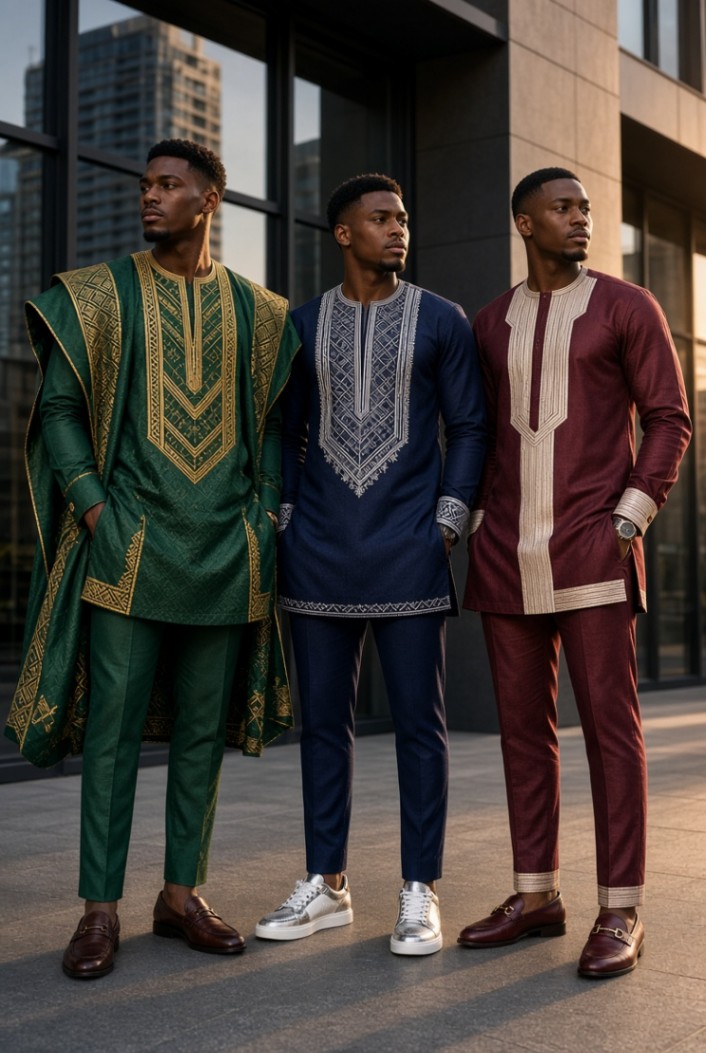
Native wear styles for men in Nigeria combine cultural identity with practical tailoring. Popular choices include senator outfits, agbada, kaftan sets, Ankara shirts, Adire pieces, and modern native looks that can move from weddings to Fridays at the office. The strongest outfits are not always the most heavily decorated. A clean fit, suitable fabric, balanced colour combination, and well-maintained accessories can make a simple native outfit look polished. Nigerian fashion coverage continues to highlight the blend of traditional garments with modern cuts, neutral colours, bold tones, and contemporary tailoring.## Popular Native Wear Styles### Senator WearSenator wear, also called “up and down” in everyday Nigerian fashion, usually consists of a matching long or short-sleeved top and trousers. The style is suitable for weddings, naming ceremonies, religious events, office social functions, and semi-formal outings.Current versions often use:- Minimal embroidery around the chest, neckline, cuffs, or pockets.- Tapered trousers rather than very wide legs.- Shorter tunic lengths for a more casual appearance.- Plain fabrics in navy, wine, black, cream, grey, brown, or emerald.- Contrasting embroidery in gold, silver, beige, or a darker shade of the base colour.Senator wear works particularly well as secondhand clothing because the matching top and trousers are usually easy to identify as a complete set. Before buying, check whether the trousers belong to the same fabric batch and whether the colours still match after washing.### Modern AgbadaAgbada is a flowing robe traditionally associated with Yoruba menswear and is commonly worn across Nigeria for major celebrations. A traditional set may include an outer robe, an inner top, and trousers. Modern versions frequently reduce the volume, shorten the robe, or use lighter fabric for easier movement.Agbada is commonly styled for:- Traditional weddings.- Chieftaincy events.- Eid celebrations.- Church ceremonies.- Graduation photographs.- Important family occasions.A simple agbada in white, cream, black, navy, or deep green can be worn with a plain inner shirt. More elaborate embroidery creates a ceremonial appearance but can make the outfit harder to wash, fold, store, and resell.When inspecting a secondhand agbada, spread the robe fully on a clean surface. Look for stretched embroidery, loose seams under the arms, fraying along the lower edge, sweat marks inside the collar, and missing buttons on the inner shirt.### Kaftan SetsA men’s kaftan usually has a long, loose top worn with matching or contrasting trousers. It is a flexible option for people who want the comfort of native wear without the extra volume of an agbada.Useful variations include:- Plain kaftans with a small embroidered chest panel.- Short-sleeved kaftans for casual occasions.- Long-sleeved kaftans for ceremonies and evening events.- Two-tone sets combining a neutral body with a darker neckline.- Kaftans made from cotton, linen blends, brocade, jacquard, or lightweight polyester.The loose cut can accommodate small alterations, but a very oversized kaftan may require more tailoring around the shoulders and sleeve openings. Always ask for the garment’s actual measurements rather than relying only on labels such as “large” or “XL.”### Ankara Native WearAnkara can be used for shirts, trousers, jackets, waistcoats, agbada panels, and complete matching outfits. Many men prefer a single Ankara shirt paired with plain trousers because the patterned piece becomes the focal point.Ways to wear Ankara without making the outfit visually crowded include:- Patterned shirt with black trousers.- Ankara waistcoat over a plain kaftan top.- Ankara pocket or collar detail on a plain senator outfit.- Matching shirt and trousers with minimal accessories.- Ankara short-sleeved shirt with denim or chinos for casual wear.Ankara prints differ significantly in colourfastness and fabric quality. Rub a small hidden area with a slightly damp white cloth to check for excessive colour transfer, especially if the item has dark red, navy, black, or purple sections.### Adire-Inspired OutfitsAdire is associated with Yoruba textile traditions and is recognised for resist-dye patterns. Modern men’s clothing may use Adire fabric for shirts, kaftans, jackets, trousers, or small panels rather than full traditional sets.Adire pieces can create a relaxed Lagos-style look when combined with:- Plain white or cream trousers.- Neutral sandals or loafers.- A simple wristwatch.- A plain inner vest or T-shirt.- Minimal jewellery.Because handmade and printed Adire can vary in pattern placement, inspect the fabric carefully for uneven fading, dye bleeding, weak stitching, and stains around the neckline.## Native Wear by Occasion| Occasion | Suitable style direction | Colour ideas | Accessories ||---|---|---|---|| Traditional wedding | Agbada, embellished senator, formal kaftan | White, cream, wine, royal blue, deep green | Cap, loafers, watch || Office celebration | Plain senator or short kaftan | Navy, grey, black, brown, beige | Leather belt, dress shoes || Friday casual wear | Ankara shirt, Adire shirt, plain kaftan | Earth tones, blue, rust, muted prints | Sneakers, sandals, simple bracelet || Naming ceremony | Light kaftan or senator set | Sky blue, cream, lavender, soft green | Loafers, modest watch || Eid celebration | Kaftan, agbada, embroidered senator | White, cream, olive, burgundy | Cap, sandals, subtle perfume || Graduation photos | Simple senator or monochromatic kaftan | Black, white, navy, wine | Watch, loafers, clean belt || Beach or outdoor event | Short-sleeved native shirt and relaxed trousers | White, tan, blue, printed Ankara | Canvas shoes, sunglasses |The event’s formality affects the amount of embroidery, fabric weight, and accessory detail that works well. A heavily decorated agbada may suit a wedding but feel impractical for a hot afternoon gathering.## Colours and Fabric Choices### Neutral ColoursBlack, white, cream, beige, grey, navy, and brown are easy to combine with existing shoes and accessories. They also tend to photograph clearly and can be altered into other garments when the original cut no longer fits.### Bold ColoursWine, mustard, emerald, royal blue, rust, and plum add personality to native wear. With bold colours, a plain shoe and restrained accessories can keep the outfit balanced.### Monochromatic DressingA monochromatic outfit uses different shades of one colour. For example, a navy senator set can be paired with a lighter blue inner shirt and dark navy shoes. This approach creates visual consistency without requiring a busy print.### Fabric Guide| Fabric | Common use | Practical feature | Inspection point ||---|---|---|---|| Cotton | Shirts, casual kaftans | Breathable and easy to wear | Shrinkage and faded collars || Linen or linen blend | Casual kaftans, shirts | Light and suitable for warm weather | Excessive creasing and thinning || Polyester blend | Senator sets, formal kaftans | Often resists creasing | Heat damage and trapped odour || Brocade | Ceremonial tops and agbada | Textured and formal-looking | Snags and flattened pattern || Jacquard | Kaftans, jackets, agbada | Woven pattern and structure | Pulled threads and lining damage || Ankara | Shirts, trousers, jackets | Strong visual pattern | Colour bleeding and seam strain || Adire | Shirts, kaftans, panels | Distinctive dyed appearance | Uneven fading and dye transfer |A fabric label is useful, but it does not replace a physical inspection. Texture, stitching, lining, odour, and colour condition often reveal more about a secondhand garment’s history than the label alone.## Finding the Right FitNative wear usually looks better when the shoulders, sleeves, neckline, and trousers are proportionate. A loose garment can be comfortable, but excess fabric around the shoulders or back may make the outfit appear borrowed rather than intentionally relaxed.Take these measurements before shopping:1. Shoulder width.2. Chest circumference.3. Sleeve length.4. Top length.5. Waist measurement.6. Trouser length.7. Thigh and ankle width.For online listings, ask the seller to measure the garment while it is laid flat. A buyer in Lagos, for example, can compare a listed chest width of 23 inches with a shirt already at home rather than guessing from a “large” label.Allow room for tailoring when the shoulders and chest already fit. Trousers can often be adjusted at the waist or hem, while major shoulder alterations may be more complicated and expensive.## Secondhand Price GuidePrices vary according to fabric, designer, age, condition, location, embroidery, and whether the garment is a complete set. The figures below are practical budgeting ranges rather than fixed market prices.| Item | Common secondhand range | What affects the price ||---|---:|---|| Plain native shirt | ₦5,000–₦15,000 | Fabric, brand, condition || Ankara or Adire shirt | ₦7,000–₦20,000 | Print quality and tailoring || Senator top and trousers | ₦15,000–₦45,000 | Embroidery, fabric, fit || Plain kaftan set | ₦12,000–₦35,000 | Fabric weight and completeness || Embroidered kaftan | ₦20,000–₦60,000 | Detail, condition, lining || Agbada set | ₦30,000–₦100,000+ | Number of pieces, embroidery, fabric || Native cap | ₦3,000–₦12,000 | Material and workmanship || Native loafers or sandals | ₦8,000–₦35,000 | Leather quality and sole condition |Treat a price as one part of the decision. A lower-priced item may require dry cleaning, repairs, transport, or alterations that change the total cost.## Secondhand Inspection ChecklistBefore agreeing to buy a native outfit, check:### Garment condition- Collar and underarm areas for sweat marks.- Cuffs for fraying or darkening.- Inside seams for loose threads.- Trouser crotch for weakening.- Zips, buttons, hooks, and press studs.- Embroidery for pulled or missing threads.- Lining for tearing or peeling.- Fabric for moth holes, burns, stains, or thinning.### Fit and completeness- Confirm whether the listing includes the top, trousers, robe, inner shirt, cap, or accessories shown.- Compare the seller’s measurements with a garment that fits you.- Ask whether the item has been altered before.- Check whether the trousers have enough seam allowance for adjustments.- Confirm if the colour in the photographs was affected by lighting.### Hygiene and careAsk how the item was stored and whether it has been washed or professionally cleaned. For clothing bought secondhand, laundering or appropriate cleaning before wear is a sensible hygiene practice. Items labelled “dry clean only” may require a specialist cleaner rather than ordinary washing.## Styling Native Wear SimplyAccessories can support an outfit without competing with it. A dark leather loafer can work with a plain senator set, while clean white sneakers may suit an Ankara shirt and relaxed trousers.A practical styling formula is:- Busy fabric: plain shoes and minimal jewellery.- Plain outfit: one visible accent, such as a cap, watch, bracelet, or embroidered shoe.- Formal agbada: coordinated cap and understated footwear.- Casual kaftan: sandals, loafers, or clean low-profile sneakers.- White native wear: darker shoes or accessories to create contrast.Avoid matching every item too literally. A shirt, cap, shoes, belt, and bracelet all in different shades of the same bright colour can make the outfit appear over-planned.## Care and StorageNative clothing lasts longer when it is cleaned and stored according to its fabric and construction.- Read the care label where one is available.- Test colourfastness before washing patterned or dark garments.- Turn embroidered garments inside out before gentle cleaning.- Avoid ironing directly over raised embroidery.- Use a clean, dry wardrobe with adequate airflow.- Fold heavy agbada robes instead of placing excessive weight on narrow hangers.- Keep white garments away from strongly coloured items.- Repair loose hems and buttons before the damage spreads.Care also affects resale value. A clean, accurately described garment with clear photographs is easier for another person to assess and reuse.## Safe Buying and Selling in NigeriaSecondhand clothing transactions often happen through WhatsApp, social media, direct messages, and informal marketplaces. The includes protecting consumers’ interests and supporting access to safe, quality goods and services.For safer transactions:1. Request recent photographs of the front, back, label, seams, and any defect.2. Ask for measurements rather than relying only on the stated size.3. Confirm the total price, delivery charge, pickup location, and payment timing in writing.4. Avoid sharing one-time passwords, card PINs, or banking login details.5. Be cautious when a seller refuses basic questions or creates unusual urgency.6. Use a public pickup point or bring a trusted person when practical.7. Inspect the item before completing an agreed in-person exchange.8. Keep screenshots of the listing and transaction conversation.9. Sellers should describe stains, alterations, missing pieces, and repairs honestly.10. Buyers and sellers should agree clearly on whether returns or exchanges are available.The , 2018 provides a framework against misleading representations and supports consumer protection in Nigeria; however, a platform listing is not a substitute for careful inspection and clear transaction terms.## How Threddo Fits*If you have a clean senator set, kaftan, agbada, Ankara shirt, or native accessory that no longer suits you, Threddo can provide a WhatsApp-first way to list it for sale or giveaway. Use clear measurements, disclose defects, select the correct category, and follow the platform’s when arranging contact or pickup.*Keeping native wear in circulation gives another person access to culturally meaningful clothing while reducing the need for a new garment. It also makes it easier for students, young professionals, and families to find occasion wear at a lower secondhand price.## Final TakeawayNative wear styles for men can be formal, casual, minimalist, colourful, or traditionally expressive. Senator sets, agbada, kaftans, Ankara, and Adire each offer different levels of comfort, formality, maintenance, and styling flexibility. When buying secondhand native wear, focus on measurements, fabric condition, garment completeness, cleaning needs, and transparent communication. When selling or giving away an item, accurate photographs and honest descriptions help the next wearer make a confident decision.This article is for educational purposes only and does not constitute professional advice. Always follow safe trading practices and use your own judgement.Last Updated: October 2026
10 Thrift Finds Under ₦2,000 You Need to See
How to Recreate a Celebrity Look With Thrift Pieces
Thrift Date Night Outfits That Don’t Look Cheap
Thrift Outfit Ideas for Campus: Stylish School Looks on a Budget
Thrifted Street Style: Outfits Spotted on Lagos Streets
15 Thrifted Outfit Inspo Looks for This Week
Have something to give away or sell?
Post your first listing — it only takes a couple of minutes. Or browse listings near you.