T
Loading…
Loading…
Last Updated: September 2026
If you keep wigs and hair extensions in the right condition, they stay neater, last longer, and are easier to wear again without extra work. In practice, good storage is mostly about keeping them clean, dry, detangled, and protected from dust, heat, and crushing.
Hair pieces lose quality quickly when they are tossed into bags, left in damp rooms, or stored with product buildup still on them. Heat, humidity, and friction can flatten curls, weaken lace, tangle strands, and make synthetic fibres look old before their time.
For people in Nigeria, storage conditions matter even more because humidity and dust can affect wigs and extensions fast. A simple routine at home can help preserve shape, reduce smell, and keep fibres from breaking down early.
Before you put any wig or extension away, start with a light reset. This keeps dirt, oil, sweat, and styling residue from setting into the hair while it sits.
For extensions, separate the wefts or bundles neatly so they do not form knots while packed away. For clip-ins, close the clips before storing so they do not catch on fabric or mesh.
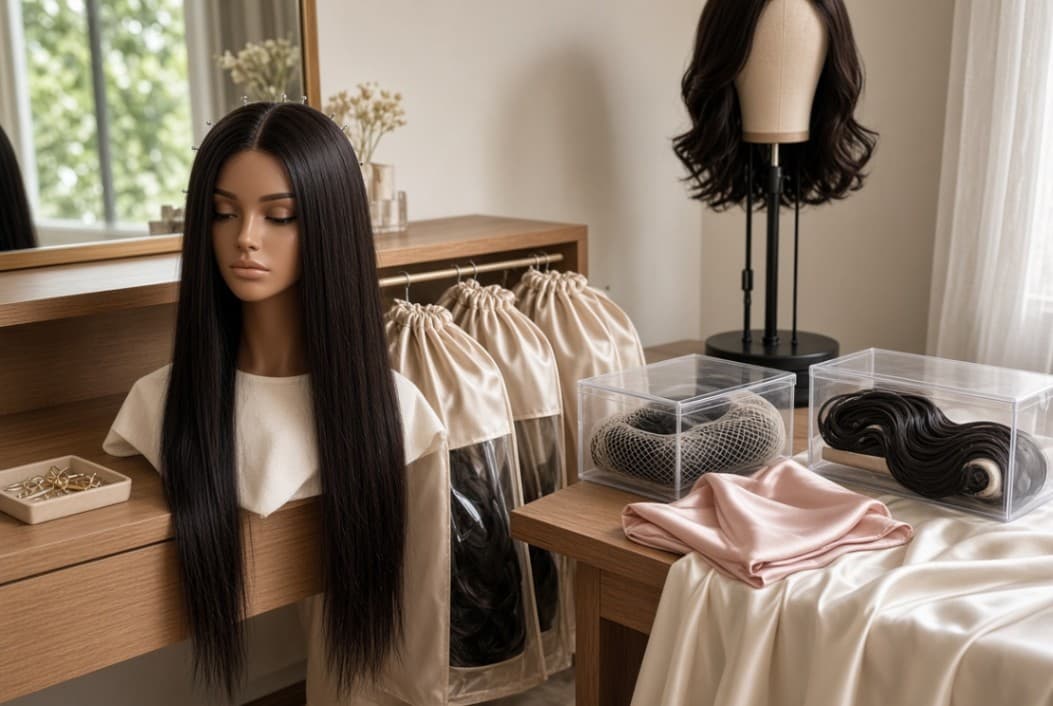
A wig cap, satin bag, wig stand, or mannequin head can help preserve structure. If the wig has curls, waves, or a defined parting, storing it in a shape-preserving way reduces extra styling later.
The right storage method depends on how often you wear the piece and how much space you have. A wig you use weekly needs a different setup from one you keep for occasional wear.
| Item type | Storage method | Why it helps | Common mistake |
|---|---|---|---|
| Lace front wig | Wig stand or satin bag | Preserves shape and reduces tangling | Folding lace under the cap |
| Curly wig | Stand or mannequin head | Keeps curl pattern intact |
Have something to give away or sell?
Post your first listing — it only takes a couple of minutes.
| Compressing curls in a drawer |
| Straight human hair wig | Satin bag or hanger | Reduces friction and dust | Leaving it uncovered |
| Clip-in extensions | Flat in a satin pouch or box | Prevents clips from snagging | Throwing pieces together loose |
| Bundles/weaves | Tied and wrapped in a satin bag | Keeps wefts aligned | Storing while damp |
| Braids, ponytails, pony wraps | Hanging organizer or soft pouch | Helps maintain style | Packing with heavy items |
Storage location matters as much as the container. A cool, dry, shaded place works better than a bathroom shelf or a hot wardrobe corner near a window.
A wig stand is one of the easiest tools for keeping a wig neat between wears. It keeps the cap open, helps the style hold its shape, and makes it easier to air out after use.
If you do not have a stand, place the wig in a satin or silk bag after it is fully dry and detangled. Avoid stuffing it tightly into a tiny box, because compression can flatten the crown and bend lace.
For frontals and lace wigs, place tissue paper inside the cap to support the shape. This works especially well for curly and voluminous units that need more structure.
Hair extensions need less display space and more protection from tangling. The main goal is to keep each bundle, weft, or clip-in section separate and smooth.
Lay each clip-in piece flat or loop them gently in one direction before placing them in a satin pouch. This prevents the clips from scratching other sections and keeps the hair from matting.
Tie the top of each bundle loosely with a soft band, then wrap in a satin or silk cloth. If the hair is long, fold it once only, because repeated folding can create bends and weak points.
Keep them in a breathable fabric pouch or hanging organizer. Heavy decorative pieces, beads, or metal clips should not be stacked under pressure, because they can distort the shape.
A little maintenance after each wear helps more than occasional deep cleaning. If you keep a routine, storage becomes easier and the hair stays ready for use.
For curly wigs, finger-detangling often keeps the pattern better than brushing. For straight hair, a light brush before storage helps reduce knots later.
These are the habits that usually cause wigs and extensions to wear out early.
A common example is a lace frontal tucked into a nylon bag after a night out. By the next wear, it may smell, flatten, or lose its neat parting because the moisture and pressure sat there too long.
You do not need expensive products to keep wigs and extensions in decent condition. Simple storage tools can work well when they are used consistently.
| Storage item | Approximate price range in ₦ | Use |
|---|---|---|
| Satin bag | ₦1,500–₦5,000 | Protects from dust and friction |
| Wig stand | ₦3,000–₦12,000 | Maintains shape and airflow |
| Mannequin head | ₦5,000–₦25,000 | Helps keep style and lace form |
| Storage box | ₦2,000–₦10,000 | Organises multiple pieces |
| Silica gel packets | ₦500–₦2,000 | Helps reduce trapped moisture |
| Hanging organiser | ₦4,000–₦15,000 | Saves space in small rooms |
Prices vary by quality, size, and location, but the main value comes from keeping the hair dry, separate, and protected.
Use this quick checklist before putting anything away:
This routine takes a few minutes, but it saves time when you want to wear the hair again.
In Nigeria, many people keep wigs and extensions for repeated use because styling hair can be expensive and time-consuming. Good storage supports that reality by helping each piece last through more wears without looking tired quickly.
This also fits a wider circular-fashion mindset: taking care of what you already own reduces waste and lowers the need to replace items too often. Research on second-hand and circular fashion in Africa shows that reuse and resale play a major role in clothing circulation, especially in West Africa, where trade and reuse systems are already deeply active.
If you ever want to pass on wigs, hair extensions, or accessories you no longer use, a simple listing page and safe direct-contact marketplace can make the handover easier. On Threddo, the focus is on direct buyer-seller contact and practical secondhand trading, so it fits neatly with a reuse-first mindset: Threddo safety guide and Threddo listings.
How you store wigs and hair extensions has a direct effect on how long they stay neat, soft, and wearable. Clean them gently, dry them fully, keep them separated, and store them in a cool, dry place that protects shape and reduces friction. This article is for educational purposes only and does not constitute professional advice. Always follow safe trading practices and use your own judgement.