How to Inspect a Bale Before Buying: Okrika Quality Checklist for Nigeria
Evelyn John·
How to Inspect a Bale Before Buying: Okrika Quality Checklist for Nigeria
Buying secondhand clothing bales—often called “okrika” or “mitumba”—can be a smart way to stock a thrift business or refresh your wardrobe at lower cost. But not every bale is what it claims to be. Some sellers advertise “Grade A” while packing mixed or lower-quality items inside.
This guide walks you through a practical, Nigeria-focused inspection process: what to look for, how to test fabrics and seams, how to spot re-baled stock, and what price ranges to expect in 2026. I’ll also share a simple checklist you can use before paying, plus notes on your rights as a buyer under Nigerian consumer protection rules.
Last Updated: September 2026
Why bale inspection matters in Nigeria’s thrift market
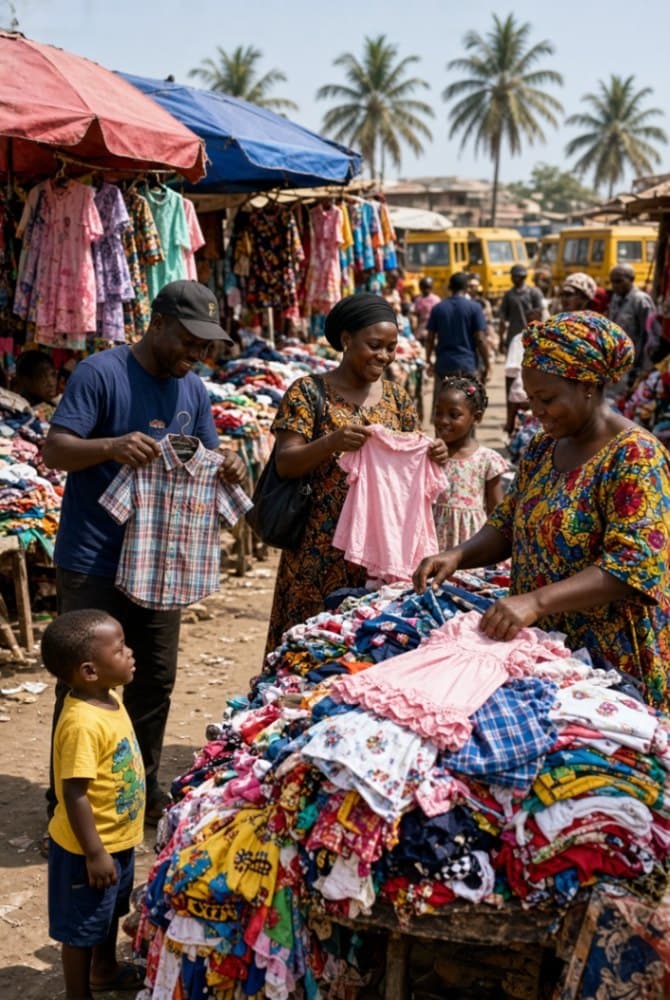
Nigeria’s secondhand clothing market is large and active, with major hubs in Lagos, Ibadan, Kano, and Port Harcourt. Because bales are compressed and often sold sealed, buyers can’t always see every piece before purchase. That creates room for mismatches between advertised grade and actual quality.
Inspecting properly helps you:
Avoid paying premium prices for mixed or lower-grade stock
Reduce losses from stained, torn, or odorous items
Build trust with your own customers if you resell
Make smarter choices between Grade A, B, and C bales
Under Nigeria’s Federal Competition and Consumer Protection Act 2018, sellers of second-hand goods must clearly disclose that items are used or reconditioned. While this doesn’t guarantee grade accuracy, it supports your right to ask questions, request samples, and expect truthful descriptions.
Understanding bale grades: A, B, C (and what they really mean)
Sellers commonly use Grade A, B, and C labels, but definitions vary by supplier. Here’s a practical breakdown used across many Nigerian thrift businesses:
Some loose threads, minor fading, fewer top brands
C (Fair / Economy)
Noticeable wear, repairs needed
Clearance racks, budget deals
More fading, possible small defects, mixed brands
Some suppliers further split into “High Grade Mixed” or “Grade A/B Mix,” so always ask exactly what their grading means before paying.
Step-by-step: How to check a bale before buying
Use this sequence when inspecting in person or via video call with a supplier.
1. Verify the seller and bale origin
Before you even touch the bale:
Ask for the bale label (often shows origin country, grade, weight, batch).
Request photos or short videos of the actual bale, including straps and tags.
If buying bulk or container loads, ask for time-stamped loading/sealing footage.
Reputable exporters and local wholesalers will usually share these without hesitation.
2. Inspect the bale exterior and strapping
Physical signs can reveal if a bale is original or re-baled (opened, re-sorted, and re-compressed):
Strapping pattern: Genuine exporter bales have consistent, machine-tensioned straps. Re-baled bales often show uneven tension, overlapping tape, or mismatched patterns across bales from the same “batch.”
Bale dimensions: Wildly inconsistent sizes in the same shipment can indicate repacking from multiple sources.
Outer bag quality: Look for intact woven polypropylene bags; torn or re-sewn outer layers may signal tampering.
If you’re buying multiple bales, compare strapping and dimensions side by side. Inconsistent patterns are a strong red flag.
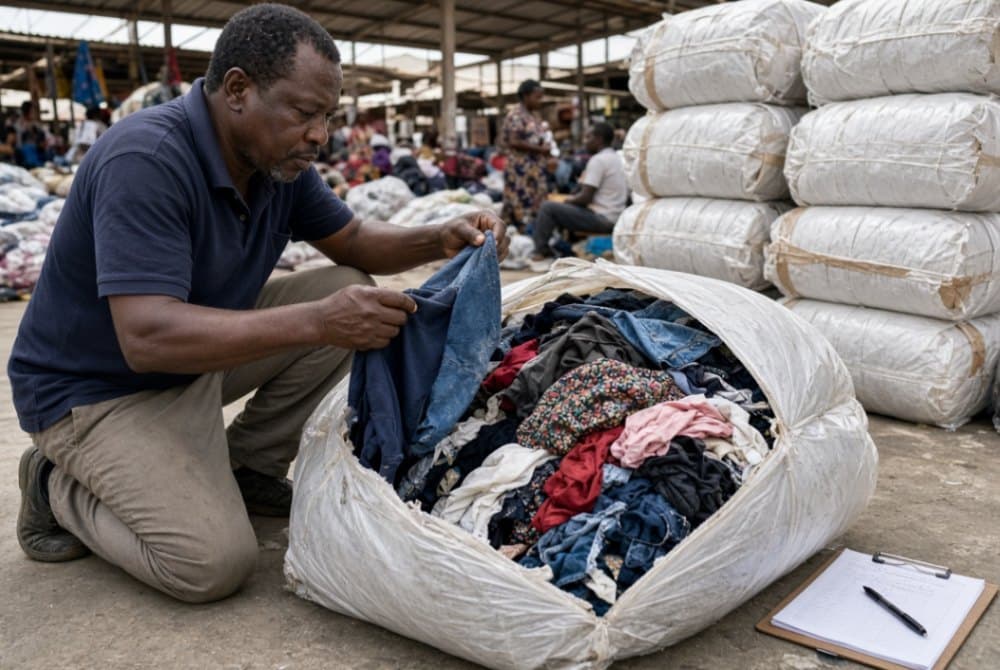
3. Sample from the middle and bottom—not just the top
A common trick is “top-layer padding,” where only the visible top pieces are high quality. To avoid this:
Ask the seller to open the bale and pull samples from the middle and bottom layers.
Randomly select 15–20 pieces across different sections.
Check if quality drops significantly below the top layer.
If only the top 10–20% looks premium, the bale may be misgraded.
4. Check brand labels and tags
For Grade A bales especially, brand labels are a key quality signal:
In a random sample of 20 pieces from a true first-grade bale, 16–18 should have readable brand labels.
Labels should be stitched, not printed. Printed “brand names” are often fakes.
Many cut-out or missing tags suggest the bale has been through secondary processing (i.e., re-baled lower-grade stock).
Familiarize yourself with common thrift-friendly brands in Nigeria (e.g., Zara, H&M, Next, Marks & Spencer, Gap, Levi’s) to spot genuine tags.
5. Test fabric quality by touch, stretch, and light
Fabric feel and behavior tell you a lot about durability:
Touch: Quality fabrics feel thick and resilient, not flimsy or papery.
Stretch test: Gently stretch a section. If it snaps back to shape, that’s a good sign. If it stays stretched or feels weak, it may wear out quickly.
Light test: Hold lighter-colored items up to light. If you can see through them easily, the fabric may be overly thin or worn.
These quick tests help you separate long-lasting pieces from those likely to disappoint customers.
6. Inspect stitching, seams, and hardware
Turn items inside out and examine construction:
Stitching: Look for tight, even stitches with no loose threads. Loose or uneven stitching can lead to seams splitting.
Seams: Run your fingers along seams. Smooth, sturdy seams indicate better finishing.
Zippers, buttons, and fasteners: Test zippers up and down; check buttons for cracks or loose threads. Faulty hardware reduces resale value.
Well-finished interiors often correlate with higher-grade garments.
7. Smell and check for odors, stains, and damage
Use your senses to catch hidden issues:
Smell: A fresh or neutral scent is ideal. Musty, moldy, or strong chemical odors are red flags.
Stains: Check underarms, collars, hems, and front panels for stubborn stains that won’t wash out.
Tears and holes: Inspect seams, pockets, and high-stress areas for small tears or thinning fabric.
Even a few badly stained or torn pieces in your sample can indicate larger problems inside the bale.
8. Confirm weight, piece count, and price alignment
Bales are often sold by weight (e.g., 80kg, 100kg), but piece count and price per item matter more for profitability.
Typical 2026 price context (Lagos and major cities; varies by supplier and grade):
Bale Size
Approx. Items
Typical Price Range (₦)
Notes
80kg Grade A
~250–350 pieces
₦180,000 – ₦350,000+
Depends on brand mix and supplier
100kg Grade A
~350–450 pieces
₦250,000 – ₦450,000+
Higher end for premium European/UK bales
Mixed Grade A/B
Varies
₦150,000 – ₦300,000+
Cheaper but more sorting work
Prices fluctuate with exchange rates, shipping costs, and location. Always calculate your expected cost per sellable item based on your sample, not just the bale price.
Red flags that suggest a low-quality or misgraded bale
Watch out for these warning signs:
Only top-layer samples allowed – refusal to show middle/bottom pieces.
Many cut or missing brand labels in a “Grade A” bale.
Inconsistent strapping across bales from the same supposed batch.
Strong musty or chemical smells from multiple sampled items.
Price far below market for claimed grade—often too good to be true.
No bale label, photos, or clear grade definition from the seller.
If several of these appear, it’s usually safer to walk away or negotiate a lower price with clear terms.
Simple bale inspection checklist (print or save on your phone)
Use this before you pay:
Seller provided bale label and clear grade definition
Received photos/videos of actual bale (straps, tags, exterior)
Allowed to sample from top, middle, and bottom layers
At least 80% of sampled Grade A items have readable brand labels
Fabric feels thick and resilient, not flimsy
Stitching is tight and even, no loose threads
Zippers, buttons, and fasteners work properly
No musty/moldy odors on multiple pieces
Minimal stains, tears, or holes in sample
Price per estimated sellable item fits your budget and margin
If you’re buying online or via WhatsApp, ask the seller to walk through these points on video before you transfer money.
Your rights as a buyer of secondhand goods in Nigeria
While bale trading is largely informal, Nigerian consumer law still offers some protections:
Under the Federal Competition and Consumer Protection Act 2018, sellers must clearly disclose that goods are second-hand, reconditioned, or used.
Consumers have a right to examination of goods and to return defective or unsafe items in many formal retail contexts.
In practice, many bale sellers operate on “no return” terms, so your best protection is pre-purchase inspection and dealing with trusted suppliers.
For higher-value purchases (e.g., container loads), consider:
Written agreements on grade, weight, and sample approval
Time-stamped loading videos and sealed bale documentation
Using suppliers who offer some form of quality guarantee or replacement policy for major mismatches
Practical tips for different buyer types
First-time thrift bale buyers
Start with smaller bales (e.g., 40–60kg) to learn grading without huge risk.
Visit physical markets or warehouses where you can inspect before paying.
Ask experienced thrift sellers in your area to mentor you on local grading norms.
Resellers and small thrift businesses
Sort your opened bale into Grade A, B, and C for clear pricing tiers.
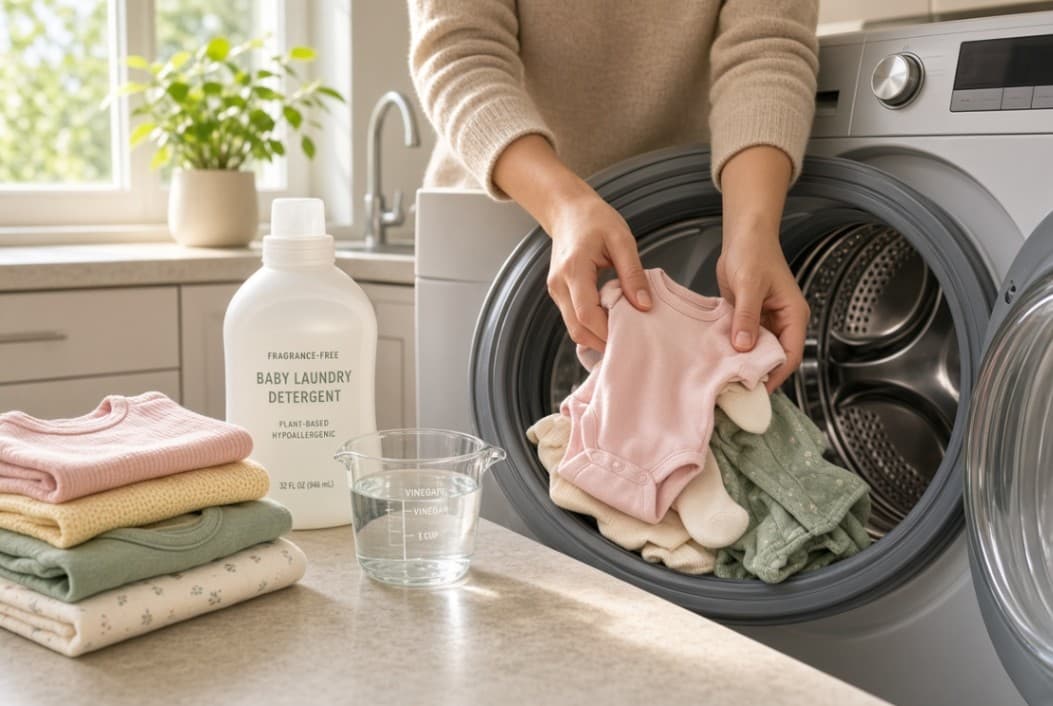
Wash and freshen items with mild detergent and vinegar solution to remove odors.
Label each item with size, grade, price, and brand for faster sales.
Online/WhatsApp buyers
Insist on live video inspection before payment.
Use platforms that encourage direct buyer–seller communication so you can ask detailed questions.
Keep records of chats, photos, and payment receipts in case of disputes.
Where Nigerians commonly buy bales (and how to choose)
Major thrift bale hubs include:
Lagos: Yaba, Oshodi (Arena Warehouse block for okrika bale dealers)
Ibadan: Various secondhand clothing markets around Dugbe and challenge areas
Kano, Port Harcourt, Abuja: Large markets with dedicated okrika sections
When choosing a supplier:
Prefer those who show bale labels, sample pictures, and grade confirmation willingly.
Ask about their sorting process and whether they have quality inspectors.
Check reviews or ask for references from other thrift buyers.
Online, many suppliers operate through WhatsApp communities and Facebook thrift supplier groups, offering videos and sample pictures before purchase.
A note on sustainability and smart thrifting
Buying secondhand bales, when done thoughtfully, supports a more circular fashion economy by extending the life of garments and reducing waste. However, not all imported secondhand clothes are high quality; some end up as waste if they’re too damaged to sell or wear.
Inspecting bales carefully helps ensure you’re bringing in wearable, resalable items rather than contributing to textile waste. It also helps you build a reputation for quality, which keeps customers coming back.
Using Threddo for safer secondhand trading
If you’re looking to sell or source individual secondhand items rather than full bales, platforms like Threddo.com.ng offer a WhatsApp-first marketplace for Nigerian users to list or find preloved clothes, shoes, bags, jewellery, hair, and accessories with no fees or in-app payments. For community safety tips and best practices when trading peer-to-peer, you can review guidance on Threddo’s safety page (/safety) to complement your bale-buying knowledge.
Conclusion
Inspecting a bale before buying is one of the most important skills for anyone serious about thrifting or running a thrift business in Nigeria. By checking labels, fabric, stitching, odors, and bale structure—and by sampling from all layers—you can avoid costly mistakes and build a more reliable stock of quality secondhand items.
This article is for educational purposes only and does not constitute professional advice. Always follow safe trading practices and use your own judgement.