
T
Loading…
Loading…
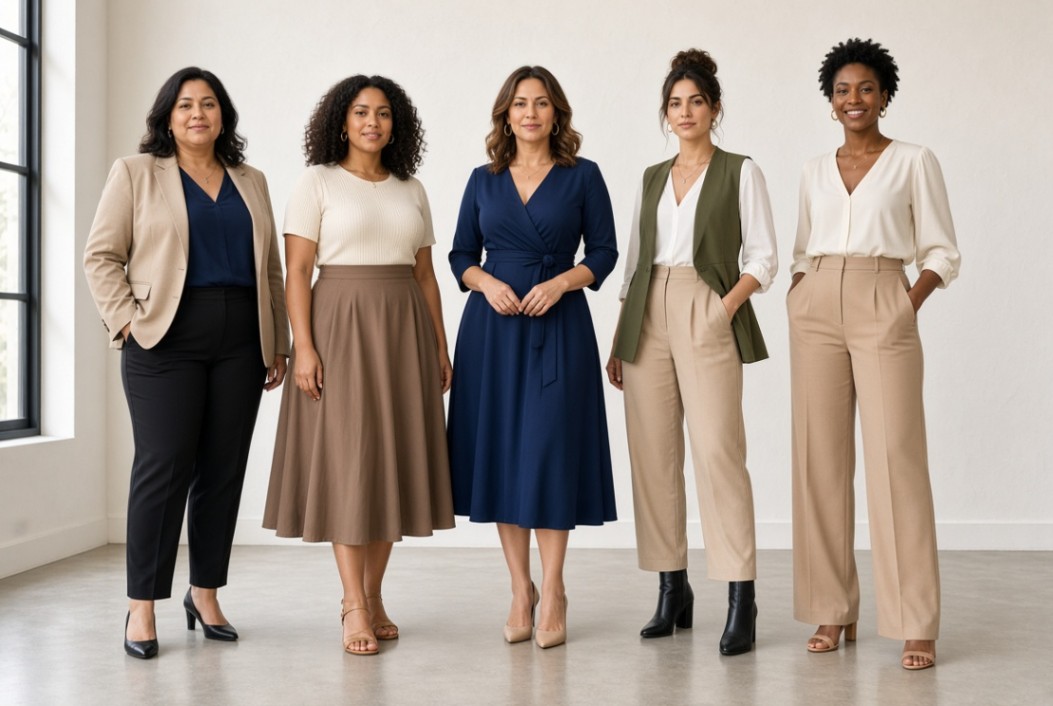
Dressing for your body type is less about hiding parts of your body and more about understanding proportion, comfort, fabric, fit, and personal style. Whether you shop at Yaba, Katangowa, Kantamanto, local boutiques, or online marketplaces, the right outfit begins with accurate measurements and a clear idea of how you want your clothes to feel and move.
Body-shape labels such as pear, apple, hourglass, rectangle, and inverted triangle can be useful styling shortcuts, but they are not fixed identities. Bodies change, clothes fit differently across brands, and Nigerian tailoring often allows adjustments that ready-made clothing does not.
In fashion, body type usually describes the relationship between your shoulders, bust or chest, waist, and hips. It is not a measure of attractiveness, health, or clothing size.
Two people can wear the same size while having different proportions. A person with a smaller waist and fuller hips may need a different trouser cut from someone with similar hip and waist measurements but a longer or shorter rise.
Common body-shape descriptions include:
| Body shape | Typical proportion | Useful styling focus |
|---|---|---|
| Pear or triangle | Hips are wider than shoulders | Balance upper and lower proportions if desired |
| Apple or round | Midsection is fuller relative to hips and shoulders | Prioritise comfort, drape, and vertical lines |
| Hourglass | Bust or chest and hips are relatively balanced, with a defined waist | Follow natural shape without excessive tightness |
| Rectangle | Shoulders, waist, and hips have a relatively similar width | Use layering, texture, or shaping to create visual structure |
| Inverted triangle | Shoulders or bust are wider than hips | Add movement or volume below the waist if desired |
These categories are broad guides rather than precise scientific classifications. Research into clothing fit has repeatedly shown that standard sizing does not represent every body shape equally, which is one reason measurements are more useful than relying on labels alone.
Before buying secondhand clothing, measure your body with a flexible tape. Wear light clothing, stand naturally, and keep the tape snug without pulling it tight. Nigerian bespoke clothing guides commonly recommend measuring the fullest part of the chest or bust, the natural waist, and the fullest part of the hips.
How Far Can ₦5,000 Really Go at a Thrift Market?
10 Thrift Finds Under ₦2,000 You Need to See
How to Recreate a Celebrity Look With Thrift Pieces
Thrift Date Night Outfits That Don’t Look Cheap
Thrift Outfit Ideas for Campus: Stylish School Looks on a Budget
Thrifted Street Style: Outfits Spotted on Lagos Streets
Have something to give away or sell?
Post your first listing — it only takes a couple of minutes. Or browse listings near you.
Record these measurements in centimetres or inches:
Do not assume that a UK 12, US 8, medium, or large means the same thing across brands. For example, one Nigerian fashion sizing chart lists bust measurements from 85 cm for XS to 109 cm for XL, while another brand uses different ranges for similar labels.
A pear-shaped body typically has hips that are wider than the shoulders. Styling can either highlight that contrast or create a more balanced appearance, depending on your preference.
For a casual Lagos look, try a fitted but comfortable plain top with a patterned wrapper-style skirt or relaxed high-waisted jeans. For traditional wear, a structured blouse with a flowing iro, skirt, or wide-leg trouser can create balance while allowing movement in warm weather.
When thrifting, inspect the hip and seat measurements first. A skirt with enough room at the hips can often be adjusted at the waist by a tailor, while a skirt that is too narrow at the hips may be difficult to enlarge.
An apple or round shape generally carries more fullness around the midsection. The most useful approach is to choose clothing that drapes comfortably instead of creating pressure around the stomach.
Avoid treating “loose” as the only option. Oversized clothing can sometimes add unwanted bulk, while extremely tight clothing can restrict movement. The practical test is whether you can sit, walk, raise your arms, and breathe comfortably.
An hourglass shape usually has relatively balanced bust or chest and hip measurements with a more defined waist. Clothing that follows the body’s natural proportions can work well, although comfort remains more important than a close fit.
For Nigerian traditional clothing, a fitted blouse paired with a flowing skirt, wrapper, or well-proportioned trousers can preserve shape without requiring restrictive tailoring. If the bust and hip measurements fall into different size ranges, buying for the larger measurement and adjusting the smaller area is a common alteration approach.
A rectangle shape generally has shoulders, waist, and hips that appear relatively similar in width. Clothing can create definition, add movement, or maintain a straight minimalist silhouette.
Secondhand shopping gives you room to experiment with these details at lower prices than buying every style new. Check whether the garment’s shoulder seams sit correctly, because shoulder fit is often more difficult to alter than the waist or hem.
An inverted triangle shape generally has shoulders or bust that are wider than the hips. Styling can soften the shoulder line or add interest and volume to the lower half.
For a casual outfit, pair a simple top with wide-leg jeans and colourful sandals. For workwear, a clean blouse with a structured trouser or A-line skirt provides shape without requiring a dramatic silhouette.
The most useful question is not “What size is this?” but “How does it fit across my key points?”
| Garment | Measurements to check | Fit details to inspect |
|---|---|---|
| T-shirt or blouse | Bust, shoulder, sleeve, length | Armhole comfort, chest pulling, shoulder seam |
| Trousers | Waist, hip, rise, inseam | Crotch comfort, pocket gaping, hem length |
| Jeans | Waist, hip, rise, inseam | Stretch recovery, thigh room, waistband placement |
| Skirt | Waist, hip, length | Walking ease, lining, zip condition |
| Dress | Bust, waist, hip, length | Seam placement, sitting comfort, fastening |
| Blazer | Shoulder, bust, sleeve, length | Button pulling, lining, shoulder structure |
| Shoes | Foot length and width | Sole wear, inner lining, grip, odour |
When viewing a secondhand item, look for:
A garment can still be usable when it needs a minor repair, but the repair time and cost belong in your decision. A simple zip replacement, hemming, or waist adjustment may be practical; extensive reconstruction can change the item’s value and fit.
Nigeria’s heat and humidity make fabric choice important. The same silhouette can feel completely different depending on fibre, weight, weave, lining, and colour.
| Fabric or material | Typical feel | Useful considerations |
|---|---|---|
| Cotton | Breathable and familiar | May shrink or crease depending on weave |
| Linen | Airy and breathable | Creases easily but suits relaxed styling |
| Rayon or viscose | Soft and fluid | Can require careful washing and may weaken when wet |
| Polyester | Often durable and quick-drying | Breathability varies by weave |
| Denim | Structured and durable | Heavy denim may feel warm in humid weather |
| Lace or mesh | Decorative and breathable in some designs | Check lining, snags, and transparency |
| Ankara or wax print | Structured and colourful | Check colourfastness, stiffness, and seam allowance |
Read or ask about the care instructions before buying. A secondhand garment that requires specialist cleaning may not be convenient for everyday Lagos wear, particularly when the item has an unverified history of washing or storage.
Prices vary by city, condition, brand, fabric, season, and seller. The ranges below are planning examples rather than fixed market prices.
| Item | Approximate secondhand range | What affects the price |
|---|---|---|
| Casual top | ₦2,000–₦8,000 | Fabric, condition, brand, finish |
| Jeans or trousers | ₦4,000–₦15,000 | Denim quality, fit, wear, label |
| Dress | ₦5,000–₦25,000 | Construction, lining, occasion, fabric |
| Skirt | ₦3,000–₦12,000 | Waist and hip fit, print, condition |
| Blazer | ₦8,000–₦30,000 | Structure, lining, brand, tailoring |
| Shoes | ₦5,000–₦25,000 | Sole wear, material, brand, hygiene |
| Bag | ₦4,000–₦25,000 | Handles, hardware, lining, material |
Before agreeing to a price, compare the garment’s condition with the cost of cleaning, repairs, transport, and possible tailoring. The cheapest item is not necessarily the lowest-cost outfit if it needs several alterations.
Tailoring is one of the practical advantages of buying clothing in Nigeria. A tailor can often adjust:
Alterations are more difficult when there is no extra seam allowance, the fabric has a strong pattern, the garment has complicated lining, or the item is too small across the shoulders, bust, hips, or thighs.
A secondhand item with generous seam allowance can sometimes be adapted for a new wearer, extending its useful life and reducing premature disposal. This matters in a country where low-quality imported secondhand clothing and textile waste create disposal challenges.
Using body-shape knowledge can reduce impulse buying and improve wardrobe rotation. When clothes fit your measurements and match your daily activities, they are more likely to remain in use.
Practical circular-fashion habits include:
Secondhand fashion has environmental benefits when a garment remains in use, but not every used item is automatically sustainable. Poor-quality pieces that quickly become waste can create additional disposal problems, including open dumping and burning.
When buying or selling clothes, shoes, bags, jewellery, hair, or accessories online, treat accurate descriptions as part of the transaction.
If you are looking for a reliable place to find or pass on pre-loved items, Threddo provides a community-focused marketplace for trading secondhand goods across Nigeria.
This article is for educational purposes only and does not constitute professional advice. Always follow safe trading practices and use your own judgement.