T
Loading…
Loading…
Last Updated: August 2026
A cluttered wardrobe quietly holds money, space, and time that could be used better. In Nigeria, where thrift fashion, resale, and peer-to-peer trading are already part of everyday life, a weekend wardrobe clear-out can turn unused clothing into quick cash while making your room easier to manage.
The fastest way to do it is to sort, photograph, price, and list only the items that are clean, wearable, and easy to describe. When you keep the process simple, you reduce stress and improve your chances of finishing in one weekend.
The goal is not to empty your wardrobe blindly. The goal is to separate what you wear often, what still has resale value, and what belongs in a donation or giveaway pile.
A practical weekend plan works better when each block has one job. That way, you avoid mixing cleaning, pricing, and posting into one confusing task.
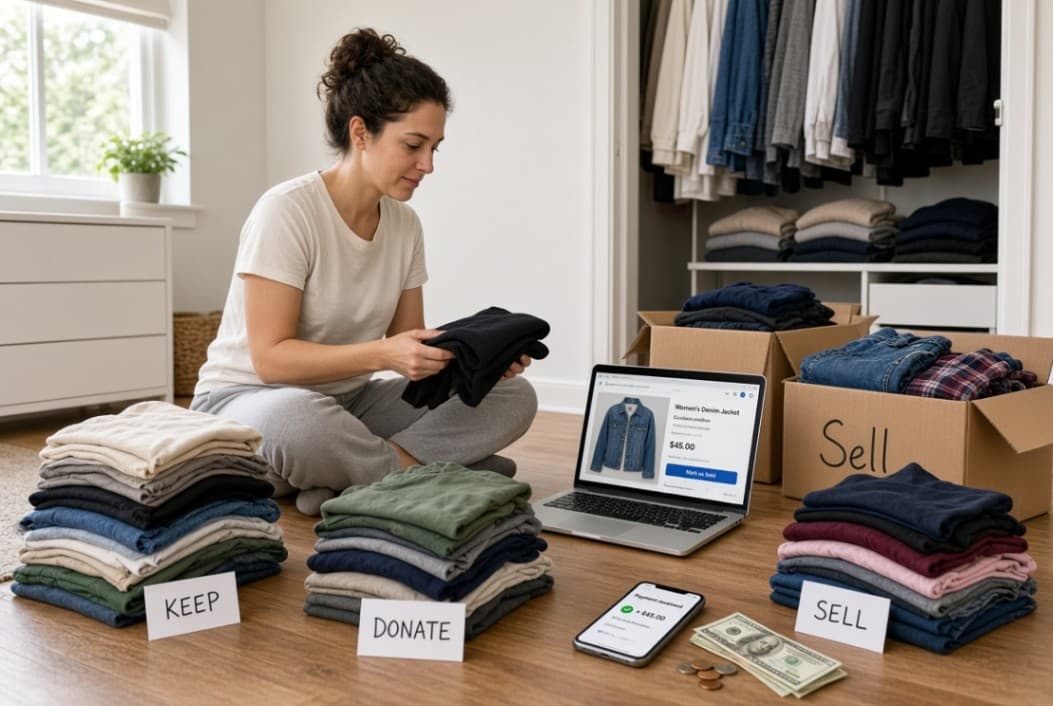
Start by pulling every clothing item, shoe, bag, and accessory out of your wardrobe. Group them into four piles: keep, sell, donate, and repair.
Use a simple rule: if you have not worn an item in many months, and it is still in good condition, it can move into the sell pile. If it is stained, heavily damaged, or missing important parts, it is usually better suited for donation or repurposing.
Wash or dry-clean the sell pile so every item looks presentable. Nigeria’s secondhand shoppers pay more attention to condition, odor, and appearance than to brand names alone.
Ironing, lint removal, button fixing, and shoe cleaning can improve how a listing performs. A shirt that looks ready-to-wear is easier to sell than one that looks like it needs work.
Take photos near a bright window or outside in natural light. Use a plain wall, bed sheet, or clean floor so the item stands out.
Shoot the front, back, close-up of labels or wear areas, and any defects. Buyers often ask for these details anyway, so showing them upfront saves time.
Set your prices in naira and keep them realistic for the local thrift market. Items that are clean, trendy, and well-photographed can move faster than items priced too close to retail.
Write clear descriptions, include size, condition, location, and delivery or pickup options, then post to places where Nigerian buyers already search for used fashion.
Have something to give away or sell?
Post your first listing — it only takes a couple of minutes.
Some wardrobe items move faster than others because they are easy to wear, easy to photograph, and easy to trust. In Nigeria, buyers often respond quickly to everyday pieces, school-friendly styles, office wear, and fashion accessories that do not need much explanation.
The table below gives a practical guide to what often sells well and how to present it.
| Item type | Why it moves | Good listing detail | Typical price range |
|---|---|---|---|
| T-shirts and tops | Easy to style and quick to ship | Size, fabric, fit, color | ₦1,500–₦5,000 |
| Jeans and trousers | Everyday use and steady demand | Waist size, length, stretch | ₦3,000–₦10,000 |
| Dresses | Strong demand for casual and occasion wear | Occasion, length, fit, condition | ₦3,000–₦15,000 |
| Sneakers and flats | Buyers like usable footwear | Sole condition, size, brand | ₦4,000–₦20,000 |
| Handbags | Easy add-on purchases | Material, size, strap condition | ₦3,000–₦18,000 |
| Jewellery and accessories | Cheap, impulse-friendly items | Material, clasp, wear marks | ₦1,000–₦8,000 |
These price ranges reflect common resale behavior in Nigeria’s thrift and used-fashion space, where condition and presentation matter as much as category. Public thrift marketplaces in Nigeria also focus on direct buyer-seller contact and affordable used fashion, which supports quick local reselling.
Good pricing is about speed, not wishful thinking. If you want money within a weekend, price for movement rather than for emotion.
A practical approach is to compare your item with similar used listings and then price slightly below similar items if your goal is faster turnover. Clean items with strong photos can sit higher than damaged or faded ones, even when both are the same brand.
Use this simple model:
If an item is hard to describe or has visible flaws, say so openly. Clear disclosure builds trust and reduces back-and-forth chats with buyers.
A strong listing usually answers the buyer’s basic questions in one glance. That means your photo, title, and description should work together.
Use this checklist before posting:
If you want fewer failed chats, keep the first line simple: “Cream midi dress, size M, very good condition, Lagos pickup.” That format is short, clear, and easy to scan on a phone.
Secondhand trading works better when both sides know what to expect. Nigerian consumer protection guidance emphasizes fair dealing, truthful representation, and transparency in transactions, which is why honest descriptions and clear item condition matter.
For wardrobe resale, the safest habits are practical:
If you are dealing with used personal-care items like hair accessories or grooming tools, hygiene and condition matter even more. For products that could touch skin closely, a clean, item-specific description helps avoid misunderstandings and keeps the transaction straightforward.
A weekend declutter can create small but useful income without turning your home into a warehouse. The exact amount depends on how many items you list, how good the photos are, and how quickly you respond to buyers.
Here is a simple example:
Total potential weekend value: ₦27,000.
That does not mean every wardrobe will earn the same amount, but it shows how a few well-presented items can unlock value fast. The key is to list items that match local demand rather than waiting for a perfect buyer.
Not every item belongs in a paid listing. Clothes that are still usable but low-value can be listed as donations or free pickups, especially if you want to clear space quickly.
Donation-style listings work well for school wear, basic tees, baby clothes, and simple accessories that may not be worth many individual chats. The benefit is speed: you reduce clutter, help another person, and keep the process moving.
A useful split for one weekend is:
Many wardrobe sales stall for avoidable reasons. The biggest problem is usually not the item itself but the way it is presented.
Avoid these mistakes:
In Nigerian online fashion marketplaces, clarity and trust are major conversion factors. Platforms that focus on direct buyer-seller contact and easy listing creation work because they reduce friction and keep communication simple.
You do not need fancy sales language to get replies. A short, polite message often works better.
Example listing text:
“Blue denim jacket, size L, lightly used, no tears, clean condition, Lagos pickup, ₦8,000. More photos available on request.”
Example response to a buyer:
“Thanks for your interest. The item is available, and I can share more photos or arrange pickup in a public location.”
That kind of message is direct, respectful, and easy for both sides to understand.
Nigeria’s thrift and resale ecosystem is already active across marketplaces, social platforms, and local fashion communities. Publicly visible Nigerian thrift brands and marketplaces increasingly center direct contact, affordable pricing, and used-fashion discovery, which makes wardrobe decluttering a realistic side-income activity rather than a niche hobby.
For Lagos shoppers and sellers in particular, secondhand fashion is common enough that local market guides regularly map out where used clothes move fastest, showing how strong demand remains for affordable clothing and accessories.
If you are listing unused items online, a WhatsApp-first marketplace like Threddo can fit a quick weekend clear-out because it is built around direct buyer contact, no fees, and simple listings for clothes, shoes, bags, jewellery, hair, and accessories.
A one-weekend wardrobe declutter works when you treat it like a small project: sort quickly, clean what you plan to sell, photograph well, price realistically, and disclose condition honestly. That approach can free up space, reduce wardrobe waste, and turn unused items into cash without adding stress.
This article is for educational purposes only and does not constitute professional advice. Always follow safe trading practices and use your own judgement.