T
Loading…
Loading…
Last Updated: September 2026
White sneakers show dust fast in Nigeria’s weather, but they can be cleaned well at home with simple tools like mild detergent, a soft brush, and clean cloths. The key is to match the cleaning method to the shoe material, avoid harsh chemicals on delicate uppers, and dry the shoes properly so they do not yellow or lose shape. Hand-cleaning methods are widely recommended for canvas, leather, and mesh shoes, with gentle detergent and soft brushing used for routine cleaning.
White sneakers pick up red dust, street grime, and splash stains quickly, especially in busy cities where walking, motorbikes, and rainwater exposure are part of daily life. Heat and humidity also make moisture linger longer, which can leave yellow marks if shoes are dried poorly. Wirecutter notes that loose dirt should be removed first and that proper air-drying helps keep shoes from staying damp and stained.
For secondhand fashion buyers, this matters even more because pre-loved sneakers often arrive with surface dirt, old polish, or storage marks. A clean pair looks better, lasts longer, and is easier to resell or reuse. The Federal Competition and Consumer Protection Commission says consumers are entitled to goods that are safe, durable, and fit for purpose, which supports careful inspection and sensible product care in the marketplace.
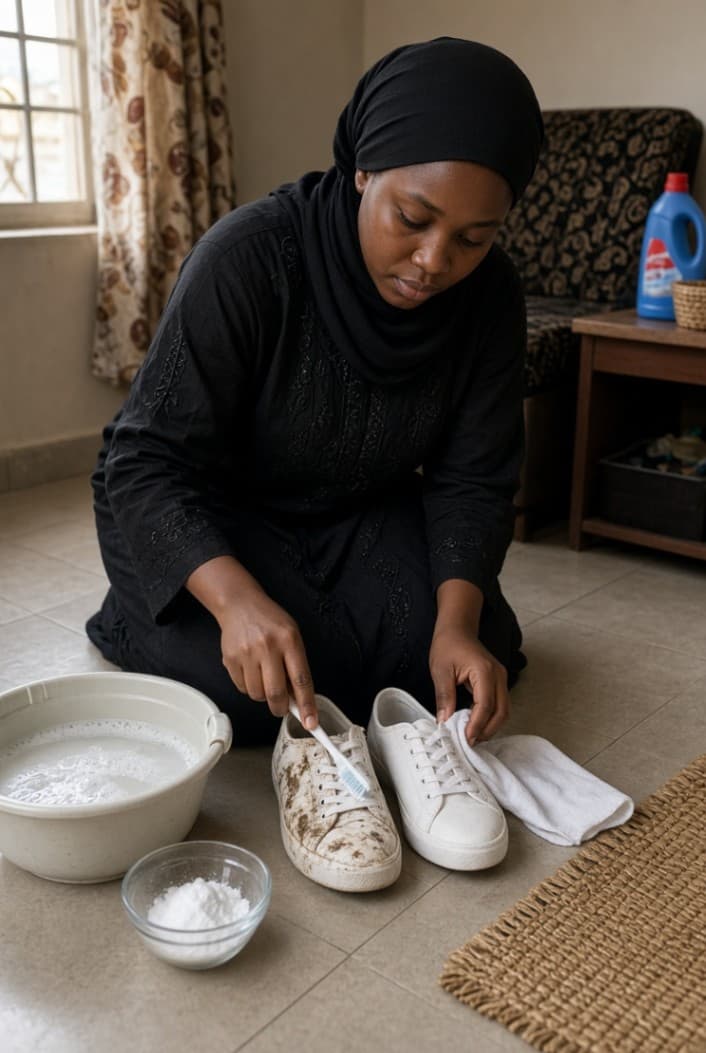
Here is a simple cleaning kit that works for most white sneakers:
| Item | What it does | Notes |
|---|---|---|
| Soft toothbrush | Lifts dirt from seams and soles | Use an old one with soft bristles |
| Mild dish soap or gentle detergent | Breaks up grime | Mix with warm water |
| Microfiber cloth or clean rag | Wipes residue | Keep one cloth for rinsing |
| Small bowl | Holds cleaning mixture | Use separate bowls if needed |
| Baking soda | Helps lift stains on fabric | Useful for canvas and cloth uppers |
| White vinegar | Can help with fabric cleaning | Use lightly, not on all materials |
| Soft brush or sponge |
Have something to give away or sell?
Post your first listing — it only takes a couple of minutes.
| Cleans midsoles and rubber parts |
| Avoid harsh scrubbing |
| White tissue paper or cloth stuffing | Helps shoes keep shape while drying | Use after cleaning |
Most guides recommend starting with dry brushing, then moving to a mild soap solution, and only using stronger agents when the material can handle it. For leather or mixed-material sneakers, gentle spot cleaning is safer than soaking.
Canvas is usually the easiest white sneaker material to clean at home. Start by removing the laces, tapping out loose dirt, and brushing the upper dry. Then mix warm water with a little dish soap, dip a soft brush into the mixture, and scrub in small circles.
A baking soda paste can help when the fabric looks dull. One common home method is to mix baking soda with mild soap and a little water until it forms a spreadable paste, apply it to stained areas, wait briefly, and wipe it off with a damp cloth. Keep the cloth only damp, not wet, because soaking can weaken glue and leave the shoe patchy.
Leather needs a gentler touch than canvas. Use a barely damp cloth with mild soap water and wipe the surface instead of scrubbing hard. Harsh brushing can dull the finish and make white leather look cloudy.
Wirecutter recommends a soft cloth for firm parts and careful cleaning around the upper, with full drying afterward. If a leather sneaker has a removable insole, take it out only if the brand allows it and let it dry separately.
Mesh traps dust in its tiny openings, so dry brushing first helps a lot. Use a soft brush to loosen dirt, then clean with a mild soap solution on a cloth or soft brush. Avoid heavy soaking because mesh can deform and hold odor if water stays inside.
Wirecutter advises that machine washing can be possible for cotton, polyester, mesh, and canvas shoes, but only when the materials are washer-safe. For at-home hand cleaning, spot treatment is the safer route when you are unsure.
That order matters because dirt on the sole can smear onto the upper if you start in the wrong place. It also prevents over-wetting, which is one of the main reasons white sneakers lose their brightness after cleaning.
Different stains need different approaches. A single cleaning mix does not handle every kind of mark well, so it helps to match the stain to the method.
| Stain type | Practical fix | Notes |
|---|---|---|
| Red dust | Dry brush, then soap water | Repeat if dust is embedded |
| Mud | Let it dry first, brush off, then clean | Wet mud spreads faster |
| Food stains | Mild detergent and cloth wipe | Act early for better results |
| Grass marks | Baking soda paste on canvas | Spot test first |
| Yellowing | Gentle cleaning and shade drying | Direct sun can worsen it |
| Sole scuffs | Soft brush and soap water | A sponge can help on rubber |
Some Nigerian fashion writers also suggest light use of bleach-based products for very stubborn stains, but those are better treated with caution because they can damage fabric and trim if used too strongly. For everyday cleaning, gentler methods are more forgiving and easier to repeat.
Drying is where many white sneakers go wrong. Direct sun can sometimes help remove moisture quickly, but too much heat can leave yellow edges or weaken glue lines. A shaded, airy spot or a fan gives a cleaner result because the shoe dries steadily instead of baking in harsh light.
Place white tissue paper, paper towels, or a clean cloth inside the shoe to support the shape. Replace the stuffing if it becomes damp. Do not store the shoes while they are still wet, because trapped moisture can cause odor and discoloration.
A small routine keeps white sneakers looking fresh longer.
This approach works well in Nigeria because dust buildup is usually gradual, not instant. Quick maintenance prevents deep staining and reduces the need for strong cleaners later. Consumer-focused guidance from the FCCPC also stresses checking safety information and acting carefully with products that may be unsafe or improperly labelled.
| Mistake | What can happen | Safer alternative |
|---|---|---|
| Soaking all materials together | Glue loosens, shape changes | Spot clean first |
| Using a hard brush on leather | Surface becomes rough | Use a soft cloth |
| Drying in harsh direct sun | Yellowing and cracking | Dry in shade or with a fan |
| Leaving soap residue behind | White marks appear later | Wipe thoroughly with damp cloth |
| Storing shoes while damp | Odor and stains develop | Air-dry fully first |
If a sneaker is very delicate, mixed-material, or expensive, it is safer to test a small hidden area first. That simple check helps you avoid visible damage on the front of the shoe. It is the same basic consumer-care principle reflected in FCCPC guidance about safe, fit-for-purpose goods and careful product handling.
If you are cleaning white sneakers to list, trade, or give away on Threddo, a neat photo and a clear condition note help buyers understand what they are getting. You can also pair this cleaning routine with Threddo’s safety guidance and listing format at /safety and /listings for cleaner, more transparent secondhand trading.
In local markets and online resale spaces, condition often affects perceived value more than age alone. A clean pair of white sneakers can look more wearable and presentable than a newer pair that still carries dust, odor, or scuffs. That is why thrift shoppers often clean first before deciding whether to keep, donate, or pass on a pair.
For students, commuters, and casual wearers in Lagos and other cities, the practical goal is not perfection but freshness. A shoe that is brushed, wiped, dried properly, and stored well will usually look noticeably better after one home cleaning session. That same habit also supports circular fashion by extending wear life before replacement.
Cleaning white sneakers at home in Nigeria works best when you start with dry brushing, use mild soap for routine care, choose material-safe methods, and dry the shoes in shade. The same process also helps secondhand pairs look fresher, last longer, and stay ready for everyday wear. This article is for educational purposes only and does not constitute professional advice. Always follow safe trading practices and use your own judgement.